

Understanding CRA Audits
What Is a CRA Audit?
A CRA audit is an examination of your financial records and tax filings to verify that the information reported to the Canada Revenue Agency is accurate and complete. During an audit, CRA officers review documents such as invoices, bank statements, payroll records, GST/HST filings, and corporate tax returns. Their goal isn’t necessarily to punish businesses but to ensure that taxes are calculated and reported correctly.
Think of an audit like a financial health check for your company. Just as doctors run tests to confirm that everything in your body is functioning properly, the CRA reviews your business records to confirm that your numbers align with tax laws. If everything checks out, the audit ends without issues. If discrepancies appear, the CRA may request additional documentation or adjust your tax filings.
Audits vary in scope. Some involve simple document requests, while others require a detailed review of several years of financial records. The complexity often depends on the size of the business, the type of industry, and the potential risk factors identified by CRA systems.
The key point many business owners misunderstand is that an audit does not automatically mean wrongdoing. Many audits occur randomly or because automated systems flagged unusual patterns in financial data. Being prepared with organized records and clear documentation can make the entire process far less stressful.
Why the CRA Audits Businesses
The CRA audits businesses primarily to maintain fairness within the Canadian tax system. If some companies underreport income or claim improper deductions, they gain an unfair advantage over businesses that follow the rules. Audits help ensure that everyone contributes their fair share of taxes.
Technology also plays a big role in modern tax audits. The CRA uses advanced data analytics to identify inconsistencies across tax filings. For example, if a business reports significantly lower profits compared to similar companies in the same industry, automated systems may flag it for review.
Another reason audits occur is to Verify Specific Tax credits or deductions. Some government incentives, such as research and development credits, involve large claims that the CRA wants to validate. When significant tax refunds or credits appear in a return, the CRA may conduct an audit to confirm the claim’s legitimacy.
Businesses should see audits as part of responsible tax administration rather than a threat. Companies with proper bookkeeping systems, organized records, and professional guidance often navigate audits smoothly because they can easily provide the documentation the CRA requests.
Common Reasons Businesses Get Audited
Large or Unusual Expense Claims
One of the most common triggers for a CRA audit is unusual expense claims. When a business reports expenses that seem disproportionate to its revenue, the CRA may investigate. For instance, if a company with modest income claims extremely high travel or vehicle expenses, auditors may want to confirm whether those expenses are legitimate business costs.
Business deductions must meet two key criteria: they must be reasonable and directly related to earning income. If expenses appear excessive or unrelated to operations, they raise questions. This is particularly common with categories such as meals, entertainment, home office expenses, and vehicle deductions.
Keeping detailed records is essential to justify these expenses. Receipts, mileage logs, travel itineraries, and written explanations can demonstrate that the expenses were genuinely incurred for business purposes. Without supporting documents, even legitimate expenses may be disallowed during an audit.
Small businesses often fall into trouble simply because they mix personal and business expenses. Using the same credit card for both types of spending makes it harder to prove which transactions belong to the business. Maintaining separate accounts is one of the simplest ways to reduce audit risk.
Mismatch Between Reported Income and Industry Norms
Another common audit trigger occurs when a business reports income levels significantly different from industry averages. The CRA maintains statistical benchmarks for many industries, allowing auditors to compare financial performance across similar businesses.
Imagine two restaurants operating in the same city with comparable seating capacity. If one reports annual revenue far lower than typical industry standards, the CRA may question whether all sales were properly recorded. Cash-heavy businesses, including restaurants, convenience stores, and construction companies, often face additional scrutiny because cash transactions can be harder to track.
Income mismatches don’t always indicate fraud. Sometimes businesses experience legitimate downturns or temporary financial difficulties. However, if income appears inconsistent with industry data, auditors may request additional documentation to confirm the reported figures.
Accurate bookkeeping plays a major role in avoiding these issues. Recording every transaction, reconciling bank accounts regularly, and using reliable accounting software ensures that revenue figures match actual financial activity.
GST/HST Filing Issues
Businesses registered for GST/HST must collect taxes from customers and remit them to the government. Errors in these filings can easily trigger audits. For example, reporting high input tax credits while showing relatively low sales revenue may raise concerns.
GST/HST audits often focus on verifying whether businesses correctly claimed tax credits for purchases and whether collected taxes were properly remitted. Missing invoices or incorrect calculations can lead to reassessments and penalties.
Maintaining organized GST/HST records, including invoices and purchase receipts, helps ensure that filings remain accurate. Many accounting systems automate these calculations, reducing the risk of mistakes.
Types of CRA Audits
Desk Audit
A desk audit is the simplest form of audit conducted by the CRA. In this type of audit, the CRA sends a letter requesting specific documents related to your tax return. The review takes place remotely, meaning you typically don’t need to meet auditors in person.
Desk audits often focus on verifying individual deductions or credits rather than reviewing an entire business. For example, the CRA might request documentation supporting vehicle expenses or a specific tax credit claim.
Because the scope is limited, desk audits usually resolve quickly once the requested documents are submitted. Organized recordkeeping makes this process straightforward.
Field Audit
A field audit is more detailed and typically occurs at your business premises or accountant’s office. CRA auditors examine financial records in person and may ask questions about business operations.
Field audits allow auditors to review accounting systems, inspect inventory, and analyze financial statements directly. Businesses in industries with high cash transactions often experience field audits because auditors want to observe internal processes.
Preparation is critical for field audits. Having clear documentation and professional accounting support ensures that questions can be answered accurately.
Comprehensive Audit
A comprehensive audit is the most detailed type of review. In this case, the CRA examines multiple years of financial records, tax filings, payroll documents, and GST/HST returns. These audits may occur if the CRA suspects significant discrepancies or complex compliance issues.
Comprehensive audits can take several months to complete. Businesses undergoing this level of review often rely heavily on professional accountants to manage communication with auditors and ensure proper documentation.
Essential Records You Must Keep
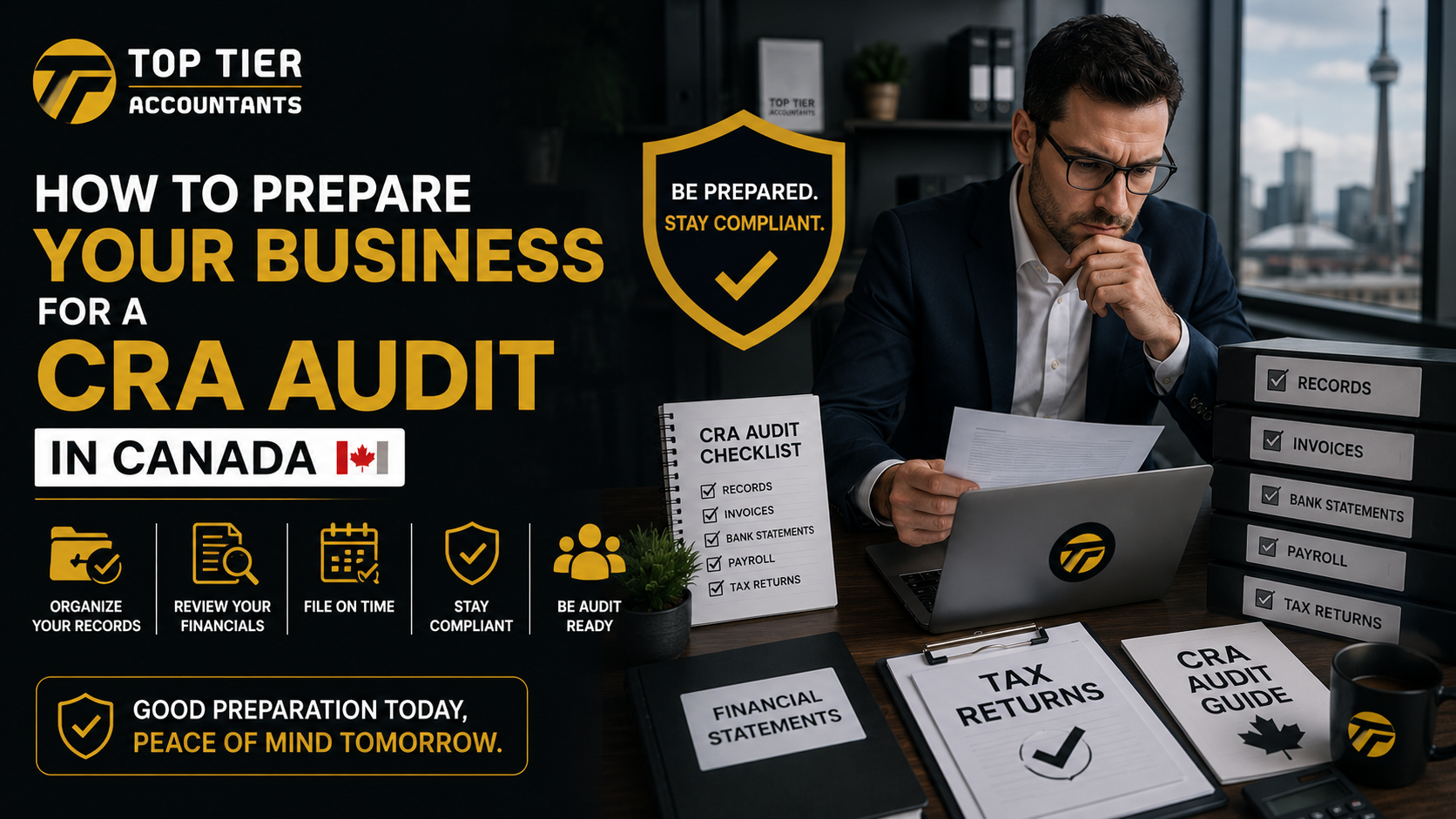
Proper documentation is the backbone of audit preparation. Canadian businesses must maintain records that clearly support every figure reported in their tax returns.
Key records include:
| Record Type | Examples |
| Financial Statements | Income statement, balance sheet |
| Sales Records | Invoices, sales receipts |
| Expense Documentation | Purchase receipts, bills |
| Payroll Records | Employee pay slips, remittance records |
| GST/HST Documents | Tax collected and input tax credits |
Keeping these records organized ensures that businesses can quickly respond to audit requests.
How Long Should You Keep Business Records?
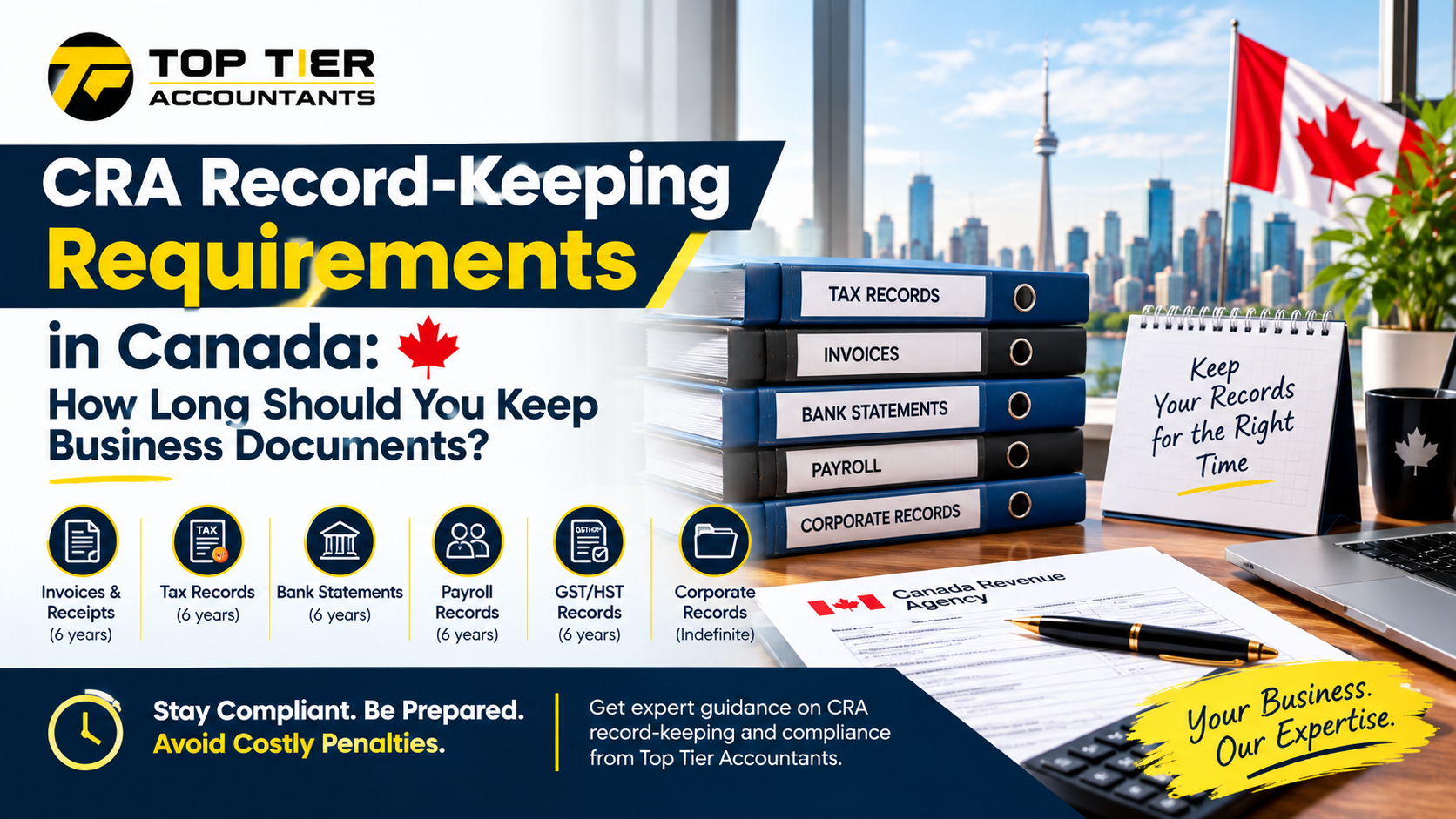
According to the Canada Revenue Agency, most business records must be kept for at least six years from the end of the last tax year they relate to. This rule applies to documents such as invoices, financial statements, payroll records, and tax filings.
Digital recordkeeping has become increasingly common, allowing businesses to store documents electronically. Cloud accounting software provides secure backups and easy access to financial data. Electronic records are acceptable as long as they remain accurate, readable, and accessible if the CRA requests them.
Destroying records too early can create serious problems during audits. If auditors request documentation that no longer exists, businesses may face reassessments or penalties.
Bookkeeping Practices That Protect You
Monthly Reconciliation
Monthly reconciliation is one of the most effective ways to maintain accurate financial records. This process involves comparing your accounting records with bank statements, credit card transactions, and other financial documents to ensure that everything matches.
Reconciling accounts regularly prevents errors from accumulating over time. If discrepancies appear, they can be corrected quickly before they affect tax filings.
Businesses that skip reconciliation often discover mistakes months later, making them much harder to fix.
Accurate Expense Categorization
Proper expense categorization helps ensure that deductions remain legitimate and easy to verify. Each expense should be recorded under the correct category, such as office supplies, marketing, or travel.
Misclassified expenses can confuse auditors and increase audit risk. Using reliable accounting software simplifies categorization and keeps records consistent.
Red Flags That Trigger CRA Audits
Several financial patterns commonly attract CRA attention:
- Large fluctuations in revenue
- Excessive business expense claims
- Frequent losses over multiple years
- Missing GST/HST filings
- Payroll inconsistencies
Avoiding these issues requires consistent financial management and transparent recordkeeping.
What Happens During a CRA Audit
Initial Contact
The CRA typically begins an audit by sending a notification letter explaining what documents they need. This letter also identifies the auditor responsible for the case.
Businesses should respond promptly and gather the requested records before the deadline.
Document Review
During the audit, the CRA reviews financial documents and may ask questions about transactions, expenses, or accounting methods. Providing clear documentation helps resolve these questions quickly.
Audit Results
After completing the review, the CRA issues an audit report. If no issues are found, the case closes without changes. If discrepancies exist, the CRA may reassess taxes owed.
How Professional Accountants Help During Audits
Professional accountants play a critical role during audits. They understand tax regulations, prepare documentation, and communicate with auditors on behalf of the business.
Accountants can also identify potential issues before an audit occurs, helping businesses correct errors early.
Conclusion
Preparing for a CRA audit isn’t about expecting trouble—it’s about running a well-organized business. Accurate bookkeeping, proper documentation, and regular financial reviews create a strong foundation that protects companies from compliance problems.
When financial records are clear and accessible, audits become manageable rather than overwhelming. Businesses that invest in professional accounting systems and follow best practices can approach CRA audits with confidence instead of fear.
FAQs
1. How often does the CRA audit small businesses?
The CRA audits a small percentage of businesses each year, focusing on cases flagged by risk analysis systems.
2. Can a CRA audit go back several years?
Yes. The CRA can review records from previous years, usually within the six-year record retention period.
3. What happens if errors are found during an audit?
If errors occur, the CRA may reassess taxes owed and apply penalties or interest.
4. Can accountants represent businesses during CRA audits?
Yes. Professional accountants can communicate with the CRA and manage audit documentation.
5. How can businesses reduce the risk of audits?
Maintaining accurate bookkeeping, filing taxes on time, and keeping detailed records significantly reduces audit risk.Understanding CRA Audits
Post a comment
Related Posts
August 31, 2026
5 Bookkeeping Reports Every Canadian Business Owner Should Review Monthly
Why Monthly Financial Reporting Matters Running a Canadian business without regularly reviewing your bookkeeping reports…

August 8, 2026
How to Set Up a CRA Payroll Account for Your Business
What Is a CRA Payroll Account? If your Canadian business is hiring employees, one of…

August 8, 2026
How to Reduce Your Corporate Tax Legally in Canada (2026 Guide)
Every business owner wants to keep more of their hard-earned profits, but reducing your tax…

August 8, 2026
How to File Complex Tax Returns for Canadian Businesses
Filing a corporate tax return in Canada can become complicated as a business grows. A…