



Understanding Cash Flow in Small Businesses
What Cash Flow Really Means
Cash flow is the lifeblood of every business. Think of it like the oxygen that keeps the body alive. Without a steady flow of oxygen, the body struggles to function. In the same way, without consistent cash flow, even profitable businesses can collapse. Many small business owners in Canada assume that as long as their business is generating sales and profit on paper, everything is fine. Unfortunately, reality often proves otherwise. Profit and Cash Flow are not the same thing. Profit represents the money left after expenses, but cash flow shows how money actually moves in and out of your business account.
A company might record strong profits while still facing serious cash shortages. For example, imagine a contractor who completes several large projects and invoices clients for $100,000. The business looks profitable, but if customers delay payments for 60 or 90 days, the contractor may struggle to pay suppliers, rent, and employee salaries in the meantime. This situation is extremely common among small businesses across Canada.
Understanding cash flow means tracking every dollar entering and leaving your business. Revenue, expenses, loan payments, taxes, payroll, and operational costs all influence your financial stability. Without clear visibility into these movements, business owners operate blindly, making decisions based on assumptions rather than data. That lack of clarity often leads to financial stress and operational disruption.
Successful entrepreneurs treat cash flow management as a daily responsibility rather than a yearly accounting exercise. They analyze financial reports regularly, anticipate shortages before they happen, and maintain reserves that protect the business from unexpected expenses. Cash flow awareness transforms business management from reactive firefighting into proactive planning.
Why Cash Flow Is More Important Than Profit
Many entrepreneurs celebrate strong profit margins but underestimate the importance of liquidity. Liquidity refers to the availability of cash that allows businesses to pay bills immediately. Without liquidity, profitability becomes meaningless because obligations must still be met in real time. A company cannot pay rent with projected profits or theoretical income recorded on financial statements.
Small businesses often operate on tight margins and limited reserves. This makes them particularly vulnerable to cash flow disruptions. When revenue fluctuates or payments are delayed, the financial pressure appears almost instantly. Businesses may be forced to rely on credit cards, short-term loans, or lines of credit just to cover operating costs.
In Canada, many small businesses operate in industries where payment cycles are long. Construction, consulting, and service-based businesses often invoice clients who pay after 30, 60, or even 90 days. During this waiting period, the company still has ongoing expenses such as wages, supplier invoices, utilities, and taxes. If the incoming cash does not arrive on time, financial strain quickly builds.
Another reason cash flow matters more than profit is operational flexibility. Businesses with strong cash reserves can invest in marketing, hire new staff, expand operations, and purchase equipment without financial stress. On the other hand, companies with poor cash flow often operate in survival mode. They delay investments, postpone growth opportunities, and avoid risks that could otherwise help them expand.
Strong cash flow also builds credibility with lenders and investors. Banks prefer to work with businesses that demonstrate consistent financial stability rather than those relying heavily on debt. Ultimately, profit measures performance, but cash flow determines survival.
The Current Cash Flow Reality for Canadian Small Businesses
Statistics About Small Business Cash Flow Problems
Cash flow challenges are not rare exceptions. They represent one of the most common financial difficulties faced by entrepreneurs. Studies consistently show that poor cash flow management is among the top reasons small businesses fail worldwide. In Canada, surveys indicate that many small business owners experience frequent liquidity pressure.
Research from Canadian business organizations has revealed that a significant portion of small companies operate with limited cash reserves. Many businesses have less than three months of operating expenses available in emergency funds. This means even minor financial disruptions can cause serious stress.
Late payments represent another major contributor to cash flow problems. A large percentage of Canadian small businesses report waiting longer than expected to receive payments from customers. Some invoices remain unpaid for several months, forcing businesses to cover costs without incoming revenue.
Rising operational expenses also play a role. Inflation, higher interest rates, and increased supplier costs have created additional pressure on business finances. When expenses grow faster than revenue, cash flow becomes increasingly difficult to maintain.
These statistics highlight an important truth: cash flow management is not just an accounting issue. It is a survival skill for entrepreneurs navigating competitive markets and unpredictable economic conditions.
Economic Pressures Affecting Canadian Businesses
Economic conditions influence how cash flows through businesses. When the economy slows down, customers delay spending and businesses face reduced demand. This slowdown directly impacts revenue streams and payment cycles.
Interest rate increases also affect cash flow management. Businesses relying on loans or credit lines face higher repayment costs. Even small increases in interest rates can significantly raise monthly financial obligations, tightening liquidity.
Supply chain disruptions have also affected Canadian companies in recent years. Delays in materials and inventory create operational bottlenecks that slow down revenue generation. When products cannot be delivered on time, invoices cannot be issued, and cash inflow stalls.
Tax obligations represent another important factor. Businesses must manage corporate taxes, payroll deductions, and sales taxes such as GST or HST. These payments require careful planning because they often involve large lump sums due at specific times during the year. Without preparation, tax deadlines can create sudden cash shortages.
Economic pressure amplifies the importance of financial discipline. Businesses that monitor cash flow closely are better prepared to navigate uncertain environments and adapt their strategies when conditions change.
Major Causes of Poor Cash Flow Management
Late Customer Payments
One of the most common causes of cash flow problems is delayed customer payments. Small businesses often extend credit terms to clients, expecting invoices to be paid within 30 days. However, many customers exceed these timelines, sometimes significantly.
When payments arrive late, the financial impact spreads across the entire operation. Suppliers still expect timely payments, employees require consistent wages, and operational expenses continue regardless of incoming revenue. Businesses essentially finance their customers’ delays, creating financial strain.
Late payments also create administrative burdens. Owners and staff spend time sending reminders, following up on outstanding invoices, and managing collections. This process consumes resources that could otherwise be spent on business growth.
Clear payment policies and automated invoicing systems help Reduce these Risks. Businesses that enforce consistent terms and communicate expectations clearly often experience fewer delays.
Poor Financial Tracking and Bookkeeping
Accurate bookkeeping forms the foundation of financial management. Without reliable records, business owners cannot see where money is going or how much is available at any given time.
Many entrepreneurs delay bookkeeping tasks until tax season, treating accounting as an annual obligation rather than a continuous management tool. This approach leads to incomplete records, missed expenses, and inaccurate financial reporting.
Poor bookkeeping also hides early warning signs of cash shortages. When financial data is outdated, business owners cannot identify declining margins, rising costs, or payment delays quickly enough to respond.
Professional accounting systems and regular financial reviews help businesses maintain clarity and control over their finances.
Warning Signs of Cash Flow Problems
Difficulty Paying Bills and Suppliers
One of the earliest indicators of cash flow trouble is difficulty paying regular expenses. Businesses may start delaying supplier payments, negotiating extended terms, or prioritizing certain bills over others.
While occasional delays may happen during seasonal fluctuations, consistent payment difficulties signal deeper financial issues. Suppliers may lose trust and demand upfront payments, further tightening liquidity.
Increasing Business Debt
Another warning sign is the growing reliance on debt to cover operational costs. Credit cards, short-term loans, and lines of credit can temporarily solve liquidity issues, but excessive borrowing creates long-term financial pressure.
As debt accumulates, interest payments consume larger portions of revenue. This cycle reduces profitability and increases financial risk.
Practical Ways to Improve Cash Flow Management
Implementing Strong Invoicing Systems
Efficient invoicing systems accelerate cash inflow and reduce payment delays. Businesses should issue invoices immediately after delivering services or products. Automated invoicing platforms can send reminders and track outstanding balances.
Clear payment terms, digital payment options, and structured follow-ups significantly improve collection rates.
Managing Expenses Strategically
Expense management plays an equally important role in cash flow stability. Businesses should regularly review operating costs, supplier contracts, and subscription services.
Reducing unnecessary expenses frees up cash that can be reinvested in growth initiatives.
Technology and Tools for Better Cash Flow Control
Cloud Accounting Solutions
Modern cloud accounting software allows businesses to track finances in real time. These platforms automate bookkeeping tasks, generate financial reports, and provide insights into revenue and expenses.
Business owners can monitor cash flow from anywhere, making financial management more accessible and efficient.
Financial Forecasting Tools
Forecasting tools analyze historical data to predict future cash flow patterns. These projections help businesses anticipate shortages and plan accordingly.
Forecasting transforms financial management from reactive crisis handling into proactive planning.
Building a Cash Flow Strategy for Long-Term Stability
Long-term financial stability requires strategic planning rather than short-term fixes. Businesses should maintain emergency reserves, monitor financial metrics regularly, and align operational decisions with cash flow realities.
Strong financial discipline allows companies to invest confidently in growth while maintaining operational security.
Conclusion
Cash flow management determines whether a business thrives or struggles. Profit alone cannot guarantee financial stability if cash inflow and outflow are not carefully monitored. Canadian small businesses face unique challenges including delayed payments, economic fluctuations, and rising operational costs. These factors make cash flow management even more critical.
Entrepreneurs who actively track financial data, implement efficient invoicing systems, and maintain strong bookkeeping practices position themselves for long-term success. Financial clarity empowers business owners to make confident decisions, pursue growth opportunities, and withstand unexpected disruptions.
Cash flow discipline transforms financial management from a reactive struggle into a strategic advantage.
FAQs
1. What is the biggest cause of cash flow problems for small businesses in Canada?
Late customer payments are one of the most common causes, as businesses often rely on timely invoices to cover operational expenses.
2. Can a profitable business still fail due to cash flow issues?
Yes. A business can be profitable on paper but still run out of cash if revenue is delayed while expenses must be paid immediately.
3. How often should small businesses review their cash flow?
Most experts recommend reviewing cash flow weekly or monthly to ensure financial stability.
4. What tools help manage cash flow effectively?
Cloud accounting software, automated invoicing systems, and financial forecasting tools help businesses monitor and improve cash flow.
5. Why is cash flow forecasting important?
Forecasting helps businesses anticipate future financial shortages and plan solutions before problems arise.
Post a comment
Related Posts
August 31, 2026
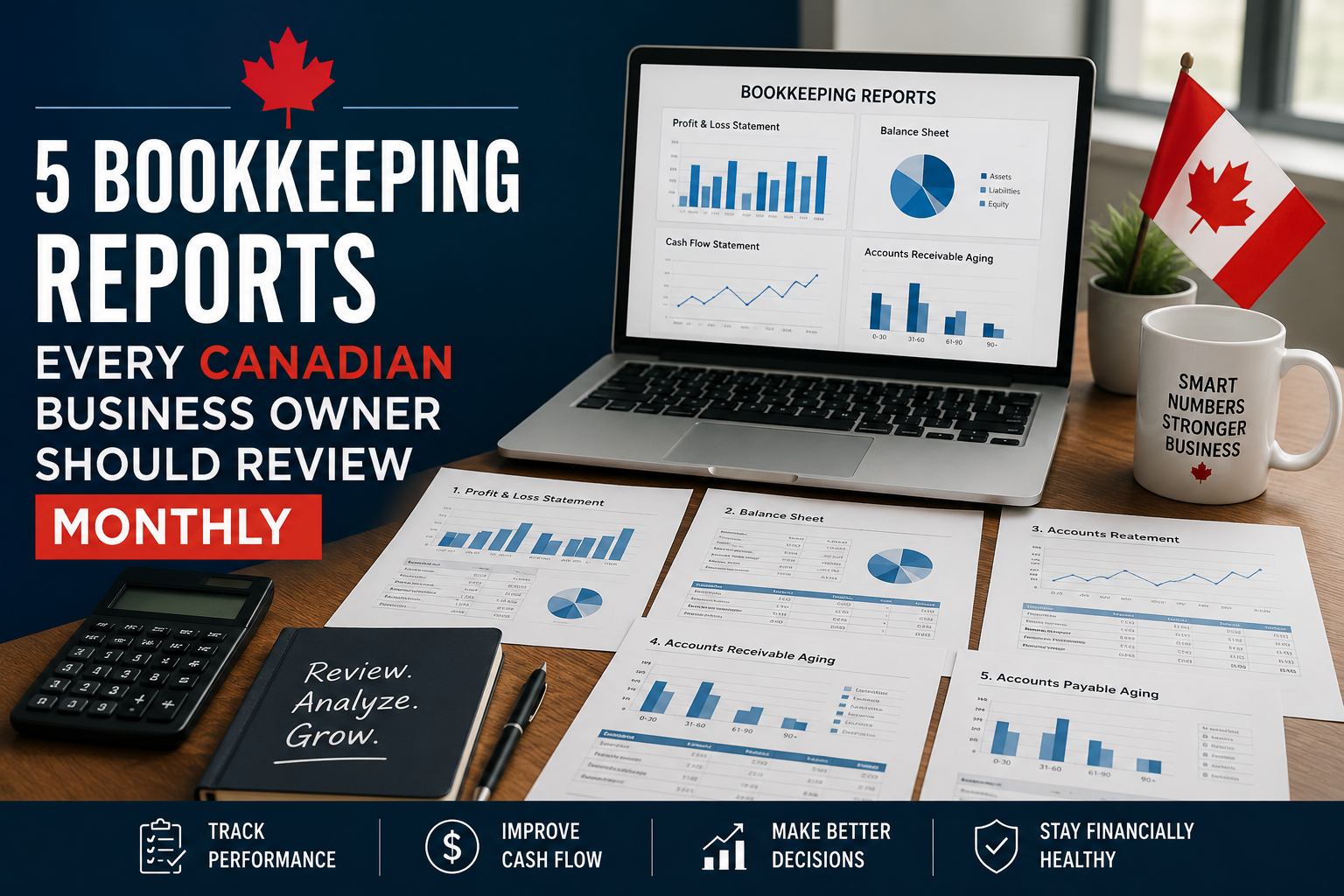
5 Bookkeeping Reports Every Canadian Business Owner Should Review Monthly
Why Monthly Financial Reporting Matters Running a Canadian business without regularly reviewing your bookkeeping reports…

August 8, 2026
How to Set Up a CRA Payroll Account for Your Business
What Is a CRA Payroll Account? If your Canadian business is hiring employees, one of…

August 8, 2026
How to Reduce Your Corporate Tax Legally in Canada (2026 Guide)
Every business owner wants to keep more of their hard-earned profits, but reducing your tax…

August 8, 2026
How to File Complex Tax Returns for Canadian Businesses
Filing a corporate tax return in Canada can become complicated as a business grows. A…