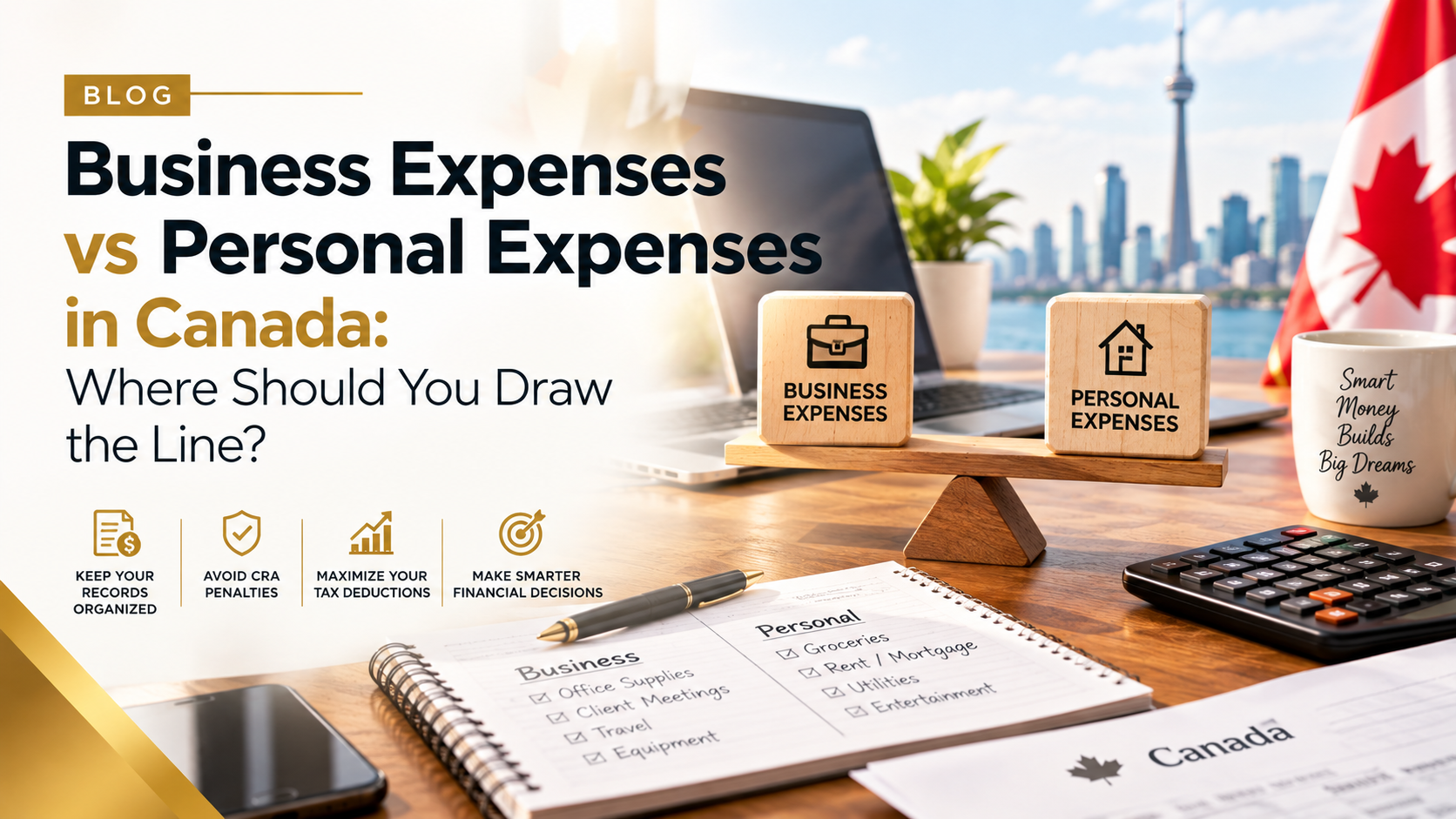


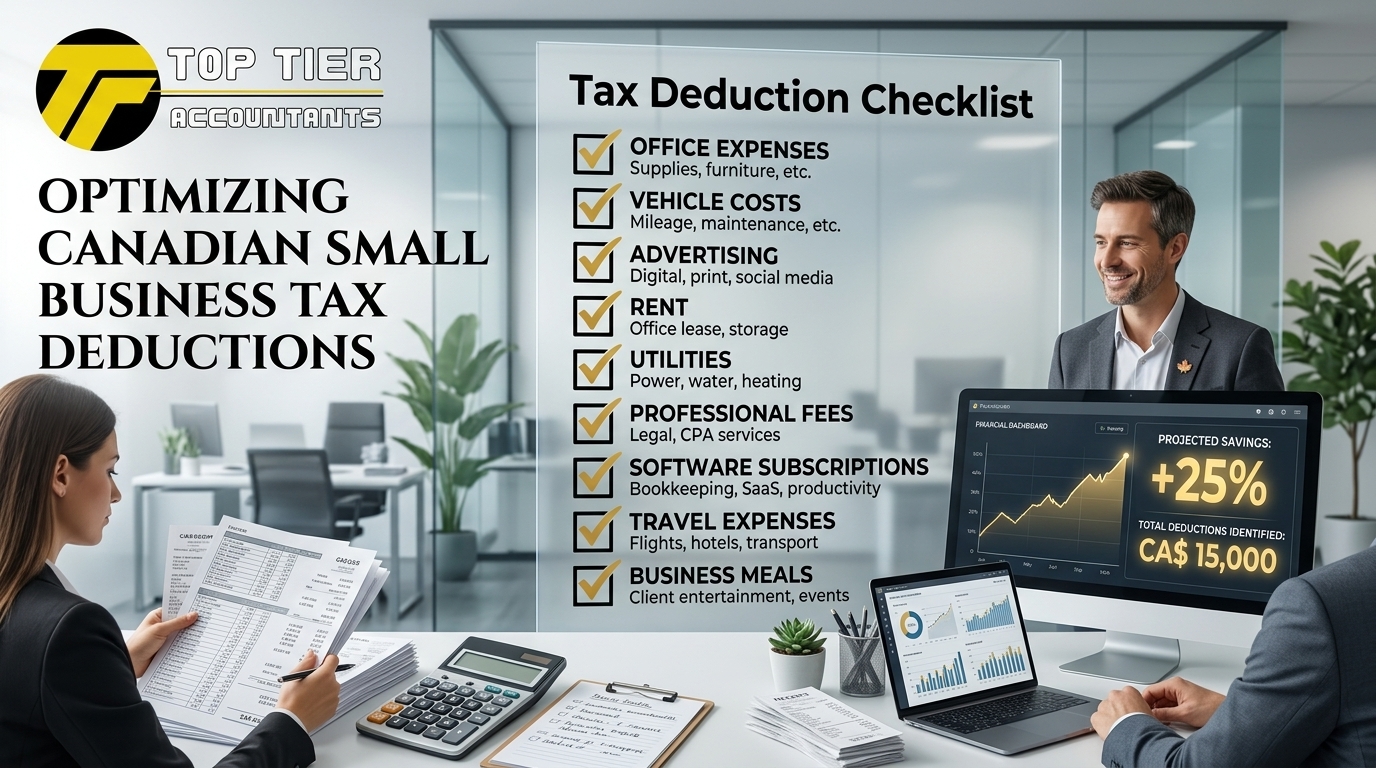
What Expenses Are Tax Deductible for Small Businesses in Canada?
Running a small business in Canada involves juggling dozens of responsibilities—marketing, operations, staffing, and finances. Among these responsibilities, tax planning is one of the most important yet misunderstood aspects of business management. Many entrepreneurs leave money on the table simply because they don’t know which expenses they can legally deduct. Understanding tax-deductible expenses can significantly reduce your tax burden and increase your business profitability.
In Canada, the general principle for tax deductions is surprisingly simple. According to the Canada Revenue Agency (CRA), a business expense is deductible if it was incurred for the purpose of earning business income and is reasonable in the circumstances. That means the majority of legitimate costs associated with running your business—from advertising to office rent—can potentially reduce your taxable income.
Think of tax deductions as the government’s way of acknowledging that running a business costs money. If you spend money to generate revenue, the tax system allows you to subtract those costs from your income before calculating taxes. The result is lower taxable income and, ultimately, lower taxes owed.
Still, the rules aren’t always straightforward. Some expenses are fully deductible, others are partially deductible, and certain costs must be depreciated over several years rather than deducted immediately. If you’re a freelancer, contractor, startup founder, or small business owner in Canada, understanding these categories is essential.
This guide will break down the most common tax-deductible expenses for small businesses in Canada, explain how they work, and help you ensure you’re claiming every deduction you legally can.
Understanding Tax Deductible Business Expenses in Canada
The CRA’s Basic Rule for Deductible Expenses
At the core of Canada’s tax system for businesses is a simple but powerful rule: you can deduct any reasonable expense incurred to earn business income. While this sounds straightforward, applying the rule correctly requires careful documentation and judgment.
The first requirement is purpose. The expense must directly relate to generating business revenue. For example, paying for website hosting, purchasing raw materials, or running digital ads clearly supports your business operations. On the other hand, buying a personal luxury item that doesn’t contribute to the business would not qualify.
The second requirement is documentation. The CRA expects businesses to keep accurate records such as invoices, receipts, and bank statements. These documents prove the expense was actually incurred and demonstrate its connection to your business activities. Without proper records, even legitimate deductions can be denied during an audit.
The third requirement is reasonableness. The CRA evaluates whether the expense amount makes sense in the context of your business. For instance, if a small freelance graphic designer claims $50,000 in entertainment expenses, tax authorities may question whether that spending was truly necessary to generate income.
When all three criteria—purpose, documentation, and reasonableness—are satisfied, the expense is usually deductible.
Current Expenses vs Capital Expenses
Another important distinction in Canadian tax law is the difference between current expenses and capital expenses. This classification determines how quickly you can deduct the cost.
Current expenses are costs that provide immediate or short-term benefits to your business. Examples include office supplies, advertising, rent, and utilities. These expenses can generally be deducted in full during the same tax year they were incurred.
Capital expenses, on the other hand, involve assets that provide long-term value to your business. Examples include computers, office furniture, machinery, or vehicles. These items cannot be fully deducted in the year of purchase. Instead, they must be claimed gradually through a system called Capital Cost Allowance (CCA), which spreads the deduction across several years.
Understanding this difference prevents common tax mistakes. Many new entrepreneurs incorrectly deduct the entire cost of expensive equipment in one year, which can trigger issues during a tax review.
Advertising and Marketing Expenses
Marketing is essential for business growth, and the Canadian tax system recognizes this by allowing most advertising and promotional costs to be fully deductible.
Digital Marketing and Online Advertising
In today’s digital economy, businesses spend heavily on online marketing channels. The good news is that these costs are generally considered ordinary operating expenses.
Examples of deductible digital marketing costs include:
- Social media advertising
- Search engine marketing
- Website hosting and domain registration
- SEO services and content marketing
- Email marketing software
- Online design tools
For instance, if you spend $3,000 per month running online ads to attract customers, that entire amount can typically be deducted as a marketing expense. This makes digital advertising not only powerful for growth but also tax-efficient.
Another common deductible expense is website development and maintenance. A business website functions as a marketing and sales platform, so costs associated with hosting, security, and design often qualify as business deductions.
Traditional Marketing Costs
Although digital marketing dominates modern strategies, traditional advertising still plays a role in many industries. Canadian businesses can also deduct expenses related to:
- Newspaper and magazine ads
- Flyers and brochures
- Business cards
- Sponsorships related to business promotion
- Trade show participation
- Billboard advertising
These costs fall under the advertising category on business tax forms, making them relatively straightforward to claim.

Office and Administrative Expenses
Every business requires administrative support, and the costs associated with running an office are typically tax deductible.
Office Supplies and Equipment
Small office supplies are fully deductible in the year they are purchased. These include items such as paper, pens, printer ink, and postage stamps. While these items may seem insignificant individually, collectively they can add up to substantial deductions over a year.
However, it’s important to differentiate between supplies and equipment. Supplies are consumable items used regularly in daily operations, while equipment typically has a longer useful life. Equipment such as desks, filing cabinets, and computers must usually be claimed through capital cost allowance instead of being deducted immediately.
Software, Subscriptions, and Internet Costs
Modern businesses rely heavily on digital tools. Fortunately, most Software Subscriptions are fully deductible business expenses.
Common examples include:
- Accounting software
- CRM platforms
- Project management tools
- Cloud storage subscriptions
- Business email services
- Design or editing software
If you operate from home, your internet service may also be partially deductible based on the percentage used for business activities.
Rent, Utilities, and Workspace Costs
Physical space is often one of the biggest operational expenses for businesses.
Renting Office or Commercial Space
If you rent a commercial property for your business—such as a retail shop, warehouse, or office—the rent payments are generally 100% tax deductible.
Similarly, related expenses such as electricity, heating, water, and security systems may also qualify as deductible utilities.
Businesses that operate from leased spaces often benefit from significant tax deductions because rent is typically one of the largest recurring costs.
Home Office Deduction Rules
Many entrepreneurs operate from home, particularly freelancers, consultants, and online businesses. The CRA allows home office deductions if the workspace meets specific conditions:
- It is your primary place of business, or
- It is used regularly to meet clients or customers.
Eligible expenses may include:
- A portion of utilities
- Home insurance
- Property taxes
- Mortgage interest
- Maintenance costs
These deductions are calculated based on the percentage of your home used for business. For example, if your office occupies 10% of your home’s floor space, you may deduct 10% of eligible household expenses.
Vehicle and Travel Expenses
For many small businesses, transportation is essential. Fortunately, several vehicle-related expenses can be deducted.
Deducting Business Vehicle Costs
If you use a vehicle for business purposes, you can claim a portion of expenses such as:
- Fuel
- Insurance
- Maintenance and repairs
- Lease payments
- Loan interest
- Parking fees
However, only the business-use portion of the vehicle expenses can be deducted if the vehicle is also used personally.
Keeping a vehicle logbook is crucial because it records how many kilometres were driven for business compared to personal use.
Travel, Meals, and Accommodation
Travel expenses incurred for business activities are generally deductible. These include:
- Flights or train tickets
- Hotel stays
- Taxi or rideshare fares
- Public transportation
Meals and entertainment are typically 50% deductible, which reflects the mixed personal and business nature of these expenses.
Professional Fees and Financial Costs
Professional services are essential for maintaining compliance and managing finances.
Accounting and Legal Fees
Businesses can deduct fees paid to accountants, lawyers, and consultants. These may include:
- Tax preparation services
- Legal advice
- Business consulting
- Compliance assistance
Even fees related to preparing and filing tax returns are deductible.
Banking Fees and Interest Charges
Financial costs such as bank charges, loan interest, and credit card processing fees are also deductible.
These expenses often arise from normal business operations and can represent significant savings when deducted properly.
Employee and Contractor Expenses
Salaries, Wages, and Benefits
If your business has employees, you can deduct compensation costs including:
- Salaries and wages
- Employer contributions to pension plans
- Employment insurance contributions
- Employee benefits
These expenses are usually fully deductible because they are essential for operating a business.
Payments to Contractors
Many small businesses rely on independent contractors rather than full-time employees. Payments made to contractors are also deductible business expenses.
However, businesses must properly document these payments and issue appropriate tax forms when required.
Equipment, Assets, and Capital Cost Allowance
Large purchases such as machinery, vehicles, and office furniture are classified as capital assets.
Instead of deducting the full cost immediately, businesses claim depreciation through Capital Cost Allowance (CCA) over several years.
Common CCA assets include:
- Computers and IT equipment
- Office furniture
- Machinery
- Commercial buildings
- Vehicles used for business
This system reflects the reality that these assets provide value for multiple years.
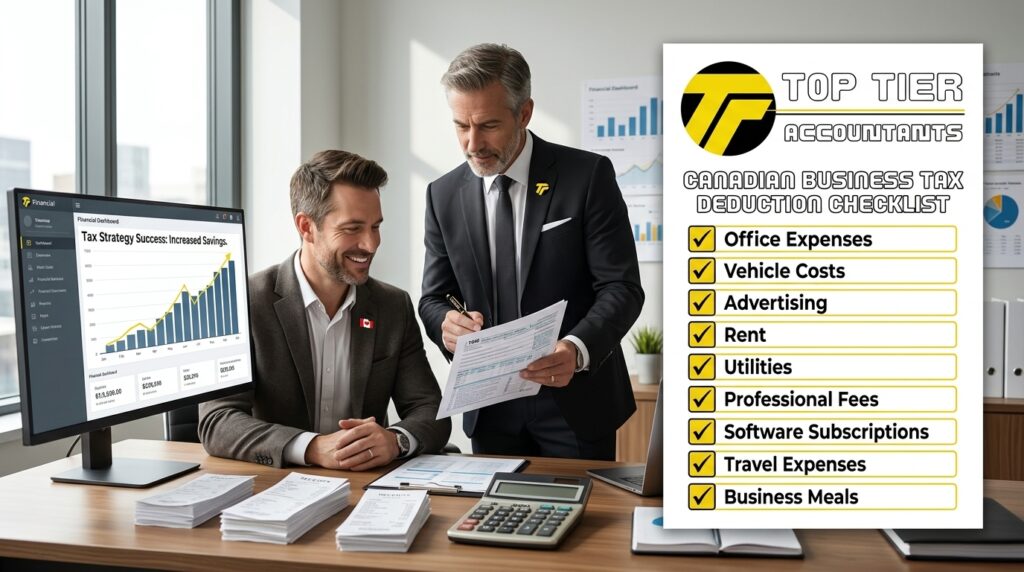
Expenses You Cannot Deduct
While many expenses qualify for deductions, certain costs are not allowed.
Examples include:
- Personal expenses unrelated to the business
- Life insurance premiums (with limited exceptions)
- Capital assets deducted incorrectly
- Excessive or unreasonable spending
Understanding these limitations helps businesses avoid penalties or audits.
Conclusion
Understanding tax-deductible expenses for small businesses in Canada can dramatically improve your Financial Health. Every dollar deducted reduces your taxable income, meaning you keep more of the revenue you worked hard to earn.
The key principle is simple: if an expense is incurred to earn business income and is reasonable, it is likely deductible. By tracking expenses carefully, maintaining proper records, and understanding the categories of deductions available, business owners can maximize their tax efficiency.
Smart tax planning isn’t about avoiding taxes—it’s about using the tax system correctly to support business growth. When used strategically, deductions can free up cash flow, support reinvestment, and help your business scale faster.
If you’re unsure whether an expense qualifies, consulting a professional accountant is always a wise move. The right advice can help you stay compliant while ensuring you claim every legitimate deduction available.
FAQs
1. What is the most common tax deduction for small businesses in Canada?
The most common deductions include advertising, office supplies, rent, utilities, internet costs, and professional fees. These are standard operating expenses for most businesses.
2. Can I deduct my home internet if I run a business from home?
Yes, but only the portion used for business activities. If 40% of your internet usage is business-related, you can typically deduct 40% of the cost.
3. Are meals with clients tax deductible in Canada?
Yes, but usually only 50% of meal and entertainment expenses are deductible.
4. Can I deduct a laptop or computer for my business?
Yes, but it is usually treated as a capital asset and deducted gradually using capital cost allowance.
5. Do I need receipts for every business expense?
Yes. The CRA requires documentation such as receipts, invoices, or bank records to support expense claims.
Post a comment
Related Posts

September 19, 2026
CRA Record-Keeping Requirements in Canada: How Long Should You Keep Business Documents?
Why CRA Record Keeping Matters Good record keeping is one of the most important responsibilities…

September 19, 2026
Corporate Tax Planning Mistakes That Could Cost Canadian Business Owners Thousands
Canadian business owners often focus on increasing revenue, controlling expenses, and finding new customers. Tax…

September 19, 2026
Corporate Tax Instalments in Canada: How to Calculate and Avoid CRA Interest
For many Canadian business owners, corporate tax instalments can feel confusing. You make payments throughout…

September 19, 2026
Canadian-Controlled Private Corporation (CCPC): Tax Benefits You Should Know
A Canadian-Controlled Private Corporation (CCPC) can be one of the most valuable structures available to…