

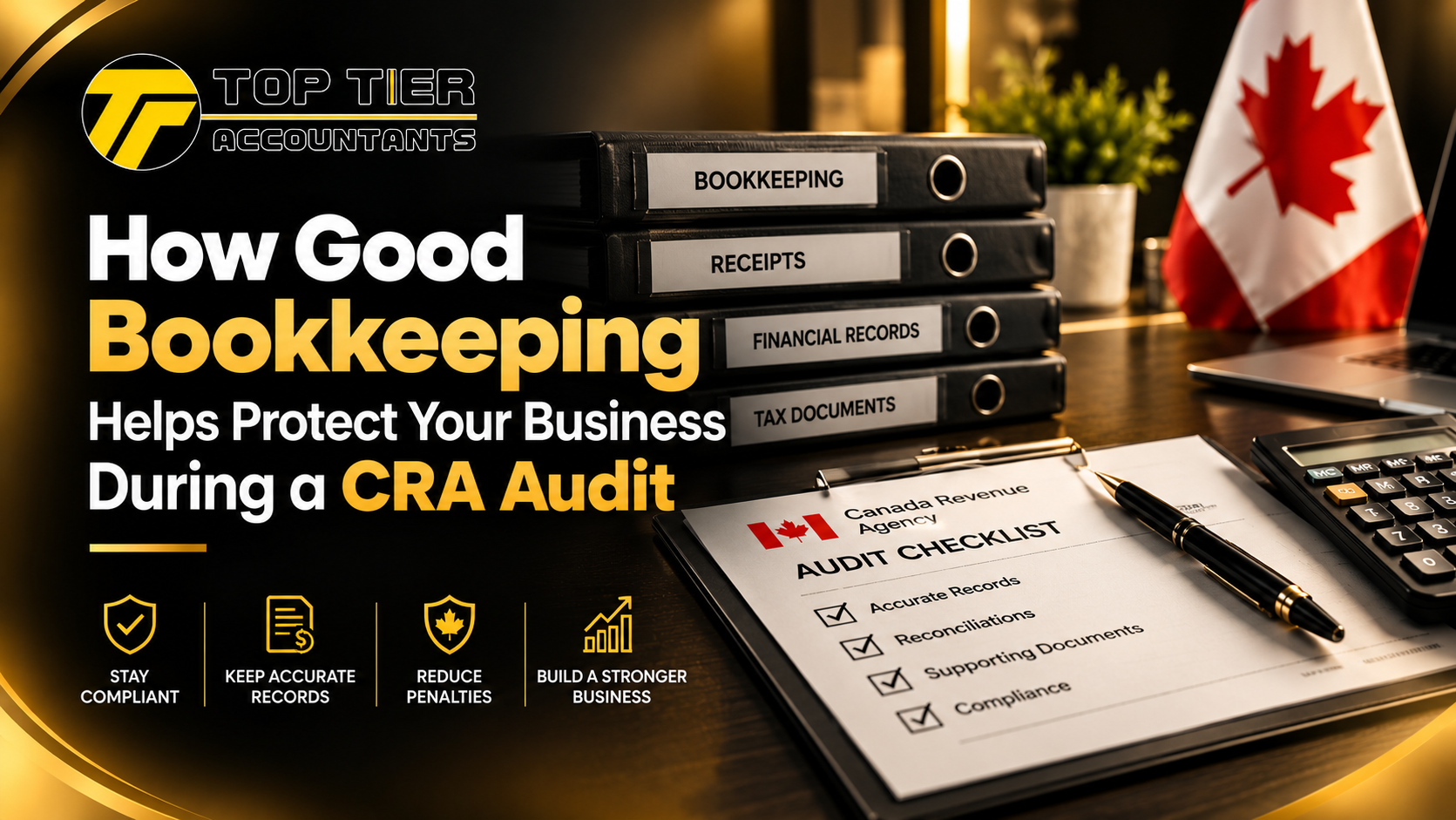
A CRA audit can feel stressful for any business owner. Suddenly, records that seemed like routine paperwork—receipts, invoices, bank statements, payroll information, expense reports, and tax filings—become extremely important. But here is the good news: when your bookkeeping is accurate and organized throughout the year, an audit does not have to become a financial nightmare. Instead, your records can act like a clear map showing the Canada Revenue Agency (CRA) exactly how your business operates and how the numbers on your tax return were calculated.
The CRA explains that business audits involve examining books and records to determine whether they support the amounts reported on tax returns. That means good bookkeeping is not simply an administrative task. It is one of the strongest forms of protection a business owner can have when questions arise about income, expenses, GST/HST, or other tax matters.
Why Bookkeeping Matters During a CRA Audit
Think of your bookkeeping as the financial history of your business. Every sale, purchase, payment, reimbursement, and business expense leaves a trail. If that trail is complete and organized, you can usually explain where the numbers in your tax return came from. If the records are scattered across emails, bank accounts, paper folders, spreadsheets, and forgotten receipts, answering the CRA’s questions can become much harder.
The CRA states that businesses are required to keep records supporting their income and expense claims. These records can include invoices, receipts, contracts, bank statements, ledgers, journals, financial statements, and other supporting documents. Good bookkeeping brings these pieces together so that your financial statements and tax returns are supported by documentation rather than estimates or memory.
What the CRA Looks for During an Audit
During a business audit, the CRA may examine business records such as ledgers, journals, invoices, receipts, contracts, and bank statements. Depending on the circumstances, personal records and records belonging to related individuals or entities may also be reviewed.
This is why consistency matters. If your accounting system shows $150,000 in sales, your invoices, deposits, payment records, and tax filings should tell a consistent story. The same principle applies to expenses. If you claim a business expense, you should be able to explain what it was, why it was incurred, and provide documentation supporting it.
Accurate Records Support Your Tax Return
One of the biggest advantages of good bookkeeping is that it creates a direct connection between your day-to-day transactions and your tax return. Instead of trying to reconstruct the year when the CRA asks questions, you already have organized records showing how your figures were calculated.
The CRA says complete and organized records can help identify sources of income and support tax deductions and GST/HST input tax credits. For a business owner, that means bookkeeping can protect you in two directions: it can help demonstrate that you reported the right amount of income, while also supporting legitimate expenses and credits you claimed.
Connecting Income to Source Documents
Imagine that the CRA asks you to explain a particular deposit appearing in your business bank account. With good bookkeeping, you can quickly trace that deposit back to a customer invoice and payment record. Without proper records, you may spend hours trying to determine where the money came from.
A well-maintained accounting system makes this process much easier. Your invoices, deposits, sales records, and bank reconciliation should work together like connected pieces of a puzzle. When those pieces fit, your financial story becomes much easier to understand.
Organized Expenses Can Protect Your Deductions
Business expenses can be an important part of calculating taxable income, but claiming an expense without adequate supporting documentation can create problems. Good bookkeeping means recording expenses consistently and retaining the documents that support them.
The CRA specifically notes that complete records can help businesses remember expenses and input tax credits they may be entitled to claim. At the same time, if records do not support your claims during an audit, those claims may be disallowed.
Receipts, Invoices, and Bank Statements
A strong bookkeeping system should make it easy to connect an expense to its supporting documentation. Depending on the transaction, this might include a supplier invoice, receipt, contract, bank statement, credit card statement, or other relevant record.
The goal is not simply to collect paperwork. The goal is to maintain a clear audit trail. The CRA describes an audit trail as information that allows the sequence of events surrounding a business transaction to be recreated from supporting documents through the summarized financial accounts.
Good Bookkeeping Helps With GST/HST
For businesses registered for GST/HST, accurate bookkeeping becomes even more important. Sales, collected GST/HST, purchases, and eligible input tax credits need to be recorded properly so that the amounts reported on GST/HST returns can be supported.
If the CRA reviews your GST/HST records, organized bookkeeping can help demonstrate how your reported figures were calculated. Rather than searching through months of transactions, you can provide a structured record of sales and purchases along with the relevant supporting documents.
Tracking Input Tax Credits
Input tax credits can reduce the GST/HST a business has to remit when eligible. Proper bookkeeping helps identify these amounts and retain the documentation needed to support them.
This is particularly valuable during an audit because the CRA may ask for evidence behind the amounts claimed. Good records allow you to move from “I believe this is correct” to “Here is the transaction and here is the documentation supporting it.”
A Clear Audit Trail Makes Reviews Easier
Modern businesses often use cloud accounting, point-of-sale systems, e-commerce platforms, payment processors, and digital invoicing. These systems can generate large amounts of useful information, but only if the records are properly maintained.
The CRA states that electronic records must be accessible and readable, and its guidance specifically recognizes the importance of maintaining audit trails for electronic transactions.
Electronic Bookkeeping and Digital Records
Digital bookkeeping can make an audit considerably more manageable because transactions can often be searched, sorted, reconciled, and traced quickly. However, simply using accounting software does not automatically guarantee good records. Your system still needs accurate entries, proper backups, and supporting documentation.
The CRA also states that businesses remain responsible for maintaining adequate records even when bookkeeping or accounting functions are outsourced to a third party.
Separate Business and Personal Finances
Mixing personal and business transactions can make bookkeeping unnecessarily complicated. When business and personal expenses flow through the same accounts, it becomes harder to determine which transactions genuinely relate to business activities.
Maintaining separate business banking and credit accounts can create a much cleaner financial trail. It also makes monthly reconciliation easier and helps your accountant understand the actual financial position of your company.
A clean separation does not guarantee that an audit will have no questions, but it can make answering those questions much easier.
How Long Should Business Records Be Kept?
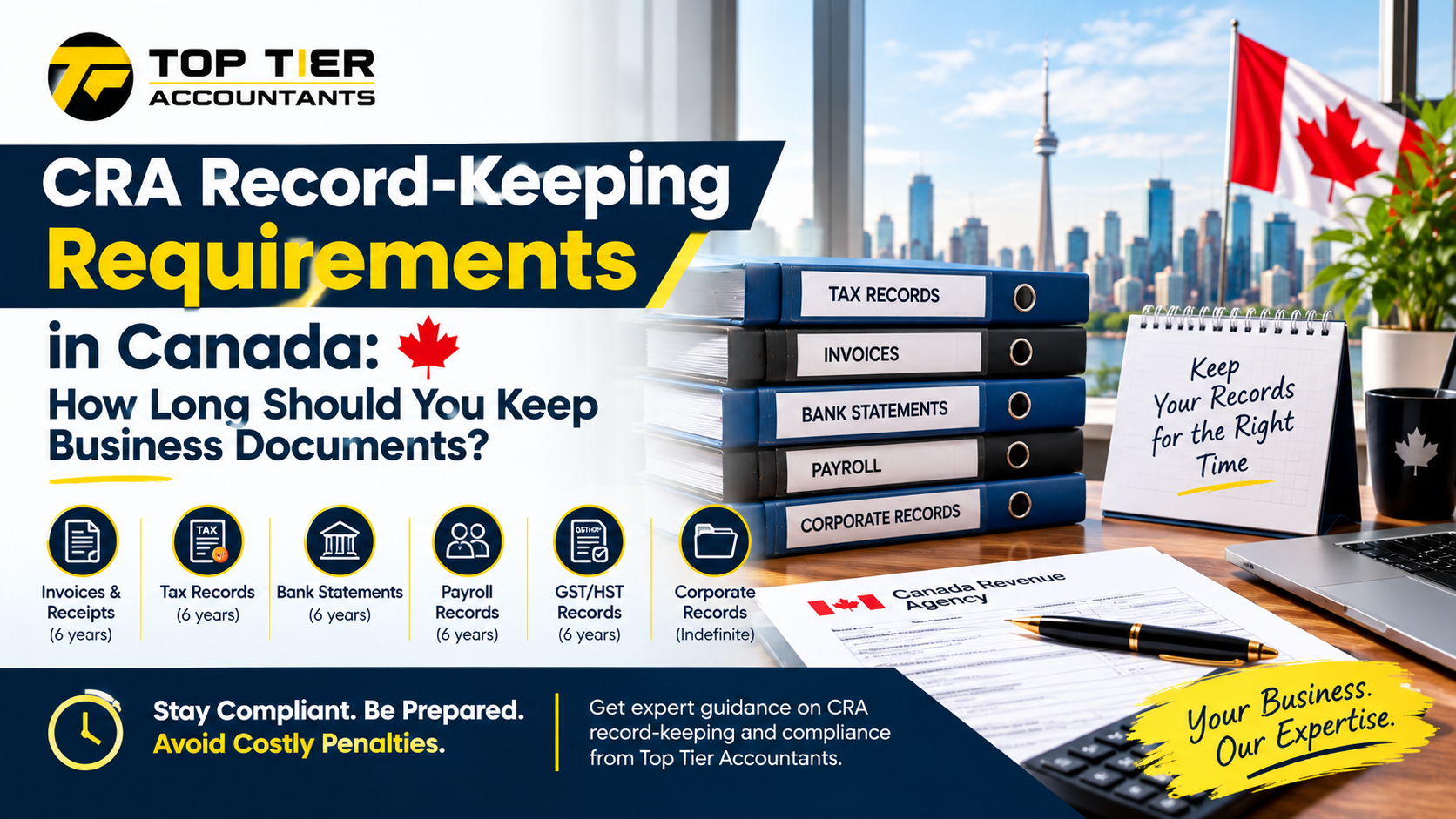
Good bookkeeping is not only about recording today’s transactions. You also need to preserve historical records. CRA guidance generally requires businesses to retain relevant books, records, and supporting documents for six years from the end of the applicable tax year, subject to specific exceptions and rules.
That means deleting old accounting files simply because the year has passed can be a serious mistake. Businesses should have a sensible record-retention and backup system so that important documents remain accessible when needed.
What Happens When Records Are Incomplete?
Incomplete bookkeeping can turn a straightforward CRA review into a much more difficult process. When the CRA cannot determine income or taxable revenues from the available records, it may use other methods to establish those amounts. The CRA also warns that unsupported claims may be disallowed.
This is where the difference between good bookkeeping and last-minute bookkeeping becomes obvious. Reconstructing an entire year’s transactions after receiving an audit notice is stressful, time-consuming, and potentially expensive. Keeping records properly from the beginning is usually far easier.
How Professional Bookkeeping Can Help
Professional bookkeeping gives business owners a structured system for recording transactions, reconciling accounts, organizing supporting documents, and monitoring financial information. More importantly, it can identify inconsistencies before they become bigger problems.
Preparing Before a CRA Audit
The best time to prepare for a CRA audit is before you receive an audit notice. Regular reconciliations, properly categorized expenses, organized receipts, accurate sales records, and reliable financial statements create a stronger foundation if the CRA ever asks questions.
At Top Tiers Accountant, the focus is on helping businesses maintain accurate and organized financial records so they can make better decisions and be better prepared when tax authorities request information. Good bookkeeping does not eliminate the possibility of an audit, but it can make the process more manageable and give you stronger documentation to support your tax filings.
Conclusion
Good bookkeeping is much more than entering numbers into accounting software. It creates a documented financial story that explains how your business earned money, spent money, calculated taxes, and arrived at the figures reported to the CRA.
When an audit happens, organized records can help you respond with confidence instead of scrambling to reconstruct transactions. The CRA expects businesses to maintain adequate records and supporting documents, and complete records can help support income, expenses, deductions, and GST/HST claims.
For business owners, the lesson is simple: don’t wait for a CRA audit to start caring about your books. Accurate bookkeeping throughout the year is one of the smartest ways to protect your business, reduce unnecessary stress, and stay prepared for whatever questions may come your way.
Frequently Asked Questions
1. Can good bookkeeping prevent a CRA audit?
No. Good bookkeeping does not prevent the CRA from selecting a business for an audit. However, organized records can make the audit process easier because you can provide documentation supporting your reported income and expenses.
2. What records should a business keep for a CRA audit?
Businesses may need records such as invoices, receipts, contracts, bank statements, ledgers, journals, financial statements, tax returns, and other documents supporting their transactions.
3. How long should Canadian businesses keep bookkeeping records?
Generally, relevant books, records, and supporting documents must be retained for six years from the end of the applicable tax year, although specific situations can have different requirements.
4. Does using an accountant make the business responsible for bookkeeping records?
Yes. Even when bookkeeping is outsourced, the business remains responsible for ensuring adequate records are maintained and made available to the CRA when required.
5. Can digital bookkeeping records be used during a CRA audit?
Yes. The CRA accepts electronic records when they are maintained in an appropriate, accessible, and readable format and can support the business’s tax obligations.
Post a comment
Related Posts
October 16, 2026
CRA Tax Audit Triggers in Canada: 10 Red Flags Small Businesses Should Avoid
Running a small business in Canada means keeping an eye on revenue, expenses, payroll, GST/HST,…
August 31, 2026
5 Bookkeeping Reports Every Canadian Business Owner Should Review Monthly
Why Monthly Financial Reporting Matters Running a Canadian business without regularly reviewing your bookkeeping reports…

August 8, 2026
How to Set Up a CRA Payroll Account for Your Business
What Is a CRA Payroll Account? If your Canadian business is hiring employees, one of…

August 8, 2026
How to Reduce Your Corporate Tax Legally in Canada (2026 Guide)
Every business owner wants to keep more of their hard-earned profits, but reducing your tax…