

Running a small business in Canada means keeping an eye on revenue, expenses, payroll, GST/HST, and taxes. But there is another responsibility business owners should not overlook: making sure their financial records can withstand a CRA tax audit. The Canada Revenue Agency examines business books and records to determine whether amounts reported on tax returns are properly supported.
A CRA audit does not automatically mean that a business owner has done something wrong. Businesses can be selected based on risk assessment, random selection, or specific compliance concerns. The smartest approach is therefore not to fear an audit but to maintain accurate records and avoid patterns that can create unnecessary questions.
What Is a CRA Tax Audit?
A CRA tax audit is an examination of a business’s financial information, accounting records, supporting documents, and tax filings. Depending on the situation, the CRA may examine ledgers, invoices, receipts, bank statements, contracts, and other documentation. The CRA can also request relevant personal or related-business records when they are connected to the business being reviewed.
For small businesses, good bookkeeping is one of the strongest forms of protection. CRA guidance requires businesses to keep records supporting their income and expense claims, including original documents such as invoices, receipts, deposit slips, contracts, and cash-register records.
How the CRA Selects Businesses for Review
There is no single “magic number” that automatically causes an audit. CRA compliance work can involve risk assessment, specific tax issues, and random selection. GST/HST returns and refund claims can also receive compliance attention.
That means business owners should focus less on trying to guess whether they will be audited and more on creating financial records that clearly explain every significant transaction.
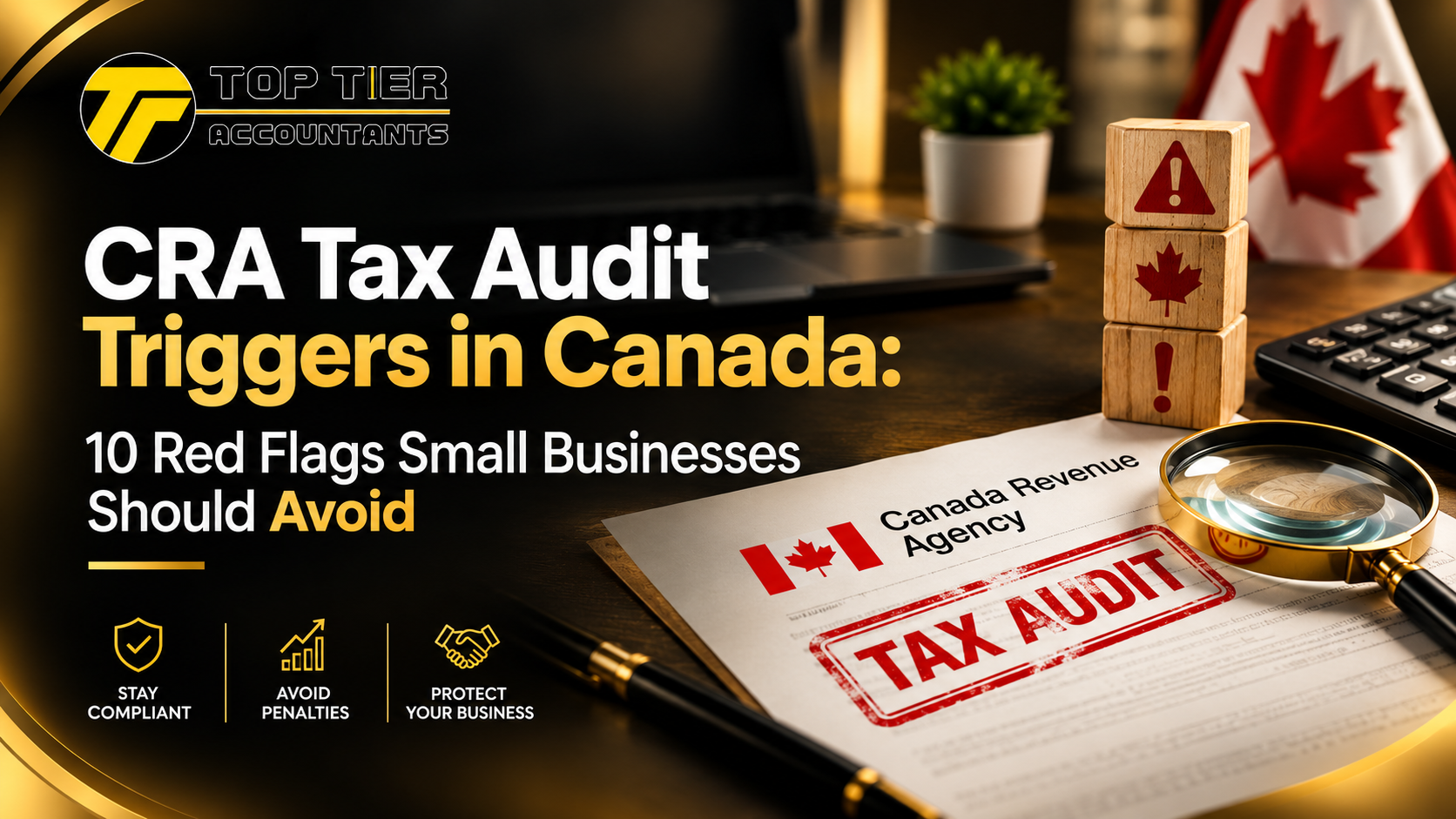
10 CRA Tax Audit Red Flags
1. Unreported or Underreported Business Income
One of the most serious problems is failing to report all business revenue. This can happen when cash sales are omitted, online payments are overlooked, or business income is not properly reconciled with bank deposits.
CRA guidance says businesses should record income from all sources and support income entries with documents such as invoices, receipts, deposit slips, and contracts.
2. Excessive or Unusual Business Expenses
Large deductions can attract attention when they appear inconsistent with the size or nature of the business. An expense is generally deductible when it is incurred for the purpose of earning business income, and claims should be supported by appropriate documentation.
The issue is not simply having high expenses. The bigger concern is being unable to explain why the expense was necessary and how it relates to business activity.
3. Missing Receipts and Poor Records
Imagine trying to explain hundreds of transactions without invoices, receipts, bank records, or supporting documents. That can quickly turn a simple review into a difficult situation.
CRA guidance states that businesses are required to maintain records supporting their income and expense claims. Poor documentation can result in claims being disallowed when the business cannot establish what a transaction represents.
4. Large GST/HST Refund Claims
Unusual GST/HST refund or input tax credit claims can create additional scrutiny. Businesses claiming input tax credits need appropriate purchase invoices or receipts to support those claims.
Your GST/HST records should make it easy to connect purchases, invoices, tax amounts, and the resulting claim.
5. Personal Expenses Claimed as Business Expenses
Using a company account does not automatically make an expense a business expense. Personal spending should not simply be categorized as business costs to reduce taxable income.
CRA guidance specifically states that personal expenses cannot be claimed as business expenses.
6. Significant Cash Transactions
Cash-heavy businesses can face additional challenges because cash sales are harder to trace than electronic payments. Restaurants, retail businesses, contractors, and other cash-intensive operations should maintain strong controls over sales and deposits.
CRA audit guidance specifically discusses the risk of understated cash sales and the importance of controls over cash transactions.
7. Inconsistent Financial Information
Your tax return, bookkeeping records, bank deposits, GST/HST filings, payroll information, and financial statements should tell the same basic story.
When numbers repeatedly conflict, questions can arise. A monthly reconciliation process can help identify discrepancies before they reach the CRA.
8. Repeated Business Losses
A business can absolutely experience legitimate losses, particularly during startup or expansion. However, repeated losses should be supported by clear records showing genuine business activity and a reasonable commercial purpose.
The key is being able to demonstrate that the business is actually operating to earn income rather than simply generating deductions.
9. Motor Vehicle and Home Office Claims
Vehicle and home-office expenses can be legitimate business deductions, but they require proper documentation and reasonable allocation between business and personal use.
Keep mileage records, receipts, dates, business purposes, and supporting calculations. The same principle applies to home-office costs: document how the expense relates to the business rather than estimating numbers without evidence.
10. Frequent Changes or Errors in Tax Filings
Repeated amendments, unexplained inconsistencies, incorrect GST/HST reporting, or recurring filing errors can create unnecessary compliance questions.
Before submitting a return, review revenue, expenses, GST/HST, payroll information, shareholder transactions, and supporting documents. A few hours of review can prevent months of unnecessary confusion later.
How to Reduce Your CRA Audit Risk
Keep a Clear Audit Trail
Modern accounting is more than entering numbers into QuickBooks or another accounting system. Your records should create a clear audit trail from the original transaction to the financial statements and tax return.
The CRA describes an audit trail as information that allows a transaction’s sequence of events to be reconstructed, including supporting documents, payment records, point-of-sale systems, inventory systems, and electronic records.
Review Your Tax Returns Before Filing
Before filing, compare your accounting records with bank statements, credit cards, GST/HST returns, payroll records, invoices, and supporting receipts. Look for unusual fluctuations and investigate unexplained differences.
Good bookkeeping is not simply about paying less tax. It is about being able to prove your numbers when someone asks questions.
Conclusion
The best way to prepare for a CRA tax audit is to build your business as though every important transaction may eventually need to be explained. Accurate income reporting, legitimate expenses, organized receipts, GST/HST documentation, reconciliations, and a reliable audit trail can make the process significantly easier.
If you are unsure whether your bookkeeping or tax records are audit-ready, getting professional accounting advice before filing can help identify problems early.
FAQs
1. Does a CRA audit mean my business did something wrong?
No. Businesses may be selected through risk assessment or random selection. An audit simply means the CRA wants to examine whether reported amounts are properly supported.
2. How long should Canadian businesses keep tax records?
CRA guidance generally requires GST/HST records to be kept for six years from the end of the relevant year, although certain circumstances can require longer retention.
3. Can cash businesses be audited by the CRA?
Yes. Cash transactions are legitimate, but businesses need reliable systems for recording sales, deposits, expenses, and supporting documentation.
4. Can I claim an expense without a receipt?
You should maintain appropriate supporting documentation for business expense claims. If a supplier does not provide a receipt, CRA guidance describes documenting key transaction details in your expense records.
5. How can an accountant help before a CRA audit?
An accountant can review bookkeeping, reconciliations, tax returns, GST/HST records, expense documentation, and other supporting information to identify inconsistencies before they become bigger problems.
Post a comment
Related Posts
October 16, 2026
How Good Bookkeeping Helps Protect Your Business During a CRA Audit
A CRA audit can feel stressful for any business owner. Suddenly, records that seemed like…
August 31, 2026
5 Bookkeeping Reports Every Canadian Business Owner Should Review Monthly
Why Monthly Financial Reporting Matters Running a Canadian business without regularly reviewing your bookkeeping reports…

August 8, 2026
How to Set Up a CRA Payroll Account for Your Business
What Is a CRA Payroll Account? If your Canadian business is hiring employees, one of…

August 8, 2026
How to Reduce Your Corporate Tax Legally in Canada (2026 Guide)
Every business owner wants to keep more of their hard-earned profits, but reducing your tax…