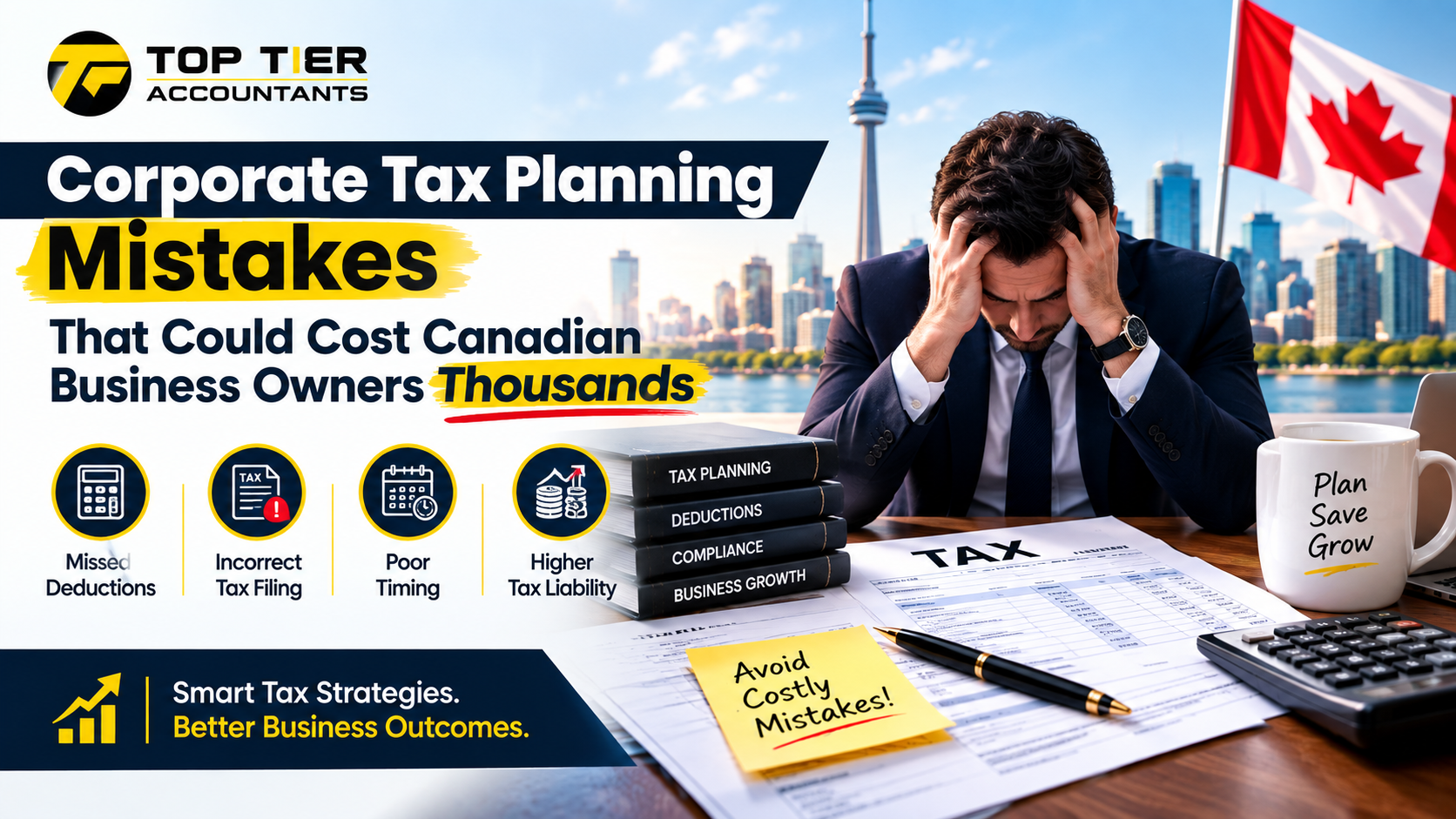
Running a business in Canada is exciting, but managing your corporate taxes can quickly become overwhelming if you don’t have the right systems in place. Every year, the Canada Revenue Agency (CRA) identifies common filing errors that lead to penalties, reassessments, missed deductions, and unnecessary audits. Many of these issues are completely avoidable with proper bookkeeping, tax planning, and professional guidance. The CRA also conducts thousands of limited corporate tax reviews annually to verify that businesses are reporting income and claiming deductions correctly.
At Top Tier Accountants, we’ve worked with businesses across Canada and have seen firsthand how small tax mistakes can become costly financial problems. Whether you’re a startup, contractor, consultant, retailer, or incorporated professional, avoiding these common mistakes can save your business both time and money.
Why Corporate Tax Compliance Matters
Corporate tax compliance is about much more than filing a return before the deadline. Accurate tax reporting helps protect your business from CRA penalties, improves financial decision-making, and builds credibility with lenders, investors, and potential buyers.
Late filings, inaccurate deductions, and poor documentation can trigger additional CRA reviews or reassessments. For example, corporations that file late may face a penalty of 5% of unpaid tax plus 1% for each complete month the return is late, up to 12 months, while most corporations are also required to file their T2 returns electronically.
- Missing the T2 Filing Deadline
One of the most common and expensive mistakes businesses make is filing their corporate tax return after the deadline. Your T2 Corporation Income Tax Return is generally due six months after your fiscal year-end, while any balance owing is usually due earlier depending on your corporation’s eligibility.
Missing these deadlines can result in penalties, interest charges, and cash flow problems. Setting reminders, maintaining updated accounting records, and working with a professional accountant throughout the year can help ensure your filing is completed accurately and on time.
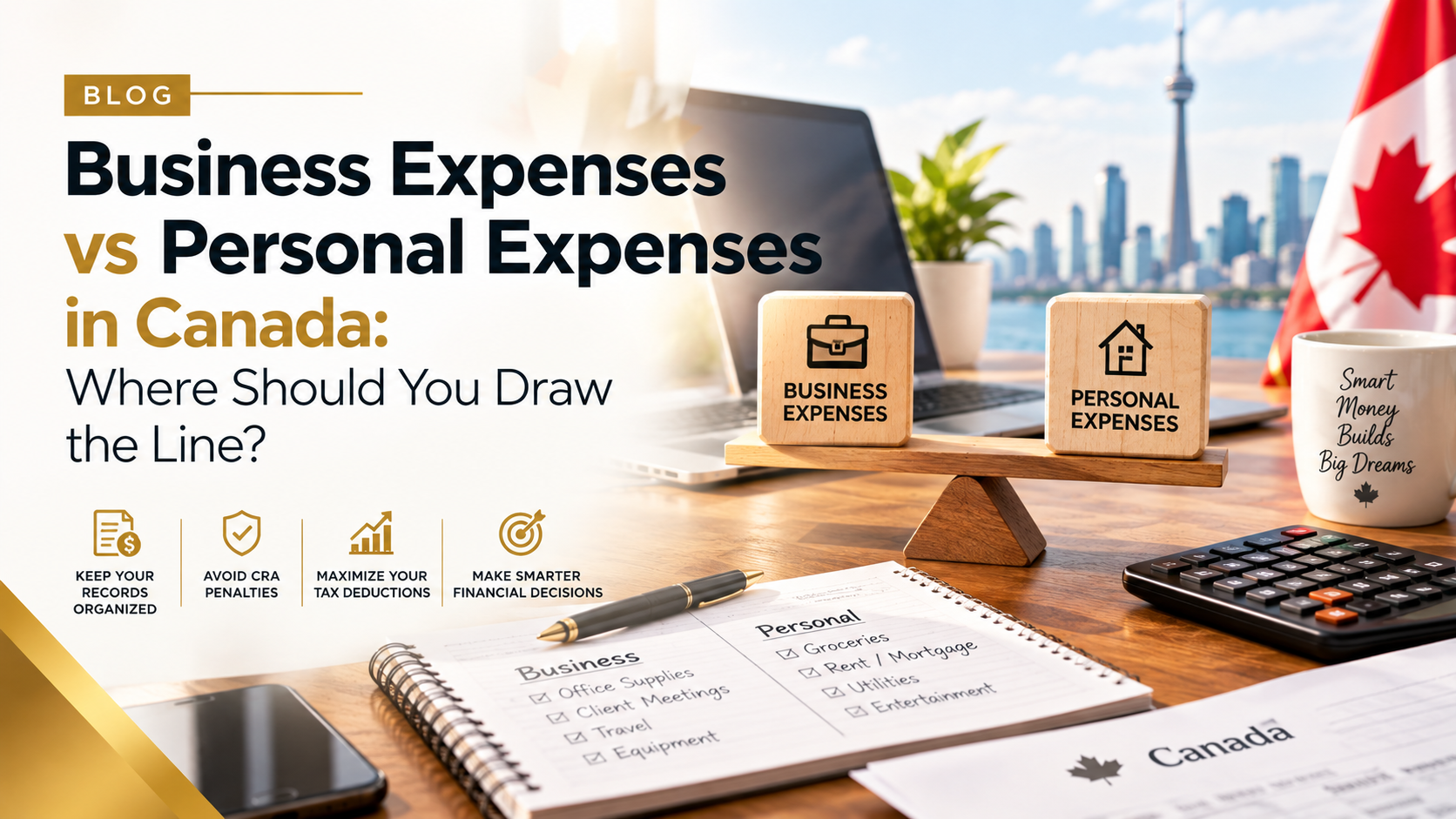
- Mixing Personal and Business Expenses
Using your business account for personal purchases—or vice versa—is one of the quickest ways to create bookkeeping problems. When expenses are mixed together, it becomes difficult to identify legitimate business deductions and accurately prepare financial statements.
Separate bank accounts and credit cards for business transactions make bookkeeping easier and provide a clearer audit trail. This simple habit also reduces the likelihood of CRA questions regarding unsupported or personal expenses. Tax professionals consistently identify this as one of the most common issues among small businesses.
- Poor Bookkeeping Throughout the Year
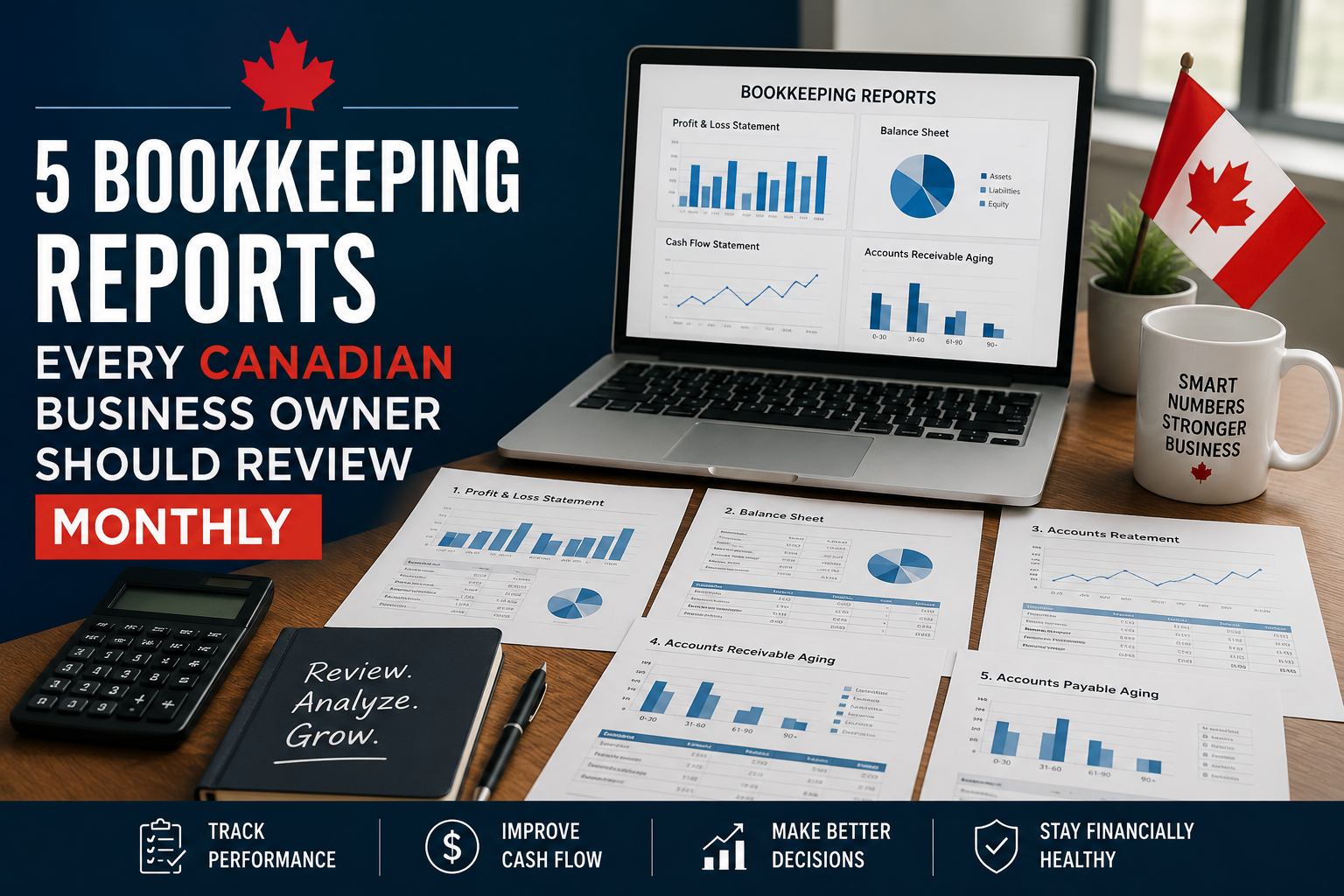
Waiting until tax season to organize receipts and update accounting records often leads to errors, missing transactions, and unnecessary stress. Poor bookkeeping can also result in overlooked deductions and inaccurate financial reporting.
Instead, reconcile your bank accounts monthly, maintain organized digital records, and regularly review your financial statements. Cloud accounting software combined with ongoing bookkeeping allows you to make informed business decisions while staying prepared for tax season.
- Missing Eligible Tax Deductions
Many businesses pay more tax than necessary simply because they fail to claim every eligible deduction. Common deductible expenses include office rent, employee wages, professional fees, advertising, business insurance, office supplies, and qualifying travel expenses.
The key is maintaining proper documentation for every claim. Without supporting invoices or receipts, even legitimate deductions may be denied during a CRA review. Good recordkeeping helps maximize savings while ensuring compliance with tax rules.
- Incorrect Salary vs. Dividend Planning
If you’re an incorporated business owner, deciding how to compensate yourself is an important tax planning decision. Choosing between salary, dividends, or a combination of both affects personal taxes, CPP contributions, RRSP contribution room, and corporate tax planning.
There is no universal solution because every business owner’s financial situation is different. Reviewing compensation strategies before year-end allows you to optimize tax efficiency while supporting your long-term financial goals.
- Ignoring GST/HST Reconciliation
A common issue identified during CRA reviews is when GST/HST returns do not match the revenue reported on the corporate income tax return. These discrepancies often result from bookkeeping errors, omitted sales, or incorrect reporting periods.
Regular reconciliation between your accounting records, GST/HST filings, and corporate income ensures consistency and reduces the risk of CRA inquiries. Monthly or quarterly reviews can identify discrepancies before they become larger compliance issues.
- Failing to Keep Supporting Documents
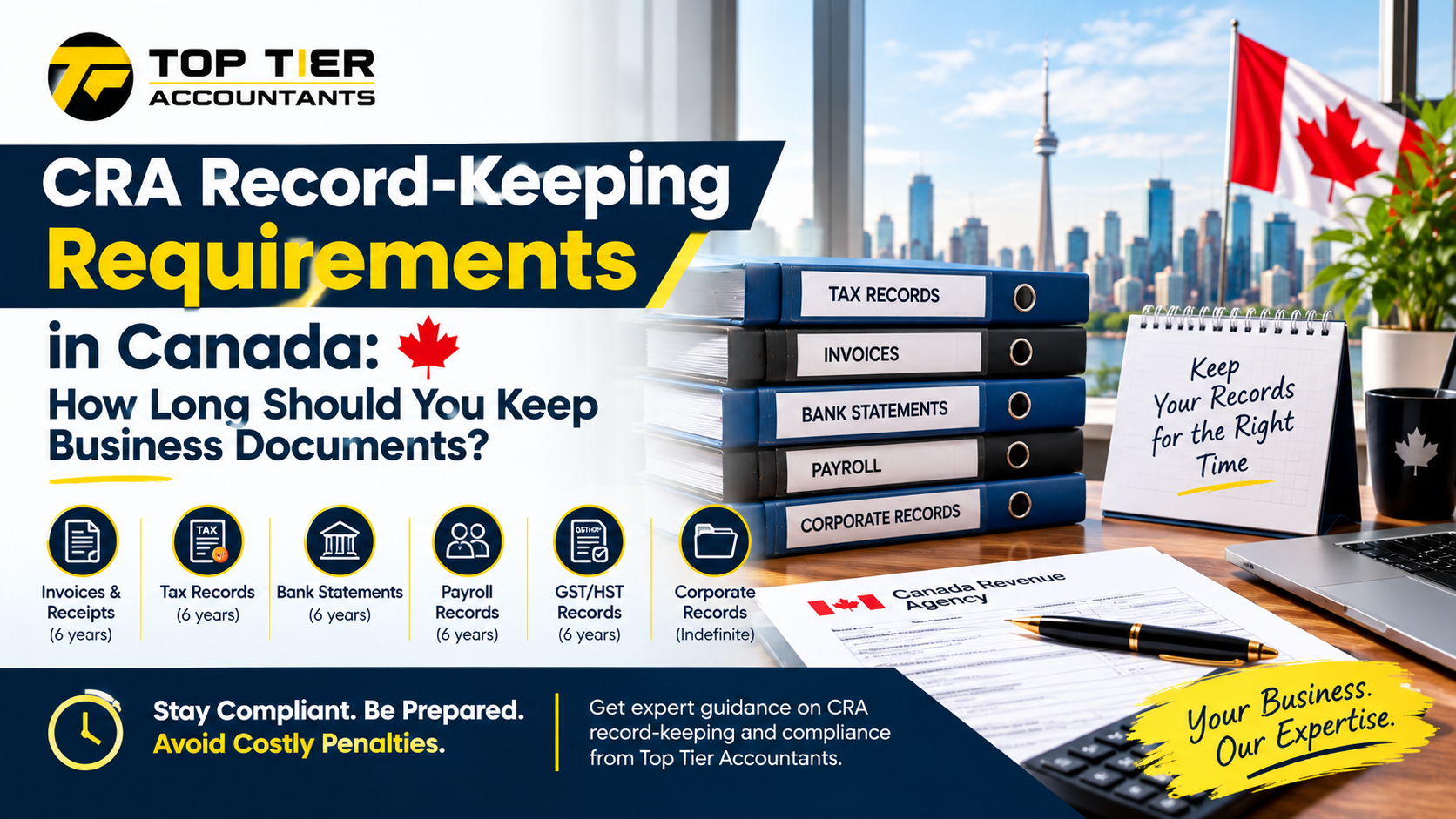
Receipts, invoices, payroll records, contracts, and bank statements are more than administrative paperwork—they provide the evidence needed to support your tax return. If the CRA requests documentation and it cannot be produced, deductions or credits may be denied.
Developing a digital document management system ensures important records remain organized and accessible throughout the required retention period. Proper documentation also speeds up year-end accounting and reduces stress during CRA reviews.
- Misclassifying Capital and Operating Expenses
Not every purchase can be deducted immediately. Some assets, such as vehicles, machinery, equipment, and computer systems, may need to be treated as capital assets and claimed over time through Capital Cost Allowance (CCA) rather than deducted as current operating expenses.
Incorrect classification can lead to reassessments and adjustments by the CRA. Professional tax advice helps ensure assets are recorded correctly and eligible deductions are maximized within CRA guidelines.
- Not Planning for Year-End Tax Savings
Many businesses focus on taxes only after the fiscal year has ended. Unfortunately, most tax-saving opportunities require action before year-end.
Reviewing your financial statements several months before your fiscal year closes allows you to evaluate equipment purchases, shareholder compensation, business expenses, and available tax credits. Proactive planning often results in lower tax liabilities and improved cash flow.
- Waiting Until Tax Season to Hire an Accountant
An accountant provides much more than tax return preparation. Working with a trusted accounting firm throughout the year gives you access to ongoing bookkeeping support, financial reporting, tax planning, payroll assistance, and strategic business advice.
Instead of reacting to tax problems, your accountant can help prevent them before they occur. Businesses that seek professional guidance early often experience fewer filing errors, stronger financial reporting, and greater confidence when dealing with CRA requirements.
How Top Tier Accountants Can Help
At Top Tier Accountants, we help Canadian businesses simplify corporate tax compliance while identifying opportunities to reduce tax legally and efficiently. Our experienced professionals provide comprehensive accounting and tax solutions tailored to businesses of all sizes.
Our services include:
- Corporate Tax Return (T2) Preparation & Filing
- Bookkeeping Services
- Financial Statements
- GST/HST Returns
- Payroll Services
- Cash Flow Management
- Tax Planning & Compliance
- CRA Representation
- Internal Control & Advisory
- Business Incorporation Services
Whether you’re launching a new corporation or managing an established business, our team ensures your tax obligations are handled accurately, professionally, and on time.
Conclusion
Corporate tax mistakes are rarely intentional, but they can be expensive. Late filings, poor bookkeeping, missing documentation, and weak tax planning often result in avoidable penalties and missed opportunities. By maintaining organized financial records, reviewing your tax strategy throughout the year, and seeking professional advice before deadlines arrive, your business can stay compliant while improving profitability.
Partnering with experienced professionals gives you peace of mind and allows you to focus on what matters most—growing your business. At Top Tier Accountants, we’re committed to helping Canadian businesses navigate corporate taxation with confidence, accuracy, and long-term success.
Frequently Asked Questions
- When is a corporate tax return due in Canada?
A T2 Corporate Tax Return is generally due within six months after your corporation’s fiscal year-end.
- Can an inactive corporation avoid filing a T2 return?
No. Most resident corporations must file a T2 return even if they had no income or business activity during the year.
- What is the most common corporate tax mistake?
Late filing, poor bookkeeping, and mixing personal and business expenses are among the most common issues.
- How long should businesses keep tax records?
Businesses should generally retain supporting records for the period required by the CRA, which is commonly at least six years after the relevant tax year.
- Why should I hire Top Tier Accountants?
Our team provides expert corporate tax preparation, bookkeeping, financial reporting, and proactive tax planning to help your business remain compliant while maximizing available tax-saving opportunities.