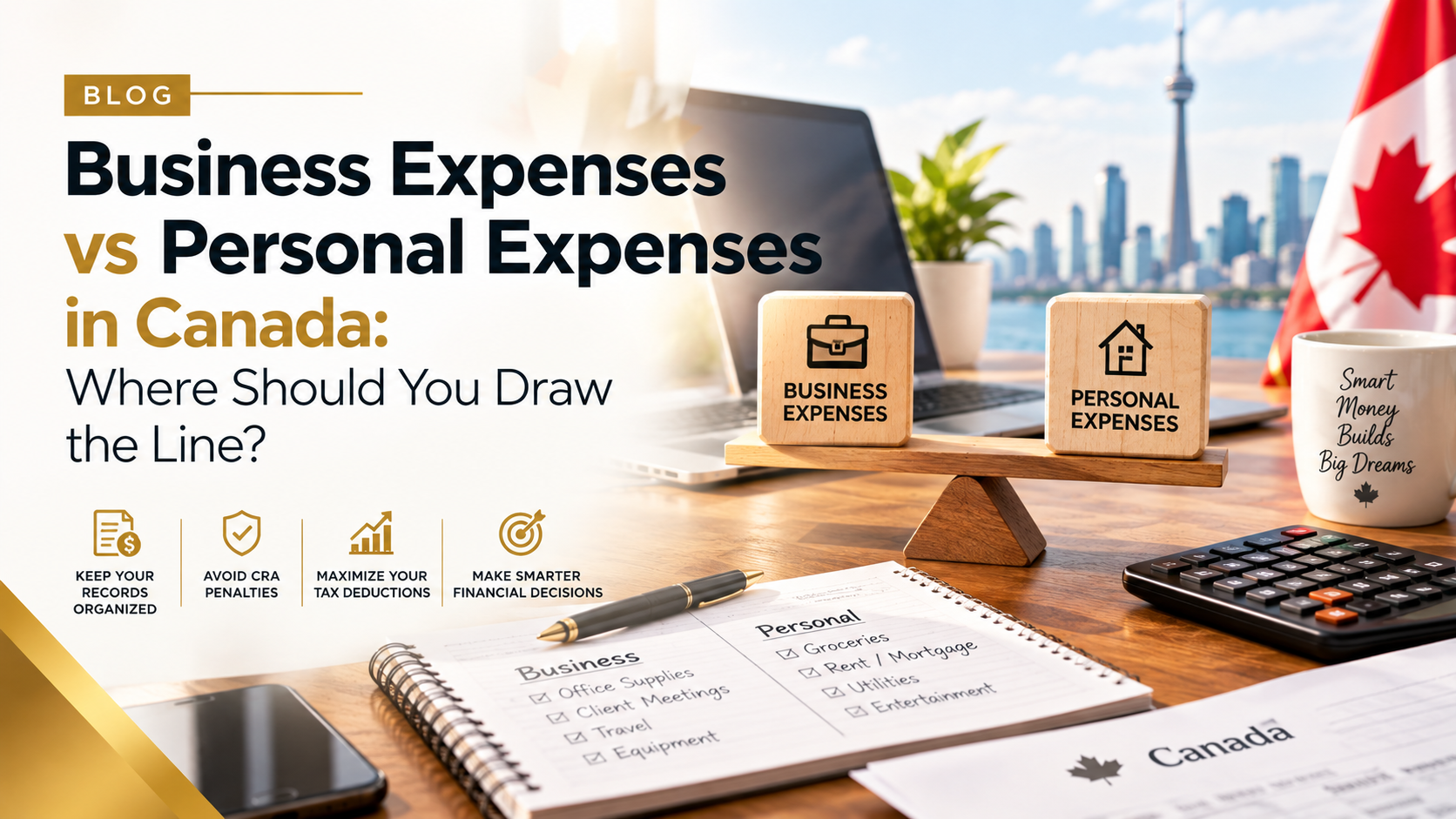



Understanding Corporate Taxes in Canada
What Is Corporate Income Tax?
If you operate a business in Canada through a corporation, you are required to pay corporate income tax on the profits your company earns during the fiscal year. Corporate tax functions differently from personal income tax because the corporation is treated as a separate legal entity. This means your company files its own tax return, pays taxes on its profits, and may distribute remaining earnings to shareholders in the form of dividends.
In Canada, corporate taxation is structured in two layers: federal tax and provincial or territorial tax. Both levels of government collect taxes, which means the total corporate tax rate you pay is a combination of these two components. The federal government sets base tax rates that apply across the country, while provinces and territories add their own rates depending on where your business operates.
For small business owners, understanding corporate tax isn’t just about compliance—it’s about Strategic Financial Planning. The structure of Canada’s tax system actually provides incentives for small businesses to incorporate and grow. For example, corporations may benefit from reduced tax rates, tax deferral opportunities, and additional deductions that sole proprietors don’t receive.
Think of corporate taxation like a layered cake. The federal government provides the base layer, provinces add their own topping, and special deductions like the Small Business Deduction act as icing that can significantly reduce the final tax bill. When business owners understand how these layers interact, they can legally minimize taxes and reinvest more profits back into their company.
Understanding this system is particularly important in 2026 because tax rules continue to evolve, and staying informed can mean the difference between paying the minimum required tax or overpaying thousands of dollars unnecessarily.
Who Needs to Pay Corporate Tax in Canada?
Corporate tax in Canada applies primarily to businesses that are incorporated, meaning they have registered as a corporation either federally or provincially. Once a business becomes incorporated, it must file a T2 corporate income tax return every year, even if it has no taxable income. This requirement applies to both active businesses and inactive corporations.
There are several types of corporations operating in Canada, but one of the most important categories for small businesses is the Canadian-Controlled Private Corporation (CCPC). This designation is crucial because it unlocks significant tax advantages, including access to the Small Business Deduction and lower tax rates on the first portion of business income.
A CCPC is generally defined as a private corporation that is controlled by Canadian residents and not publicly traded. Many small businesses, startups, and professional corporations fall into this category. Because of government incentives designed to encourage entrepreneurship, CCPCs often pay significantly lower tax rates compared to large corporations.
Corporations operating in Canada must pay tax on worldwide income if they are considered resident in Canada. Meanwhile, non-resident corporations pay tax only on income generated from Canadian sources or from conducting business within the country.
For entrepreneurs deciding whether to incorporate, the tax advantages can be substantial. Personal income tax rates in Canada can exceed 45% in higher brackets, whereas corporate tax rates for small businesses may be significantly lower. This difference allows business owners to retain more earnings within the corporation and reinvest those funds for future growth.
Federal Corporate Tax Rates in Canada (2026)
General Corporate Tax Rate
The federal corporate tax rate in Canada is 15% on taxable income after standard reductions and abatements. This rate applies to most corporations once they exceed the small business income threshold or if they are not eligible for small business deductions.
However, the federal system is slightly more complex than it appears at first glance. The basic federal tax rate technically starts at 38%, but several reductions bring it down significantly. The federal tax abatement reduces the rate to 28%, and the general tax reduction lowers it further to the final 15% net rate for most corporations.
This 15% rate represents only the federal portion of corporate tax. Provinces and territories apply additional tax rates that typically range from 8% to 16%, depending on the location of the business. When combined with federal tax, total corporate tax rates usually fall between 23% and 31% for general corporations.
For example, a corporation operating in Ontario might pay:
| Tax Component | Rate |
| Federal Corporate Tax | 15% |
| Ontario Corporate Tax | 11.5% |
| Combined Rate | 26.5% |
This combined system means that location matters. Two companies earning identical profits could pay different amounts of tax depending on which province they operate in.
Small Business Tax Rate for CCPCs
Small businesses in Canada receive a significant advantage through the Small Business Deduction (SBD). This deduction reduces the federal tax rate from 15% to 9% on the first $500,000 of active business income earned by eligible Canadian-Controlled Private Corporations.
That reduction may seem small at first glance, but it represents a 40% decrease in federal tax for qualifying small businesses. The savings can be dramatic. For example, a company earning $500,000 in taxable income would save approximately $30,000 in federal taxes compared to paying the full 15% rate.
Provincial governments also offer reduced tax rates for small businesses. These provincial rates typically range between 0% and 3.2%, depending on the province. When combined with the federal 9% rate, small business tax rates in Canada generally fall between 9% and 12%, which is extremely competitive compared to many other developed countries.
For instance, in Ontario the combined small business tax rate is approximately 12.2%, while in Alberta it can be around 11%. These lower rates are designed to encourage entrepreneurship and allow smaller companies to reinvest profits back into growth.
Provincial and Territorial Corporate Tax Rates
Why Corporate Tax Rates Vary by Province
Canada’s corporate tax system is decentralized, meaning each province and territory has the authority to set its own tax rates. This structure creates regional differences in corporate taxation, which can influence where businesses choose to operate or expand.
Provincial tax rates exist because provinces need revenue to fund infrastructure, healthcare, education, and economic development programs. By adjusting corporate tax rates, provinces can attract investment and encourage business growth in their region.
For example, provinces with strong economic competition often offer Lower Corporate Tax Rates to attract businesses. Alberta is a well-known example of this strategy. Lower taxes can encourage companies to relocate operations, hire employees, and invest in new facilities within the province.
However, tax rates are only one factor in choosing where to operate a business. Other considerations include workforce availability, logistics infrastructure, access to customers, and local regulations. Still, corporate tax differences can significantly influence strategic planning for growing businesses.
Combined Federal and Provincial Rates (Examples)
Because corporate tax in Canada combines federal and provincial components, the final tax rate depends heavily on location. Below is a simplified comparison of combined small business and general corporate tax rates across selected provinces in 2026.
| Province | Small Business Rate | General Corporate Rate |
| Ontario | 12.2% | 26.5% |
| Alberta | 11% | 23% |
| British Columbia | 11% | 27% |
| Manitoba | 9% | 27% |
| Nova Scotia | 12.5% | 29% |
| Prince Edward Island | 12.5% | 31% |
These rates illustrate how dramatically taxes can vary depending on geography. For small businesses operating on tight margins, even a few percentage points in tax differences can represent thousands of dollars in savings each year.

Small Business Deduction (SBD) Explained
Eligibility Requirements for the SBD
The Small Business Deduction is one of the most valuable tax benefits available to Canadian entrepreneurs. This deduction allows qualifying corporations to pay significantly lower tax rates on their first portion of business income.
To qualify for the SBD, a corporation must generally meet several criteria:
- It must be a Canadian-Controlled Private Corporation
- It must earn active business income
- Its taxable income must fall within the small business limit
The SBD encourages small businesses to reinvest their earnings into expansion, hiring employees, and purchasing equipment. Without this deduction, many startups would face significantly higher tax burdens during their early growth stages.
The $500,000 Small Business Limit
The Small Business Deduction applies only to the first $500,000 of active business income earned by a corporation each year. Income above that threshold is taxed at the general corporate tax rate.
This threshold is known as the small business limit, and it is shared among associated corporations. For example, if two corporations are owned by the same group of shareholders, they may have to split the $500,000 limit between them.
Understanding how this limit works is critical for tax planning. Strategic business structures, holding companies, and income management strategies can help maximize the benefit of the Small Business Deduction.
Corporate Tax Types Every Business Owner Should Know
Active Business Income
Active business income refers to profits earned from the core operations of your business. This includes revenue generated from selling products, providing services, or operating your primary business activities.
Active business income is important because it qualifies for the Small Business Deduction, allowing corporations to benefit from lower tax rates. For many small businesses, most income falls into this category.
Examples include:
- Consulting revenue
- Product sales
- Professional services
- Construction or contracting work
Because this type of income receives preferential tax treatment, proper accounting classification is critical.
Investment Income and Passive Income
Investment income within a corporation is taxed differently from active business income. Passive income typically includes earnings from investments such as interest, dividends, rental income, and capital gains.
In Canada, passive income inside a corporation can face tax rates exceeding 38% federally before refunds, which is significantly higher than the small business rate. This policy exists to discourage corporations from using their structure purely as an investment shelter rather than operating an active business.
Passive income can also affect eligibility for the Small Business Deduction. If a corporation earns more than $50,000 in passive income annually, the small business limit may begin to decrease, reducing the amount of income eligible for lower tax rates.
Key Tax Planning Strategies for Small Businesses
Income Splitting and Salary vs Dividends
One of the most common tax planning strategies for incorporated business owners involves choosing between Salary and Dividends when paying themselves.
A salary is considered employment income and is deductible for the corporation. Dividends, on the other hand, are paid from after-tax profits and are taxed differently at the shareholder level.
Choosing the right mix of salary and dividends can reduce overall taxes while optimizing retirement savings contributions such as RRSPs.
Maximizing Tax Deductions
Another critical strategy involves maximizing legitimate business deductions. Canadian corporations can deduct a wide range of expenses, including:
- Office rent
- Employee wages
- Marketing and advertising
- Equipment purchases
- Professional fees
These deductions reduce taxable income, which ultimately lowers corporate tax liability.
Common Corporate Tax Mistakes Small Businesses Make
Many small businesses accidentally overpay taxes due to avoidable mistakes. One common error is failing to track deductible expenses properly. Without organized bookkeeping, companies may miss valuable deductions that could significantly reduce taxable income.
Another frequent issue is misunderstanding eligibility for the Small Business Deduction. Some corporations unknowingly lose this benefit due to passive income thresholds or ownership structures.
Late filings and missed deadlines also create problems. Even corporations with no income must file annual tax returns, and failing to do so can result in penalties and interest charges.
Conclusion
Corporate tax in Canada may appear complicated at first, but understanding the basic structure can dramatically improve financial outcomes for small business owners. In 2026, the system continues to offer substantial benefits to Canadian-Controlled Private Corporations through reduced federal tax rates, provincial incentives, and the powerful Small Business Deduction.
With a federal small business tax rate of 9% and combined rates often around 11–12%, Canada remains one of the more competitive environments for small business taxation. However, taking full advantage of these benefits requires proper planning, accurate bookkeeping, and a clear understanding of how corporate taxes work.
For entrepreneurs who take the time to understand these rules or work with professional accountants the reward is clear: lower taxes, stronger cash flow, and more resources available to grow their business.
FAQs
1. What is the small business corporate tax rate in Canada for 2026?
The federal small business tax rate is 9% on the first $500,000 of active business income for eligible CCPCs, plus provincial tax rates that typically range from 0% to 3.2%.
2. What is the general corporate tax rate in Canada?
The federal general corporate tax rate is 15%, with provincial taxes added on top, creating combined rates between roughly 23% and 31% depending on the province.
3. Who qualifies for the Small Business Deduction?
Only Canadian-Controlled Private Corporations (CCPCs) earning active business income within the small business limit generally qualify for the deduction.
4. Do all corporations need to file a tax return in Canada?
Yes. Every corporation operating in Canada must file a T2 corporate tax return annually, even if it has no income.
5. How can small businesses legally reduce corporate taxes?
Businesses can reduce taxes through strategies such as claiming deductions, optimizing salary versus dividends, reinvesting profits, and working with tax professionals to plan ahead.
Post a comment
Related Posts
September 19, 2026
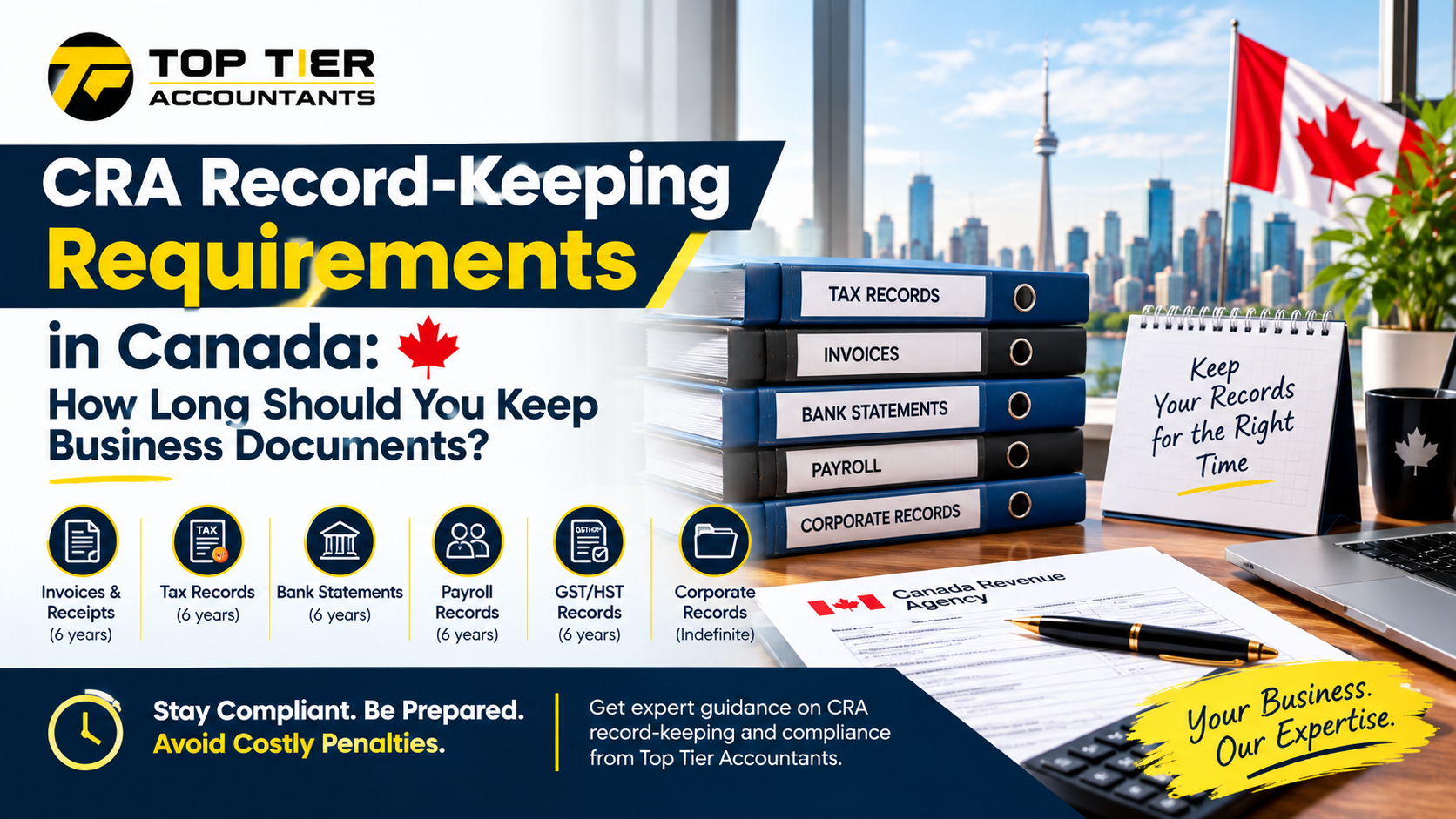
CRA Record-Keeping Requirements in Canada: How Long Should You Keep Business Documents?
Why CRA Record Keeping Matters Good record keeping is one of the most important responsibilities…
September 19, 2026
Corporate Tax Planning Mistakes That Could Cost Canadian Business Owners Thousands
Canadian business owners often focus on increasing revenue, controlling expenses, and finding new customers. Tax…
September 19, 2026
Corporate Tax Instalments in Canada: How to Calculate and Avoid CRA Interest
For many Canadian business owners, corporate tax instalments can feel confusing. You make payments throughout…
September 19, 2026
Canadian-Controlled Private Corporation (CCPC): Tax Benefits You Should Know
A Canadian-Controlled Private Corporation (CCPC) can be one of the most valuable structures available to…