



Running a business in Canada means dealing with taxes, payroll, and compliance requirements set by the federal government. One of the most important tools available to business owners is the CRA My Business Account, an online portal that allows companies to manage tax obligations directly with the Canada Revenue Agency. Without this account, handling business taxes becomes far more complicated and time-consuming.
Many entrepreneurs underestimate the importance of setting up their CRA business account early. They assume it’s only necessary once their company grows or begins earning significant revenue. In reality, creating this account from the start provides better control, transparency, and efficiency when dealing with government requirements. It acts like a digital command center where business owners can track taxes, submit returns, and communicate with the CRA in real time.
Think of the CRA Business account as the financial control panel for your company’s relationship with the Canadian government. Instead of juggling paperwork, waiting for mailed notices, or relying on outdated processes, everything becomes accessible online in one secure location. Whether you’re a startup founder, freelancer, or established corporation, having this account simplifies compliance and reduces financial risk.
This guide explains exactly why every business in Canada should have a CRA business account, how it works, and how it can help companies operate more efficiently while avoiding costly mistakes.
Understanding the CRA Business Account
What Is a CRA My Business Account?
The CRA My Business Account is a secure online service provided by the Canada Revenue Agency that allows business owners and authorized representatives to manage tax-related activities digitally. Through this portal, businesses can access program accounts such as GST/HST, payroll deductions, corporation income tax, and excise taxes.
Instead of submitting paperwork or calling CRA support lines, companies can log into the portal and perform tasks like filing returns, reviewing balances, making payments, and checking official correspondence. This digital system has become a central tool for modern businesses because it streamlines interactions with the tax authority.
Imagine trying to manage your company’s finances without online banking. You would constantly rely on physical statements and manual transactions. That’s exactly how business tax management would feel without the CRA business account. With it, entrepreneurs can monitor their financial obligations instantly and respond to issues before they escalate.
Another important feature is the ability to grant access to accountants or financial advisors. Business owners can authorize professionals to view and manage their account through the CRA’s representative system. This makes collaboration between companies and accounting firms much more efficient.
The Role of the Business Number (BN)
Before accessing a CRA business account, companies must obtain a Business Number (BN). This nine-digit identifier is issued by the Canada Revenue Agency and serves as the official identification for businesses dealing with government tax programs.
The BN functions similarly to a Social Insurance Number for individuals. It links your business to various government services and programs. Once a company receives its BN, additional program accounts can be attached to it depending on operational needs.
For example:
| Program Account | Purpose |
| GST/HST (RT) | Collect and remit sales taxes |
| Payroll (RP) | Manage employee deductions |
| Corporate Tax (RC) | File corporate income tax returns |
| Information Returns (RZ) | Submit specific tax reporting forms |
Each program account adds a specific code to the BN, creating a structured identification system for different tax responsibilities. This structure allows businesses to manage multiple tax programs under a single centralized account.
Without a BN and CRA business account, companies would struggle to interact with the CRA efficiently. The BN essentially acts as the gateway to all tax-related communication with the federal government.
Why the CRA Business Account Is Essential for Canadian Businesses
Centralized Tax Management
One of the biggest challenges for businesses is managing multiple tax obligations simultaneously. A typical Canadian company may need to handle Corporate Income Tax, payroll deductions, GST/HST filings, and information returns. Without a centralized system, tracking these responsibilities can become chaotic.
The CRA business account solves this problem by consolidating everything into one digital dashboard. Instead of logging into separate systems or maintaining manual records, business owners can view all their tax accounts in a single place.
This centralized approach provides several advantages:
- Better visibility into tax obligations
- Faster access to financial data
- Reduced administrative workload
- Easier communication with the CRA
For growing businesses, this centralized structure is particularly valuable. As operations expand, tax obligations become more complex. Having a single portal ensures that entrepreneurs always know where their business stands financially with the government.
Real-Time Access to Financial Information
Another major advantage of the CRA business account is real-time access to financial data. Through the portal, companies can instantly view account balances, submitted returns, and payment history.
This level of transparency is incredibly useful for financial planning. Instead of waiting weeks for official correspondence, businesses can monitor their tax status immediately after filing or making payments.
For example, if a company submits its GST/HST return online, the account will reflect updated balances shortly afterward. This allows owners to confirm that everything was processed correctly.
In addition, most official CRA communications are now delivered electronically through the business account portal. This ensures that businesses receive important notices faster and reduces the risk of missing critical updates.
Key Features of CRA My Business Account
Managing GST/HST Returns
If your business collects sales tax in Canada, managing GST/HST filings is one of your most important responsibilities. The CRA business account simplifies this process by allowing companies to file returns, review balances, and make payments online.
Instead of preparing physical forms or visiting financial institutions, everything can be handled digitally. Businesses can also review previous filings, making it easier to maintain accurate records.
This digital filing system helps reduce errors and speeds up processing times. It also allows companies to monitor refunds or adjustments more efficiently.
Payroll and Employee Deductions
Businesses with employees must handle payroll deductions such as Canada Pension Plan (CPP), Employment Insurance (EI), and income tax withholdings. Managing these deductions manually can quickly become overwhelming.
Through the CRA business account, employers can monitor payroll program accounts, verify remittance schedules, and track payments. This ensures that deductions are submitted correctly and on time.
Accurate payroll management is critical because mistakes can lead to penalties or compliance issues. The CRA portal helps reduce these risks by providing clear information about payroll obligations.
Corporate Income Tax Management
For incorporated companies, corporate income tax filings are another major responsibility. The CRA business account allows corporations to review their tax returns, account balances, and notices directly online.
This feature is especially useful for financial planning and year-end preparation. Companies can confirm that filings were processed successfully and check whether any outstanding amounts are owed.
Viewing Balances and Notices
One of the most practical features of the CRA portal is the ability to view account balances and official notices instantly. Businesses no longer need to wait for mailed statements or spend hours on hold with CRA support lines.
By logging into their account, companies can quickly review:
- Tax balances
- Payment history
- Filed returns
- Official CRA correspondence
This transparency helps business owners stay informed and avoid surprises during tax season.
Benefits for Small Businesses and Startups
Simplifying Tax Compliance
For many entrepreneurs, tax compliance can feel overwhelming. Canadian tax regulations are complex, and missing even a small requirement can create significant problems.
The CRA business account helps simplify compliance by providing clear access to tax obligations. Instead of relying on guesswork, business owners can see exactly what filings or payments are required.
This clarity is particularly valuable for startups that are still learning how the tax system works. Having a centralized account makes it easier to understand responsibilities and stay organized.
Reducing the Risk of Penalties
Late filings and missed payments can lead to penalties and interest charges. These extra costs can quickly add up, especially for small businesses with limited budgets.
The CRA business account reduces this risk by providing timely notifications and easy access to filing tools. Businesses can submit returns quickly and verify that payments were received.
By staying organized and informed, companies can avoid unnecessary financial penalties and maintain a positive relationship with the CRA.
How to Register for a CRA Business Account
Step-by-Step Registration Process
Setting up a CRA business account is relatively straightforward. Businesses typically follow these steps:
- Obtain a Business Number (BN) through CRA registration.
- Create a CRA online account.
- Add your business number to the account.
- Link program accounts such as GST/HST or payroll.
- Verify your identity through CRA security checks.
Once these steps are completed, the business owner can access the portal and begin managing tax obligations online.
Information You Need Before Registering
Before registering, businesses should gather important information such as:
- Business Number (BN)
- Social Insurance Number (for verification)
- Corporate details
- Previous tax return information
Having these details ready will make the registration process faster and smoother.
Common Mistakes Businesses Make Without a CRA Account
Missing Important CRA Communications
Businesses that rely only on paper mail often miss important communications from the CRA. Delayed responses to notices can lead to compliance issues or financial penalties.
With a CRA business account, all messages are delivered electronically, ensuring that companies receive updates immediately.
Filing Taxes Incorrectly or Late
Another common issue is incorrect or late tax filings. Without a centralized portal, businesses may struggle to track deadlines and submission requirements.
The CRA business account helps reduce these errors by providing direct access to filing tools and account information.
Security and Digital Advantages of CRA Online Services
Multi-Factor Authentication and Data Protection
Security is a top priority for government digital services. The CRA business account uses advanced security measures such as multi-factor authentication to protect user data.
This additional layer of protection ensures that only authorized users can access sensitive financial information. Businesses can also add backup authentication methods, making the system both secure and reliable.
The Role of Accountants in Managing CRA Business Accounts
While the CRA business account provides powerful tools, many companies still rely on professional accountants to manage their finances. Accountants can access the account through authorized representation and help businesses stay compliant with tax regulations.
Professional guidance becomes particularly valuable when dealing with complex situations such as audits, corporate restructuring, or tax planning strategies. By combining the CRA portal with expert accounting support, businesses can create a strong financial management system.
Conclusion
Operating a business in Canada involves navigating a complex tax system. Without the right tools, managing tax obligations can quickly become overwhelming. The CRA My Business Account provides a practical solution by centralizing tax management, improving transparency, and simplifying communication with the Canada Revenue Agency.
From filing GST/HST returns to tracking payroll deductions and reviewing official notices, the portal offers a comprehensive platform for handling business taxes efficiently. It reduces administrative workload, minimizes compliance risks, and helps companies stay organized throughout the year.
Every business—whether a small startup or an established corporation—benefits from having this account. By registering early and using its features effectively, entrepreneurs can focus less on paperwork and more on growing their businesses.
FAQs
1. What is a CRA Business Account?
A CRA Business Account is an online portal that allows businesses to manage tax filings, payments, and communication with the Canada Revenue Agency.
2. Do all businesses in Canada need a Business Number?
Most businesses that collect GST/HST, hire employees, or file corporate taxes must obtain a Business Number from the CRA.
3. Can an accountant access my CRA business account?
Yes. Businesses can authorize accountants or representatives to access their account through the CRA’s representative services.
4. Is CRA My Business Account secure?
Yes. The system uses encryption and multi-factor authentication to protect sensitive business information.
5. How long does it take to create a CRA business account?
The registration process usually takes a short time if you already have a Business Number and required verification details.
Post a comment
Related Posts
September 19, 2026
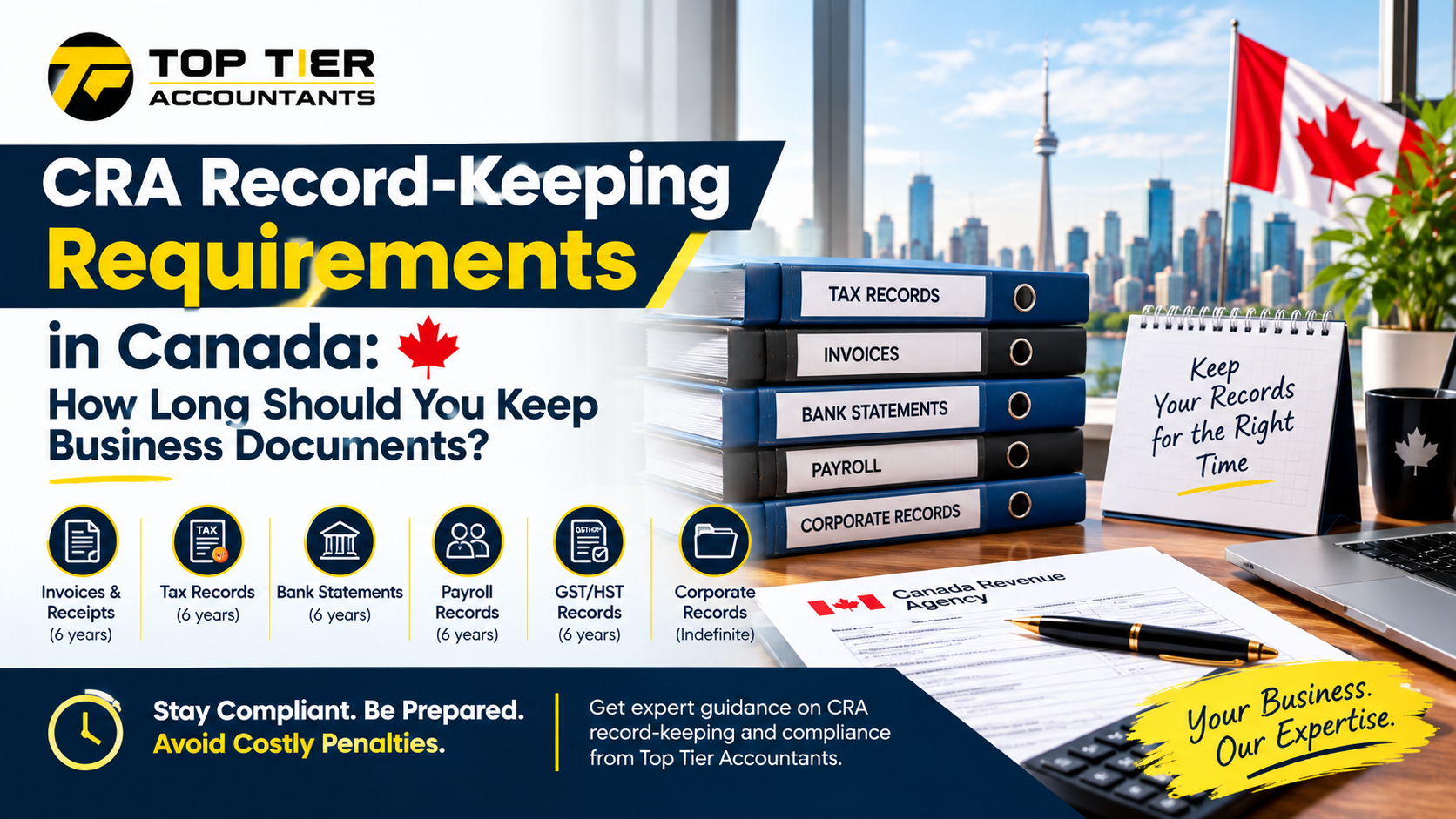
CRA Record-Keeping Requirements in Canada: How Long Should You Keep Business Documents?
Why CRA Record Keeping Matters Good record keeping is one of the most important responsibilities…

September 19, 2026
Corporate Tax Planning Mistakes That Could Cost Canadian Business Owners Thousands
Canadian business owners often focus on increasing revenue, controlling expenses, and finding new customers. Tax…

September 19, 2026
Corporate Tax Instalments in Canada: How to Calculate and Avoid CRA Interest
For many Canadian business owners, corporate tax instalments can feel confusing. You make payments throughout…

September 19, 2026
Canadian-Controlled Private Corporation (CCPC): Tax Benefits You Should Know
A Canadian-Controlled Private Corporation (CCPC) can be one of the most valuable structures available to…