


Every business owner wants to keep more of their hard-earned profits, but reducing your tax bill should always be done Legally and strategically. The good news is that Canada’s tax system offers several legitimate ways for incorporated businesses to minimize their corporate tax while remaining fully compliant with the Canada Revenue Agency (CRA). The key is understanding which deductions, credits, and planning opportunities apply to your business before your fiscal year ends—not after you’ve already filed your return.
Many business owners assume tax planning only happens during tax season. In reality, effective tax planning is a year-round process. Decisions about payroll, equipment purchases, bookkeeping, and shareholder compensation can significantly impact your final tax liability. Businesses that plan ahead are often in a better position to improve cash flow, avoid penalties, and invest more money back into growth.
At Top Tier Accountants, we help corporations across Canada develop tax-efficient strategies that align with CRA regulations while maximizing available tax-saving opportunities. Here are ten proven ways to legally reduce your corporate tax.
Why Tax Planning Matters for Canadian Businesses
Corporate tax planning is about making informed financial decisions throughout the year rather than looking for last-minute deductions. A proactive approach allows business owners to manage taxable income, improve profitability, and avoid costly mistakes.
The CRA provides several incentives designed to encourage business growth, investment, and innovation. Businesses that understand these rules are often able to reduce their tax burden while strengthening their financial position. Good planning also improves budgeting, supports better cash flow management, and minimizes the risk of penalties caused by late filings or inaccurate reporting.
Understand Your Corporate Tax Obligations
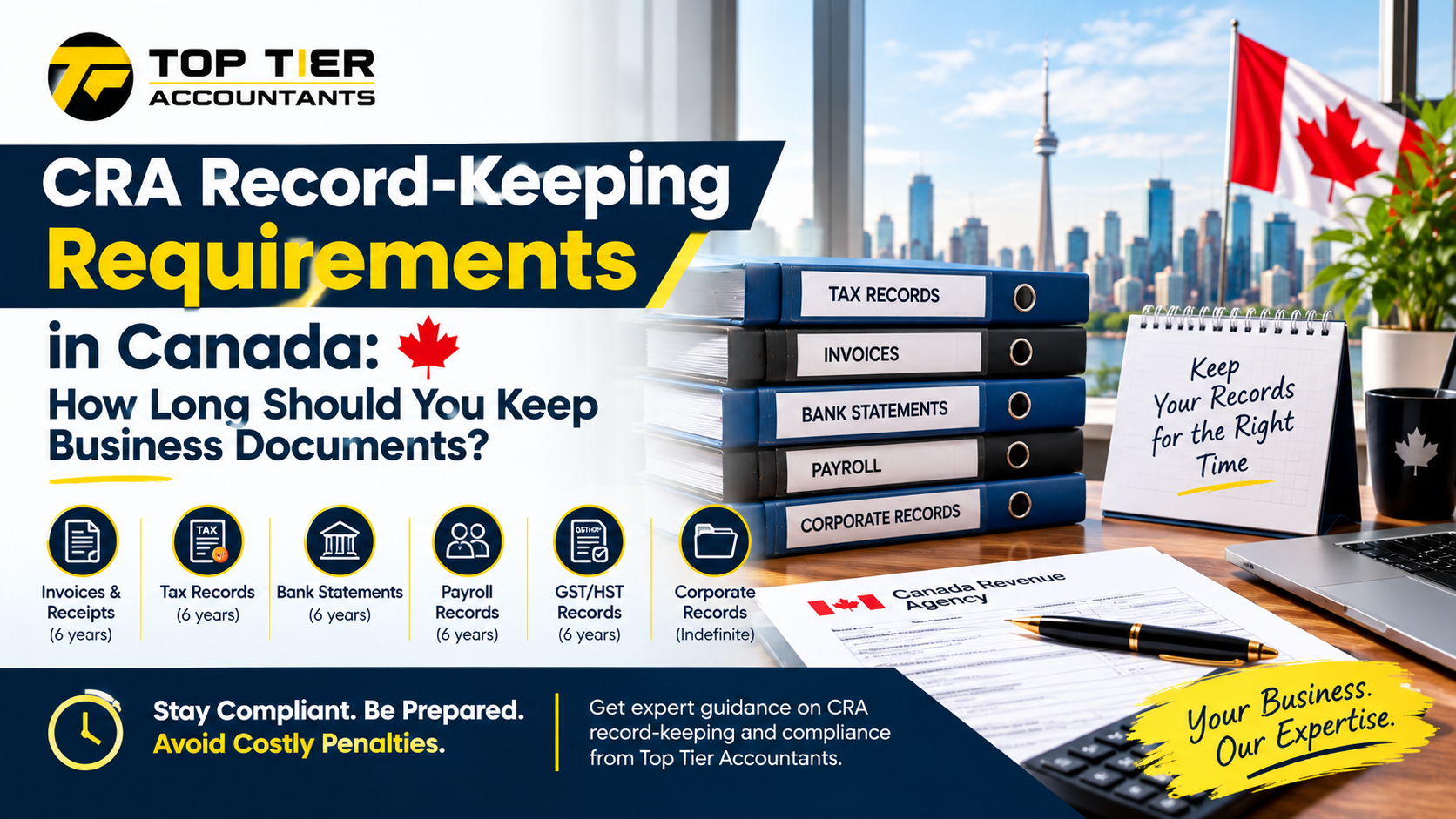
Before looking for tax-saving opportunities, it’s important to understand your filing responsibilities. Most Canadian corporations must file a T2 Corporation Income Tax Return every year, even if the business earned little or no income. Filing on time, maintaining accurate financial records, and complying with CRA requirements form the foundation of any successful tax strategy.
Once compliance is in place, business owners can focus on maximizing deductions and using legitimate tax planning techniques to reduce taxable income.
1. Maximize Business Expense Deductions
One of the easiest and most effective ways to reduce corporate tax is by claiming every eligible business expense. Expenses incurred to earn business income are generally deductible, provided they are reasonable and properly documented.
Common deductible expenses include:
- Office rent and utilities
- Employee salaries and wages
- Advertising and marketing
- Professional accounting and legal fees
- Business insurance
- Office supplies
- Software subscriptions
- Business travel
- Vehicle expenses related to business use
Maintaining organized receipts and accurate bookkeeping throughout the year ensures that no legitimate deductions are overlooked during tax season.
2. Take Advantage of the Small Business Deduction
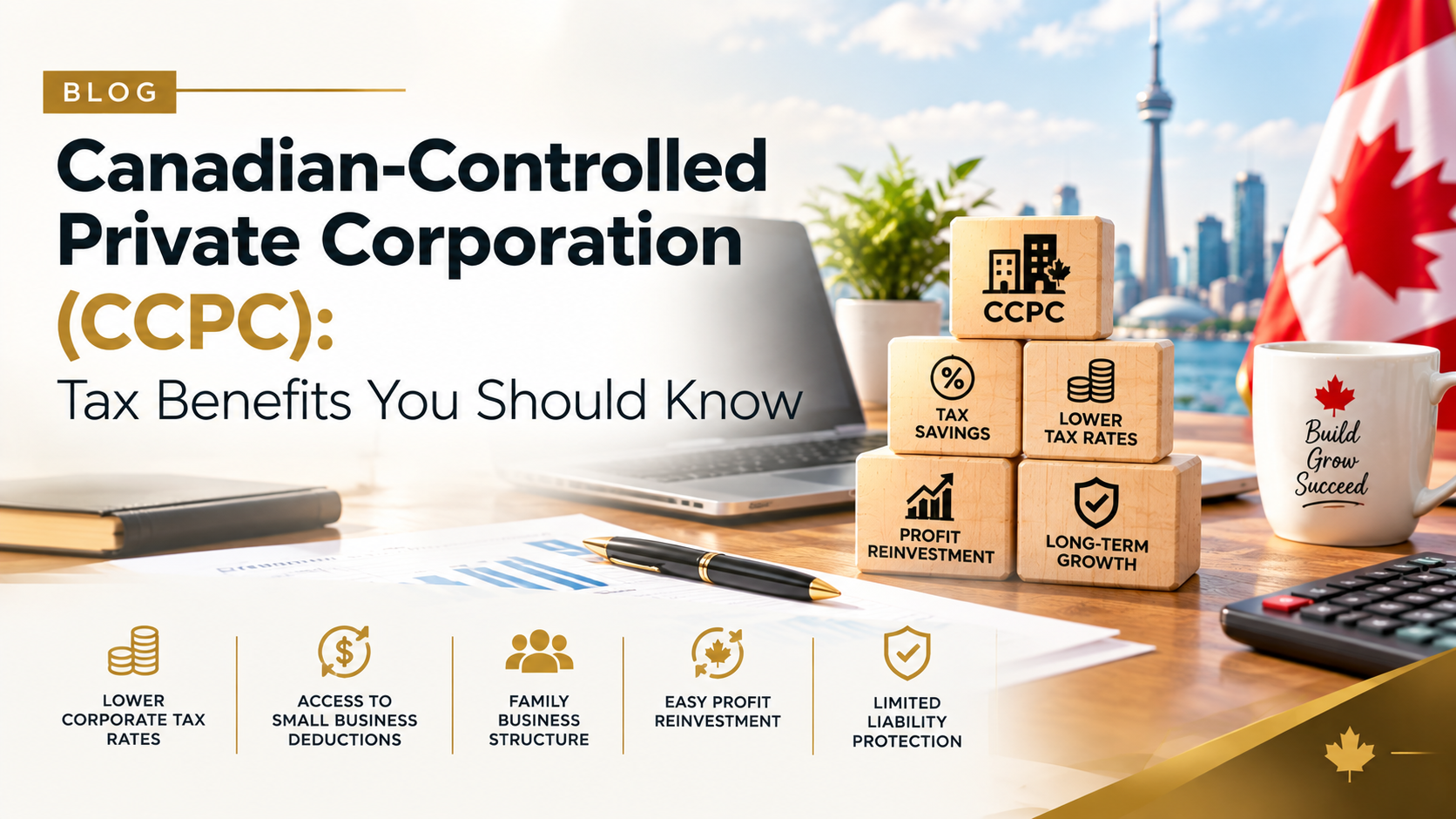
If your corporation qualifies as a Canadian-Controlled Private Corporation (CCPC), you may be eligible for the Small Business Deduction (SBD). This valuable tax incentive reduces the federal tax rate on qualifying active business income, allowing eligible businesses to retain more profits for growth and investment.
Eligibility depends on factors such as the corporation’s structure, taxable capital, and the amount of qualifying business income. Reviewing your eligibility annually with a tax professional can help ensure you maximize this important benefit.
3. Invest in Capital Assets Strategically
Purchasing equipment, machinery, furniture, or technology before your fiscal year-end may provide tax advantages through Capital Cost Allowance (CCA). Instead of deducting the entire purchase immediately, qualifying assets are generally depreciated over time according to CRA rules.
Planning capital investments before year-end can improve operational efficiency while also reducing taxable income through allowable depreciation claims.
4. Optimize Salary vs. Dividend Compensation
For incorporated business owners, deciding whether to receive compensation through salary, dividends, or a combination of both is an important tax planning decision.
A salary can create RRSP contribution room and may be deductible to the corporation, while dividends generally do not require CPP contributions. The best approach depends on several factors, including personal income, retirement goals, cash flow, and overall tax planning.
Rather than applying a one-size-fits-all strategy, review shareholder compensation annually with an experienced accountant to determine the most tax-efficient option.
5. Contribute to Employee Benefits and Retirement Plans
Offering employee benefits can provide advantages for both your business and your team. Contributions to eligible health benefit plans, retirement programs, and certain employee benefits may be deductible business expenses while improving employee retention and satisfaction.
Investing in your workforce often creates long-term value beyond immediate tax savings, making it an effective business strategy as well as a financial one.
6. Claim Available Tax Credits
Many Canadian businesses miss valuable tax credits simply because they are unaware they exist. Depending on your industry and activities, your corporation may qualify for credits related to:
| Tax Credit | Potential Benefit |
| Scientific Research & Experimental Development (SR&ED) | Supports eligible R&D activities |
| Apprenticeship Incentives | Encourages skilled trades training |
| Provincial Business Incentives | Vary by province |
| Clean Technology Programs | Support eligible environmental investments |
Because eligibility requirements differ, reviewing available federal and provincial incentives each year can significantly reduce your overall tax liability.
7. Plan Purchases Before Your Fiscal Year-End
Timing matters in tax planning. If your business is already planning to purchase equipment, software, office furniture, or technology, making those purchases before your fiscal year-end may allow you to claim deductions or depreciation sooner.
Waiting until after year-end could delay the tax benefit until the following fiscal period. Reviewing anticipated purchases with your accountant helps ensure they’re timed effectively for maximum financial advantage.
8. Maintain Accurate Bookkeeping
Accurate bookkeeping forms the foundation of every successful tax strategy. Poor records often lead to missed deductions, reporting errors, and unnecessary CRA inquiries.
Monthly bookkeeping allows business owners to monitor income, expenses, and cash flow while ensuring financial statements remain accurate throughout the year. Cloud accounting software combined with regular reconciliations makes tax preparation faster, easier, and more reliable.
9. Carry Forward Business Losses
Not every business is profitable every year, especially during the startup phase or periods of expansion. Canadian tax rules may allow eligible corporations to apply certain losses against income from other years, helping reduce taxes when profitability improves.
Properly tracking and reporting losses is essential. An experienced accountant can help determine how these provisions apply to your corporation and ensure they are used effectively as part of a long-term tax strategy.
10. Work with a Professional Tax Advisor
Tax legislation changes regularly, and opportunities to reduce corporate taxes can easily be missed without professional guidance. Working with a qualified accountant throughout the year provides far greater value than simply preparing an annual tax return.
A professional tax advisor can:
- Identify available deductions and credits.
- Develop year-round tax strategies.
- Prepare accurate financial statements.
- Ensure CRA compliance.
- Reduce the risk of penalties and reassessments.
- Provide ongoing financial advice to support business growth.
Instead of reacting to tax issues at year-end, proactive planning helps your business make better financial decisions all year long.

Why Choose Top Tier Accountants?
At Top Tier Accountants, we specialize in helping Canadian businesses reduce their corporate tax legally while remaining fully compliant with CRA requirements. Our experienced team provides personalized accounting solutions designed to improve profitability and simplify tax compliance.
Our services include:
- Corporate Tax Return (T2) Preparation
- Tax Planning & Compliance
- Bookkeeping Services
- Financial Statements
- GST/HST Returns
- Payroll Management
- Cash Flow Management
- Business Incorporation
- CRA Representation
- Internal Control & Advisory Services
Whether you’re a startup, a growing corporation, or an established business, we develop practical tax strategies tailored to your goals.
Conclusion
Reducing your corporate tax legally isn’t about finding loopholes—it’s about making smart financial decisions backed by proper planning and accurate recordkeeping. From maximizing deductible expenses and claiming available tax credits to optimizing shareholder compensation and planning year-end purchases, there are many legitimate ways to lower your tax bill while staying compliant with CRA regulations.
The most successful businesses don’t wait until tax season to think about taxes. They work with trusted professionals throughout the year to identify opportunities, avoid costly mistakes, and build stronger financial foundations. At Top Tier Accountants, we’re committed to helping Canadian businesses keep more of what they earn through proactive, compliant, and strategic tax planning.
Frequently Asked Questions
1. Is it legal to reduce corporate taxes in Canada?
Yes. The CRA allows businesses to reduce their taxes through legitimate deductions, tax credits, and approved tax planning strategies.
2. What is the easiest way to lower corporate tax?
Keeping accurate bookkeeping records and claiming every eligible business expense are among the most effective ways to reduce taxable income.
3. Can small businesses qualify for lower corporate tax rates?
Eligible Canadian-Controlled Private Corporations (CCPCs) may qualify for the Small Business Deduction, which can reduce the federal tax rate on qualifying active business income.
4. When should I start tax planning?
Tax planning should take place throughout the year, not just before filing your corporate tax return. Regular financial reviews provide more opportunities to reduce taxes legally.
5. How can Top Tier Accountants help my business?
Top Tier Accountants provides expert corporate tax planning, bookkeeping, financial reporting, CRA compliance, and business advisory services to help Canadian businesses minimize taxes while supporting long-term growth.
Post a comment
Related Posts
August 31, 2026
5 Bookkeeping Reports Every Canadian Business Owner Should Review Monthly
Why Monthly Financial Reporting Matters Running a Canadian business without regularly reviewing your bookkeeping reports…

August 8, 2026
How to Set Up a CRA Payroll Account for Your Business
What Is a CRA Payroll Account? If your Canadian business is hiring employees, one of…

August 8, 2026
How to File Complex Tax Returns for Canadian Businesses
Filing a corporate tax return in Canada can become complicated as a business grows. A…
August 8, 2026
Corporate Tax Returns in Canada: A Complete Guide for Small Businesses (2026)
Corporate Tax Returns in Canada: A Complete Guide for Small Businesses (2026) Running a corporation…