

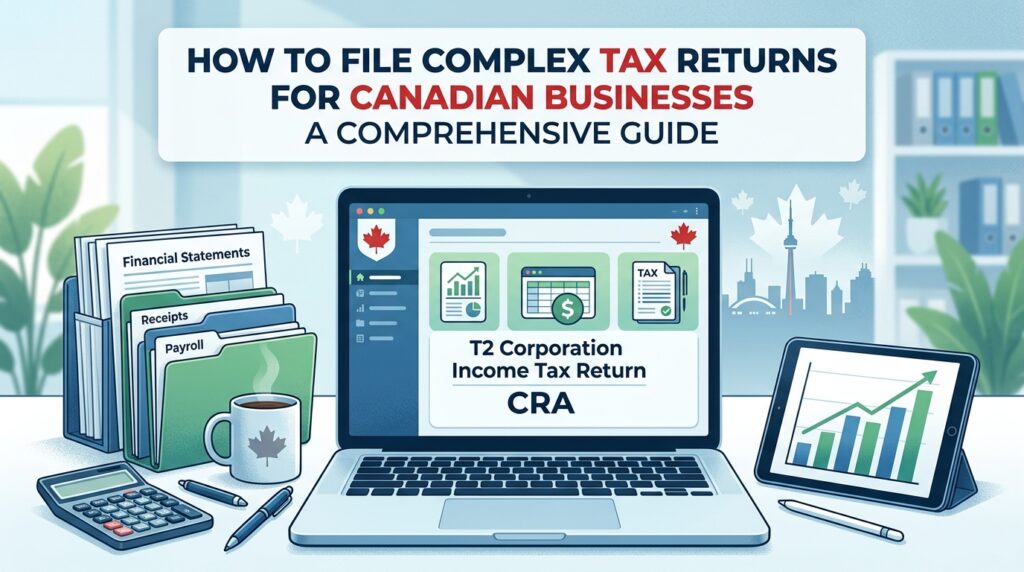
Filing a corporate tax return in Canada can become complicated as a business grows. A company with multiple revenue streams, employees, investments, related corporations, foreign transactions, or significant assets may need more than basic bookkeeping to prepare an accurate return. The T2 Corporation Income Tax Return is the primary corporate income tax return, and most resident corporations must file it every year, even if they have no tax payable.
For complex businesses, tax preparation involves reviewing accounting records, identifying applicable schedules, reconciling tax accounts, and checking whether additional information returns are required. A well-prepared return can help a company remain compliant while making sure it claims legitimate deductions and tax credits.
What Makes a Corporate Tax Return Complex?
A corporate tax return becomes complex when a business has financial activities that require additional tax calculations or reporting. A company may have several types of income, capital assets, shareholder transactions, investments, or dealings with related businesses.
For example, a Canadian corporation might operate an active business while also earning investment income and holding shares in another corporation. It may also have shareholder loans, vehicle expenses, payroll, GST/HST obligations, and transactions with companies outside Canada.
These circumstances can require additional schedules and detailed analysis. Simply transferring figures from accounting software into a tax return may not provide an accurate picture of the company’s tax position.
Start With Accurate Accounting Records
The foundation of a good corporate tax return is Accurate bookkeeping. Before preparing the T2, businesses should ensure that their financial statements and general ledger are complete and properly reconciled.
Bank accounts, credit cards, loans, accounts receivable, accounts payable, payroll liabilities, GST/HST balances, and shareholder accounts should all be reviewed.
Particular attention should be given to unusual or large transactions. If an expense has been incorrectly classified or a shareholder balance has not been reconciled, the problem can carry over into the tax return.
A proper year-end accounting review can therefore make corporate tax preparation faster and reduce the risk of errors.
Understand the T2 Corporate Tax Return
The T2 Corporation Income Tax Return is used by Canadian corporations to report their income and calculate corporate income tax. CRA guidance states that resident corporations generally have to file a T2 every tax year, even when the corporation is inactive or has no tax payable.
The complexity of the T2 depends on the corporation’s activities. A small corporation with straightforward Canadian operations may have a relatively simple filing, while a larger business may need numerous schedules covering investments, capital assets, associated corporations, tax credits, and other transactions.
Businesses should also consider provincial and territorial tax requirements because corporate tax rates and filing arrangements can vary depending on where the corporation operates.
Review Required Tax Schedules
One of the most important steps in preparing a complex corporate tax return is identifying the correct schedules.
Depending on the business, these may relate to:
- Capital cost allowance
- Taxable capital gains
- Dividends
- Associated corporations
- Investment income
- Tax credits
- Provincial tax
- Foreign activities
- Scientific research and development
- Corporate relationships
The appropriate schedules should be determined from the company’s actual transactions rather than simply copying the previous year’s return.
GST/HST Reconciliation
GST/HST is separate from corporate income tax, but it should be reviewed as part of year-end tax preparation.
A corporation registered for GST/HST should reconcile its GST/HST accounts with CRA records and accounting records. Input tax credits should be supported by appropriate invoices and documentation.
Businesses should also ensure that GST/HST collected from customers has not accidentally been treated as business revenue. Similarly, recoverable GST/HST should be properly reflected in the accounting records.
CRA requires businesses to maintain records supporting GST/HST calculations and claims, including sales and purchase invoices.
Review Payroll Records
Businesses with employees should reconcile their payroll accounts before filing the corporate tax return.
This includes reviewing:
- Salaries and wages
- CPP contributions
- EI premiums
- Income tax deductions
- Taxable benefits
- Payroll remittances
- Year-end payroll liabilities
Payroll errors can affect both the corporation and its employees. Businesses should ensure that payroll records agree with the amounts reported on the appropriate information slips.
Capital Assets and Tax Depreciation
Many Canadian businesses purchase equipment, computers, vehicles, machinery, furniture, or other long-term assets.
Accounting depreciation is not necessarily the same as tax depreciation. For tax purposes, businesses generally calculate Capital Cost Allowance (CCA) according to the applicable rules and asset class.
When a business purchases or sells assets, the transaction should be reviewed carefully. The tax consequences may differ from the accounting treatment, particularly when an asset is sold for more or less than its tax-related balance.
Shareholder Loans and Personal Expenses
Shareholder loans are another important area for corporate tax preparation.
Business owners sometimes use corporate funds to pay personal expenses or transfer money between themselves and the corporation. These transactions should be properly recorded and classified.
A shareholder account with an unusual balance should not simply be ignored at year-end. Depending on the circumstances, shareholder loans and benefits can have personal and corporate tax consequences.
Businesses should maintain clear documentation and separate personal and corporate spending as much as possible.
Related-Party Transactions
Transactions between related companies or shareholders require careful review.
Common examples include:
- Management fees
- Intercompany loans
- Dividends
- Asset transfers
- Expense reimbursements
- Shared services
These transactions should be properly documented and recorded. Businesses with multiple corporations should maintain clear accounting records for each entity and reconcile intercompany balances before filing.
Foreign Transactions and Reporting
International business activities can add another layer of complexity.
A Canadian corporation may have foreign customers, suppliers, bank accounts, investments, shareholders, or related companies. Certain foreign transactions can trigger additional information-reporting requirements.
CRA’s foreign reporting framework includes forms such as T106, T1134, and T1135, depending on the circumstances.
Foreign reporting should be reviewed before the T2 is filed because an information-return obligation may exist even when the transaction does not create additional corporate income tax.
Look for Tax Credits and Deductions
Complex tax preparation should not focus only on calculating tax payable. It should also identify legitimate deductions and tax credits that the corporation may qualify for.
Potential areas can include eligible business expenses, capital expenditures, research and development activities, training costs, and other qualifying expenses.
However, every deduction should be supported by appropriate documentation. Businesses should not claim expenses simply because they appear in the accounting system.
Corporate Tax Instalments
Corporate tax planning should continue throughout the year rather than only at filing time.
Corporations that are required to make tax instalments should monitor their obligations and cash flow. Reviewing previous tax liabilities and current-year results can help businesses estimate upcoming payments.
This is particularly important for growing companies because a significant increase in taxable income can create a much larger tax balance than the business owner expected.
Keep Proper Supporting Records
A tax return should always be supported by reliable documentation.
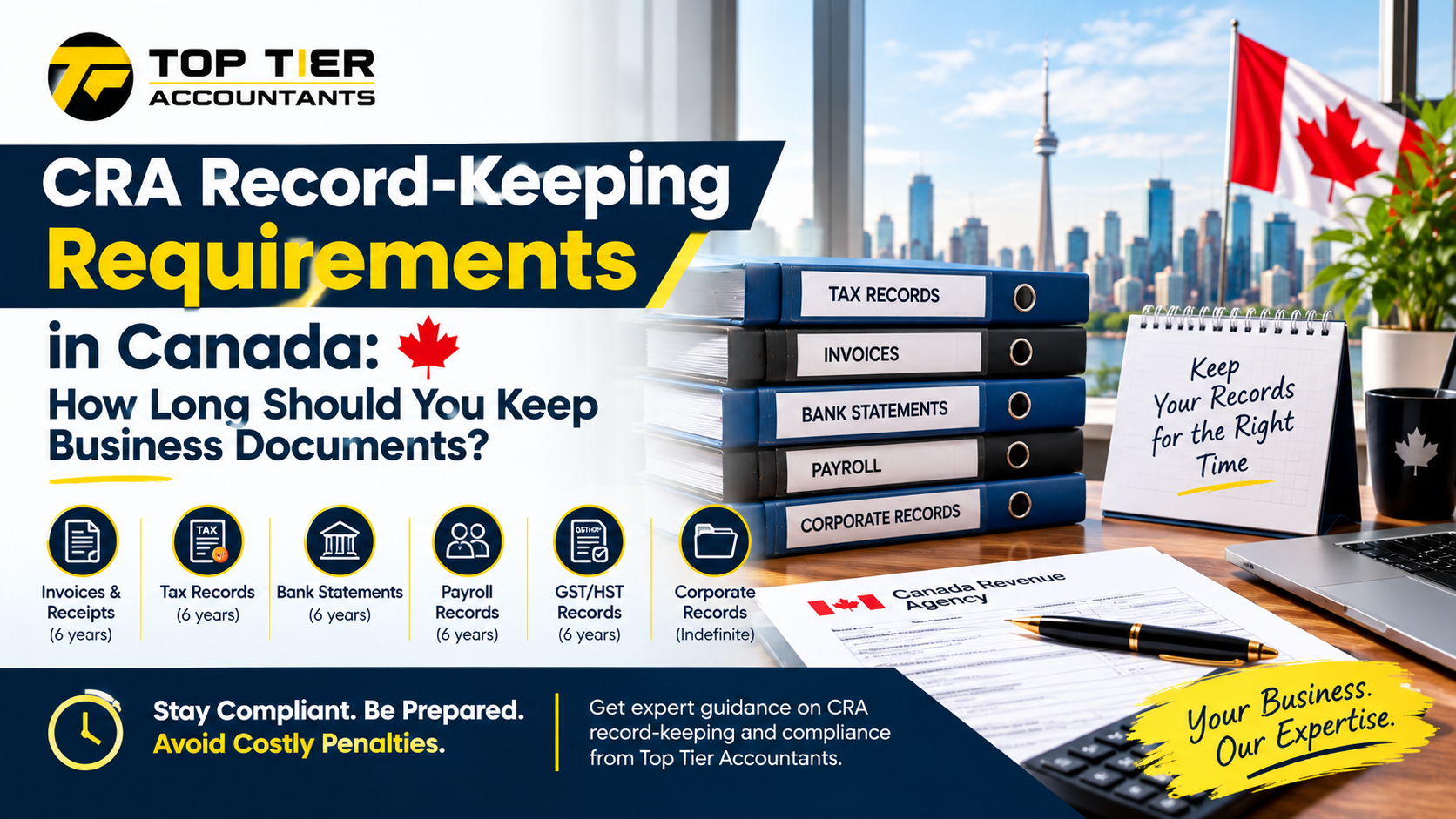
Businesses should retain:
- Bank statements
- Sales invoices
- Purchase invoices
- Contracts
- Loan agreements
- Payroll records
- Asset purchase documents
- Investment records
- Corporate resolutions
- Tax slips
Good recordkeeping makes tax preparation easier and provides evidence if the CRA asks questions about a transaction.
Common Mistakes to Avoid
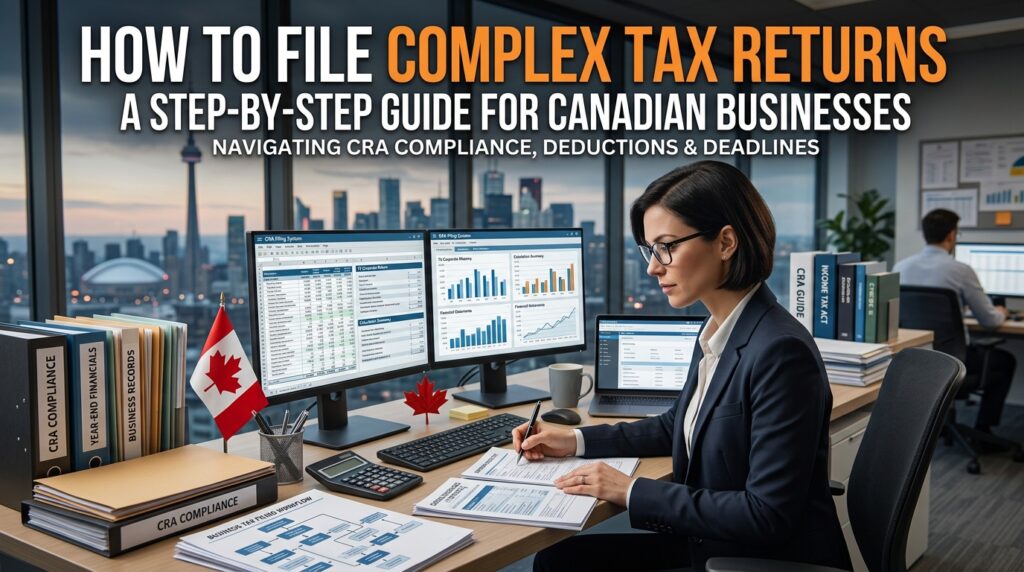
Some common mistakes can create unnecessary tax problems for Canadian corporations. These include mixing personal and business expenses, failing to reconcile shareholder accounts, overlooking foreign reporting requirements, incorrectly calculating depreciation, and missing GST/HST discrepancies.
Another major mistake is waiting until the filing deadline to begin preparing a complex return. Large or complicated businesses need time to collect documents, review transactions, resolve accounting issues, and prepare the required schedules.
Starting the process early gives the business more time to correct problems before filing.
When Should You Hire a Tax Professional?
Professional assistance can be particularly valuable when a Canadian business has:
- Multiple corporations
- Foreign transactions
- Significant investments
- Shareholder loans
- Related-party transactions
- Major capital assets
- Tax credits
- Complex GST/HST matters
- Corporate reorganizations
- Previous CRA correspondence
A qualified accountant or tax professional can review the company’s financial information and determine what needs to be reported on the T2 and related filings.
Conclusion
Filing complex tax returns for Canadian businesses requires careful coordination between accounting, tax rules, documentation, and corporate information. A business should not treat the T2 as simply another form to complete at year-end.
Accurate bookkeeping, proper reconciliations, correct tax schedules, GST/HST reviews, payroll checks, shareholder-account analysis, and foreign-reporting reviews can all contribute to a more reliable corporate tax filing.
For businesses with complicated financial structures, professional Corporate tax preparation in Canada can help reduce compliance risks while identifying legitimate opportunities for better tax planning.
The goal is simple: file accurately, meet CRA deadlines, maintain strong records, and make informed tax decisions.
FAQs
1. Does every Canadian corporation have to file a T2?
Generally, yes. Resident corporations are generally required to file a T2 every tax year, even if they are inactive or have no tax payable.
2. What makes a T2 tax return complex?
Multiple corporations, foreign transactions, investments, shareholder loans, capital assets, tax credits, and related-party transactions can make a T2 more complicated.
3. Can GST/HST affect corporate tax preparation?
Yes. GST/HST accounts should be reconciled with the accounting records, particularly when preparing year-end financial statements and the corporate tax return.
4. Should shareholder loans be reviewed before filing?
Yes. Shareholder loan balances should be properly recorded and reviewed because they can have tax consequences depending on the circumstances.
5. When should a business start preparing its corporate tax return?
Ideally, businesses should begin the year-end process well before the filing deadline. Early preparation allows time to reconcile accounts, collect documentation, identify missing information, and address potential tax issues.
Post a comment
Related Posts
August 31, 2026
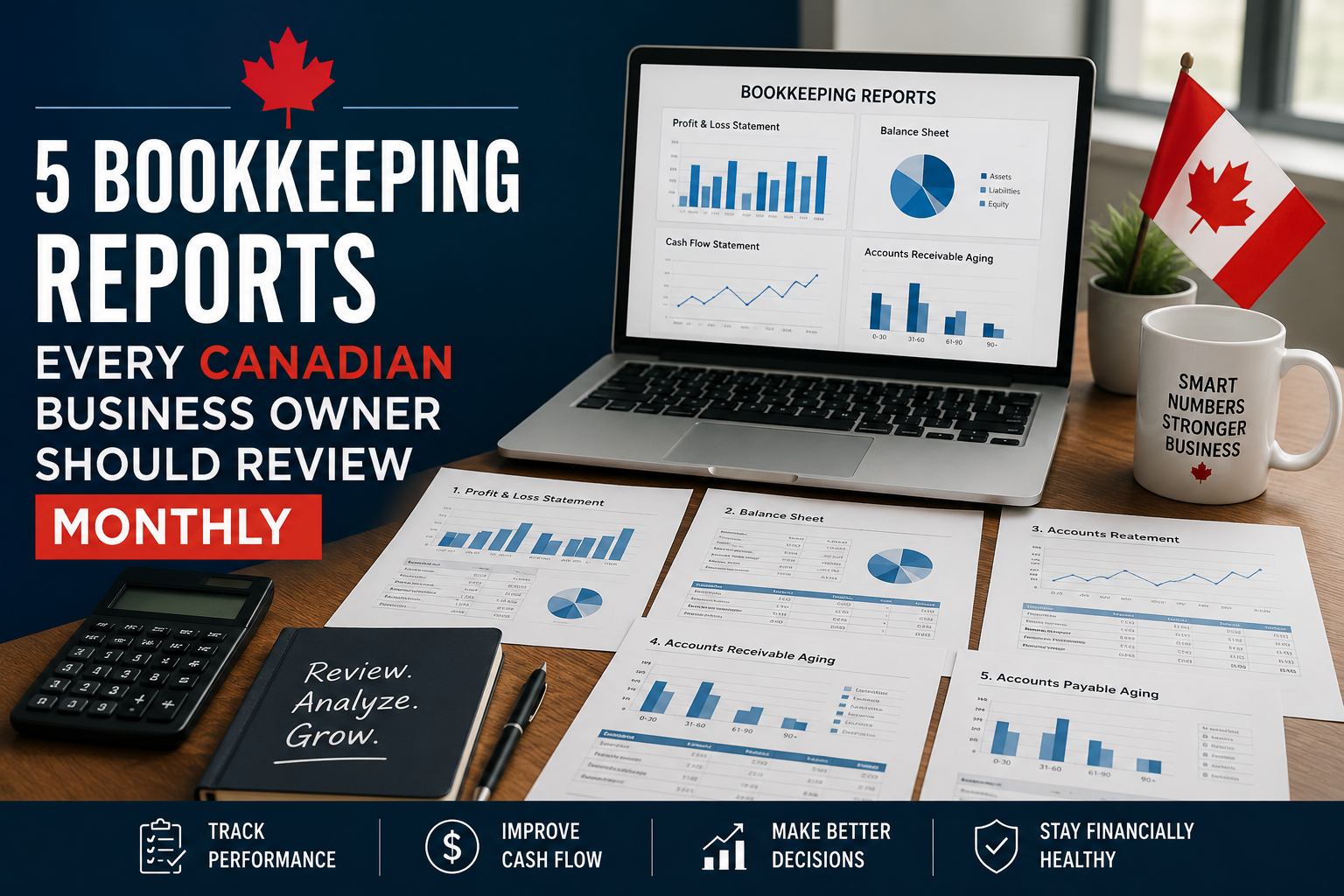
5 Bookkeeping Reports Every Canadian Business Owner Should Review Monthly
Why Monthly Financial Reporting Matters Running a Canadian business without regularly reviewing your bookkeeping reports…

August 8, 2026
How to Set Up a CRA Payroll Account for Your Business
What Is a CRA Payroll Account? If your Canadian business is hiring employees, one of…

August 8, 2026
How to Reduce Your Corporate Tax Legally in Canada (2026 Guide)
Every business owner wants to keep more of their hard-earned profits, but reducing your tax…
August 8, 2026
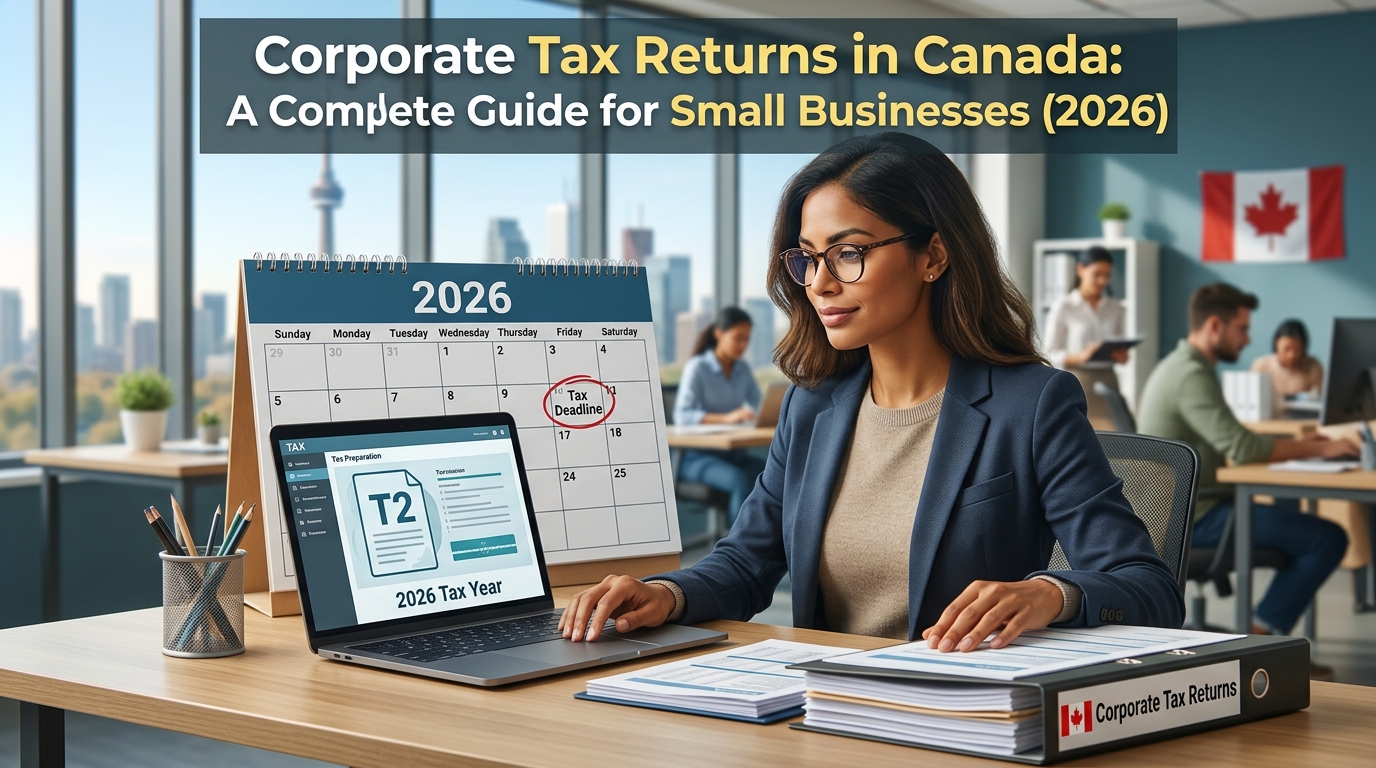
Corporate Tax Returns in Canada: A Complete Guide for Small Businesses (2026)
Corporate Tax Returns in Canada: A Complete Guide for Small Businesses (2026) Running a corporation…