

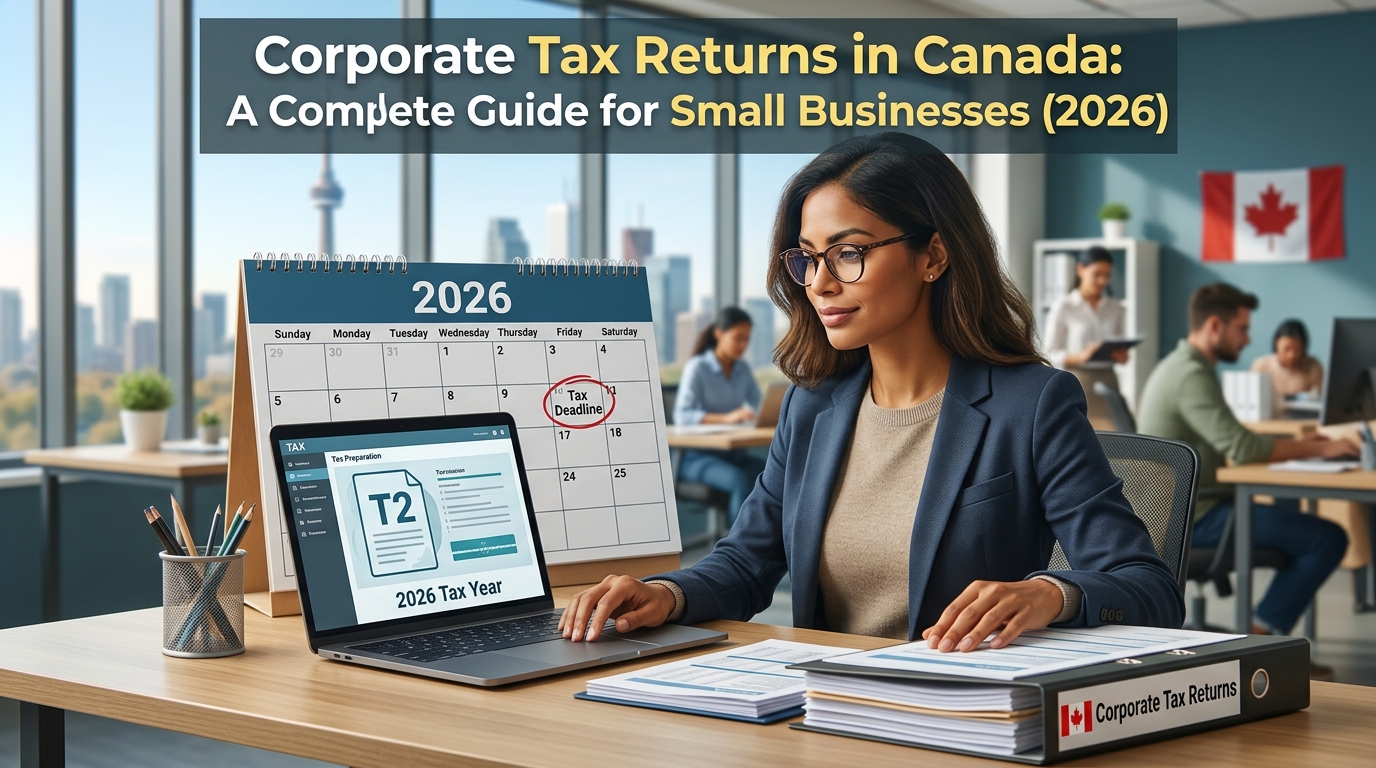
Corporate Tax Returns in Canada: A Complete Guide for Small Businesses (2026)
Running a corporation in Canada comes with many responsibilities, but none is more important than staying compliant with the Canada Revenue Agency (CRA). Filing your Corporate Tax Return (T2) isn’t just another administrative task—it’s a legal requirement for nearly every incorporated business operating in Canada. Whether your company earned millions in revenue, generated a modest profit, or remained inactive throughout the year, the CRA still expects a properly completed corporate tax return.
The good news is that understanding corporate taxes doesn’t have to be overwhelming. Once you know the filing requirements, deadlines, deductions, and available tax-saving opportunities, the process becomes significantly easier. For many small businesses, good tax planning can reduce tax liabilities, improve cash flow, and eliminate costly penalties.
As of 2026, the CRA continues to require most corporations to file their T2 returns electronically. Corporations that fail to comply with mandatory electronic filing requirements may face a $1,000 penalty. Every resident corporation—including inactive corporations and many non-profit corporations—must generally file a T2 return every tax year, regardless of whether any tax is owed.
This guide explains everything Canadian small business owners need to know about corporate tax returns in 2026.
Understanding Corporate Tax Returns
A Corporate Tax Return, commonly known as the T2 Return, is the annual income tax return that corporations submit to the Canada Revenue Agency. Unlike personal tax returns, corporate returns report the financial performance of an incorporated business over its fiscal year.
One of the biggest misconceptions among new business owners is that only profitable companies need to file taxes. That simply isn’t true. The CRA requires nearly every incorporated business to file a return, even when there is no income, no operations, or no tax payable. This ensures the CRA maintains accurate records of every corporation’s activities and tax status.
A properly prepared T2 return typically includes:
- Financial statements
- Balance Sheet
- Income Statement
- General Index of Financial Information (GIFI)
- Tax schedules
- Supporting calculations
- Federal and provincial tax information
For growing businesses, the T2 return also becomes an important financial document that lenders, investors, and financial institutions may request when evaluating financing applications.
What Is a T2 Corporate Tax Return?
The T2 Corporation Income Tax Return is Canada’s standard corporate income tax filing document. It consists of the primary return along with various schedules that depend on the corporation’s activities.
Corporations may need to report:
| Return Component | Purpose |
| T2 Return | Reports taxable income |
| GIFI | Standardized financial reporting |
| Schedule 1 | Net income reconciliation |
| Schedule 50 | Shareholder information |
| Provincial schedules | Provincial tax calculations |
Smaller corporations that meet specific CRA conditions may qualify for the T2 Short Return, simplifying the filing process. However, eligibility depends on several criteria established by the CRA.
A complete T2 filing demonstrates compliance while allowing businesses to claim deductions, losses, tax credits, and other available incentives.
Who Must File a T2 Return?
The filing requirement is straightforward.
Nearly every resident corporation in Canada must file a T2 return every year.
This includes:
- Canadian-Controlled Private Corporations (CCPCs)
- Professional corporations
- Holding companies
- Dormant corporations
- Non-profit corporations (in many cases)
- Tax-exempt corporations
Even if:
- Your corporation earned $0
- Your corporation had no bank transactions
- You paid yourself nothing
- You haven’t started operating
you generally still need to file your T2 return.
Many first-time business owners mistakenly believe that an inactive corporation can simply ignore annual filing requirements. Unfortunately, late filing penalties, interest charges, and compliance issues can accumulate quickly.
Key 2026 Corporate Tax Rules
Several important rules remain in effect during 2026 that every corporation should understand.
One of the most significant is the continued requirement for electronic filing. Since tax years beginning after 2023, most corporations are required to submit their T2 returns electronically. Filing a paper return when electronic filing is required can result in a $1,000 penalty.
Another key deadline concerns filing and payment:
| Requirement | Deadline |
| T2 Return Filing | Within 6 months after fiscal year-end |
| Balance Due | Usually 2 months after year-end |
| Eligible CCPC Balance Due | Often 3 months after year-end if qualifying conditions are met |
Corporations that make instalment payments must continue paying monthly or quarterly depending on CRA requirements.
Failure to meet these deadlines can result in penalties, interest, and unnecessary financial stress.
Documents Required Before Filing Your Corporate Tax Return
Preparing your Corporate Tax Return (T2) starts long before tax season. Keeping accurate and organized records throughout the year will save time, reduce stress, and help ensure your business claims every deduction it is entitled to. The CRA requires corporations to maintain complete books and records that support the figures reported on the tax return. Good documentation also helps if your corporation is selected for a review or audit.
Before filing, gather the following documents:
| Document | Purpose |
| Financial Statements | Report income, expenses, assets, and liabilities |
| Income Statement | Shows annual profit or loss |
| Balance Sheet | Lists assets, liabilities, and equity |
| General Ledger | Detailed accounting records |
| Bank Statements | Verify deposits and expenses |
| Sales Records | Support reported revenue |
| Expense Receipts | Substantiate deductible business expenses |
| Payroll Records | Support wages, salaries, and payroll remittances |
| GST/HST Returns | Reconcile indirect taxes |
| Previous Year’s T2 Return | Maintain consistency and carry forward balances |
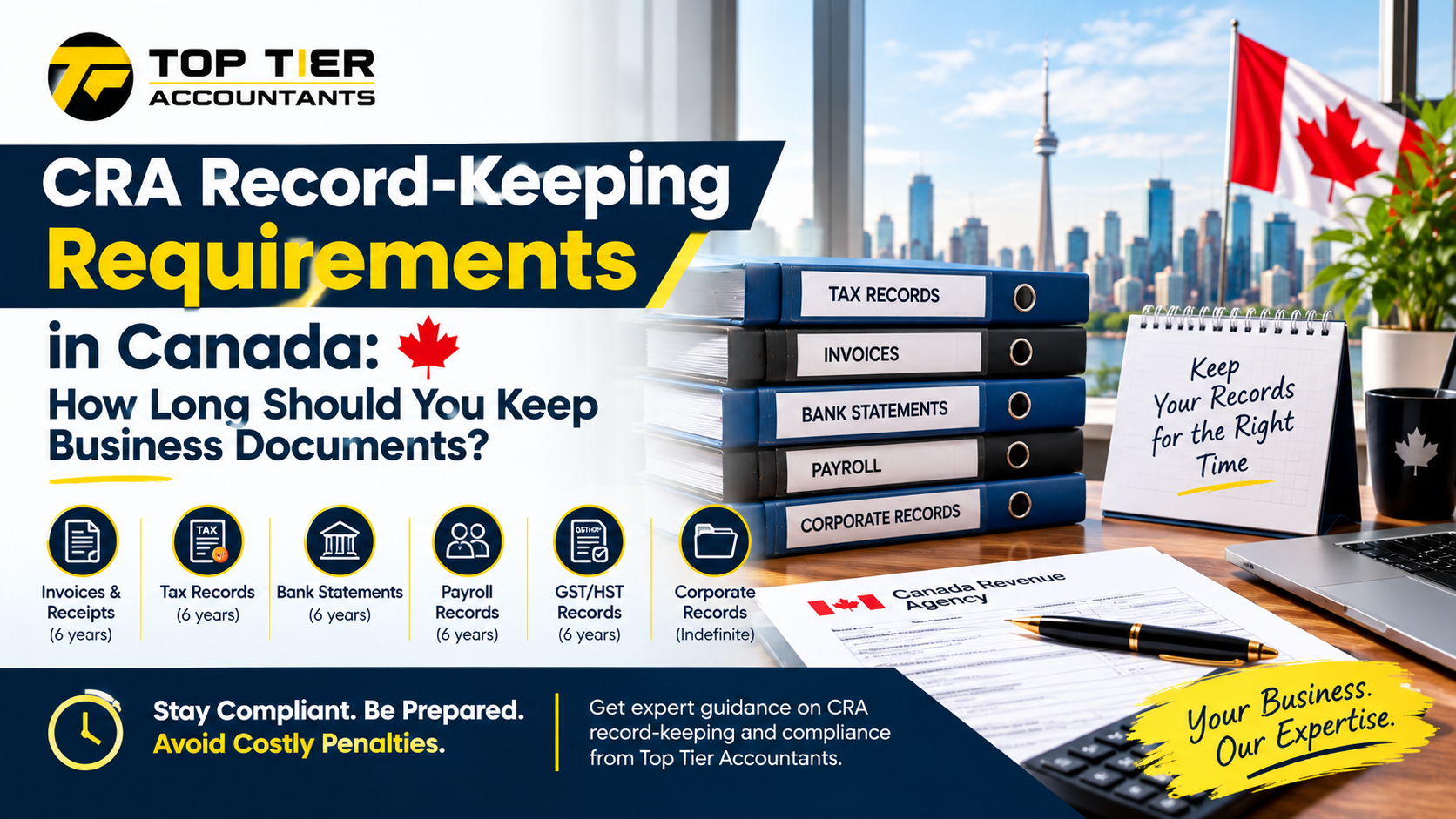
Businesses should generally retain supporting records for at least six years after the end of the last tax year to which they relate, unless the CRA authorizes otherwise. Proper recordkeeping not only supports compliance but also provides valuable insights into your company’s financial health and future planning.
Corporate Tax Rates in Canada (2026)
Understanding corporate tax rates is essential for budgeting and tax planning. Canadian corporations generally pay both federal and provincial or territorial corporate income tax. The exact amount depends on factors such as where the business operates, the type of income earned, and whether the corporation qualifies for special tax treatments.
For many Canadian-Controlled Private Corporations (CCPCs) that qualify for the Small Business Deduction (SBD), the federal small business tax rate remains 9% on qualifying active business income up to the federal business limit. Income above that threshold is generally taxed at the higher general corporate rate before provincial taxes are added. Provincial corporate tax rates vary across Canada, so the combined tax rate differs depending on the province or territory where the corporation has a permanent establishment.
| Tax Type | Typical Federal Rate* |
| Small Business Rate (Eligible CCPCs) | 9% |
| General Corporate Rate | 15% |
*Provincial or territorial corporate taxes apply in addition to the federal rate.
Because provincial rates differ, businesses operating in provinces such as Ontario, British Columbia, or Alberta should calculate their combined federal and provincial tax liability using the applicable rates for their jurisdiction.

The Small Business Deduction (SBD)
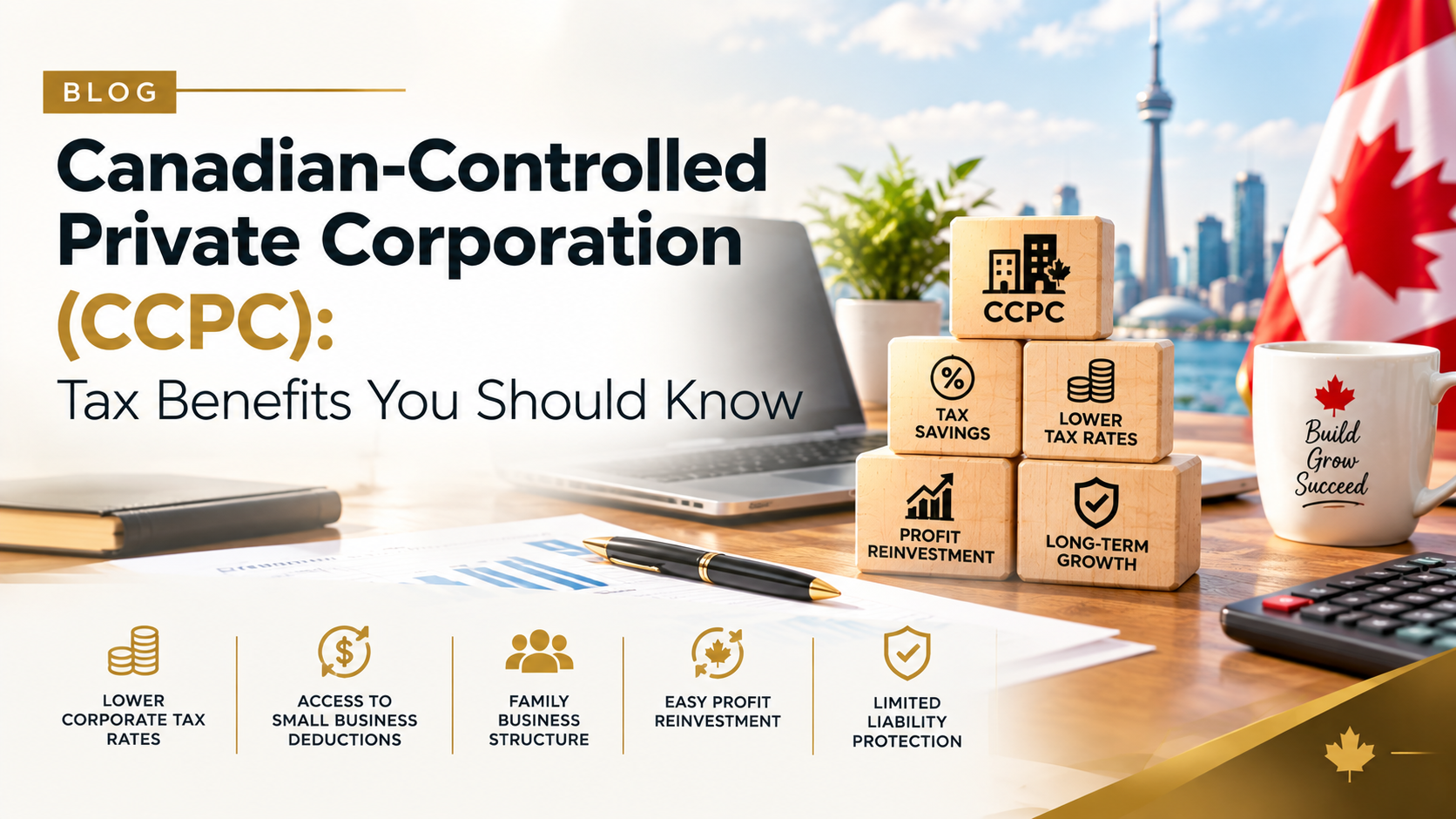
The Small Business Deduction is one of the most valuable tax incentives available to eligible Canadian-controlled private corporations. It allows qualifying corporations to pay a reduced federal tax rate on a specified amount of active business income, helping small businesses retain more cash for growth and operations.
The deduction can significantly improve cash flow by lowering the amount of income tax payable. Many small businesses use these tax savings to invest in new equipment, hire employees, expand operations, or strengthen working capital.
Eligibility depends on several factors, including:
- Being a Canadian-Controlled Private Corporation (CCPC)
- Earning qualifying active business income
- Remaining within applicable taxable capital limits
- Meeting CRA eligibility requirements
Since the rules can become complex—especially for associated corporations or businesses approaching taxable capital thresholds—it is advisable to work with an experienced tax professional to maximize available benefits while remaining compliant.
Common Deductible Business Expenses
One of the most effective ways to reduce corporate tax is by claiming legitimate business expenses. The CRA generally allows corporations to deduct expenses that are incurred to earn business income, provided they are reasonable and properly documented.
Common deductible expenses include:
| Expense Category | Examples |
| Office Expenses | Supplies, postage, software subscriptions |
| Rent | Office or commercial space |
| Utilities | Electricity, internet, phone |
| Salaries & Wages | Employee compensation |
| Professional Fees | Accounting, legal, consulting |
| Advertising & Marketing | Online ads, print marketing, website costs |
| Insurance | Commercial insurance premiums |
| Vehicle Expenses | Business-use fuel, maintenance, insurance |
| Travel | Business-related transportation and accommodation |
| Interest | Business loan interest (where deductible) |
Maintaining organized receipts and digital records throughout the year makes it much easier to support these deductions and reduces the likelihood of errors during tax preparation.
Common Corporate Tax Filing Mistakes
Even profitable businesses can face penalties because of avoidable filing errors. Understanding these common mistakes can help corporations stay compliant and avoid unnecessary costs.
Some of the most frequent issues include:
- Filing after the deadline
- Missing required schedules
- Incorrect financial statements
- Reporting inaccurate income
- Claiming unsupported deductions
- Failing to reconcile GST/HST information
- Ignoring instalment obligations
- Poor bookkeeping throughout the year
Late filing can trigger penalties and interest charges that increase over time. Inaccurate or incomplete information may also lead to CRA reviews or requests for additional documentation. Establishing strong bookkeeping practices and reviewing the return carefully before submission can significantly reduce these risks.
Tax Planning Strategies for 2026
Effective tax planning should be an ongoing process rather than a year-end exercise. By reviewing financial performance throughout the year, businesses can identify opportunities to improve cash flow and legally reduce tax liabilities.
Consider these strategies:
- Review financial statements quarterly.
- Keep bookkeeping current throughout the year.
- Separate personal and business expenses.
- Make necessary year-end adjustments before closing the books.
- Track capital asset purchases carefully.
- Monitor shareholder compensation strategies.
- Review available tax credits and deductions.
- Plan for instalment payments to avoid interest charges.
A proactive approach allows business owners to make informed financial decisions instead of reacting under tight filing deadlines.
Why Work With a Professional Accountant?
Corporate taxation is more than completing forms—it involves interpreting tax legislation, identifying planning opportunities, and ensuring compliance with evolving CRA requirements. A qualified accountant can help businesses:
- Prepare accurate financial statements.
- File T2 returns correctly and on time.
- Maximize legitimate deductions and credits.
- Reduce the risk of CRA penalties.
- Develop long-term tax planning strategies.
- Support CRA reviews or audits if needed.
For growing businesses, professional guidance often results in savings that outweigh the cost of accounting services.
Conclusion
Filing a Corporate Tax Return (T2) is a fundamental responsibility for every incorporated business in Canada. Understanding filing deadlines, maintaining accurate financial records, claiming eligible deductions, and planning ahead can help businesses remain compliant while improving financial performance.
Rather than viewing tax filing as a once-a-year obligation, successful business owners treat it as part of a broader financial strategy. Consistent bookkeeping, informed tax planning, and timely professional advice can minimize tax liabilities, reduce compliance risks, and create a stronger foundation for sustainable growth.
Whether your corporation is newly incorporated or well established, investing time in proper tax management today can help position your business for long-term success.
Frequently Asked Questions (FAQs)
1. Does an inactive corporation need to file a T2 return?
Yes. In most cases, resident corporations must file a T2 Corporation Income Tax Return every tax year, even if they had no income or business activity.
2. When is a corporate tax return due?
A corporation generally must file its T2 return within six months after the end of its fiscal year. Any balance owing is often due earlier, depending on the corporation’s circumstances.
3. Can I file my corporate tax return myself?
While it is possible using CRA-approved software, many businesses choose to work with an accountant because corporate tax filings often involve financial statements, tax schedules, and planning considerations.
4. What happens if I file my corporate tax return late?
Late filing may result in penalties and interest charges. Repeated late filings can increase the financial consequences and may attract additional CRA scrutiny.
5. What records should I keep for corporate tax purposes?
Corporations should maintain financial statements, invoices, receipts, bank records, payroll information, GST/HST records, and other supporting documentation. These records should generally be retained for the period required by the CRA to support reported amounts and deductions.
Post a comment
Related Posts
August 31, 2026
5 Bookkeeping Reports Every Canadian Business Owner Should Review Monthly
Why Monthly Financial Reporting Matters Running a Canadian business without regularly reviewing your bookkeeping reports…

August 8, 2026
How to Set Up a CRA Payroll Account for Your Business
What Is a CRA Payroll Account? If your Canadian business is hiring employees, one of…

August 8, 2026
How to Reduce Your Corporate Tax Legally in Canada (2026 Guide)
Every business owner wants to keep more of their hard-earned profits, but reducing your tax…

August 8, 2026
How to File Complex Tax Returns for Canadian Businesses
Filing a corporate tax return in Canada can become complicated as a business grows. A…