

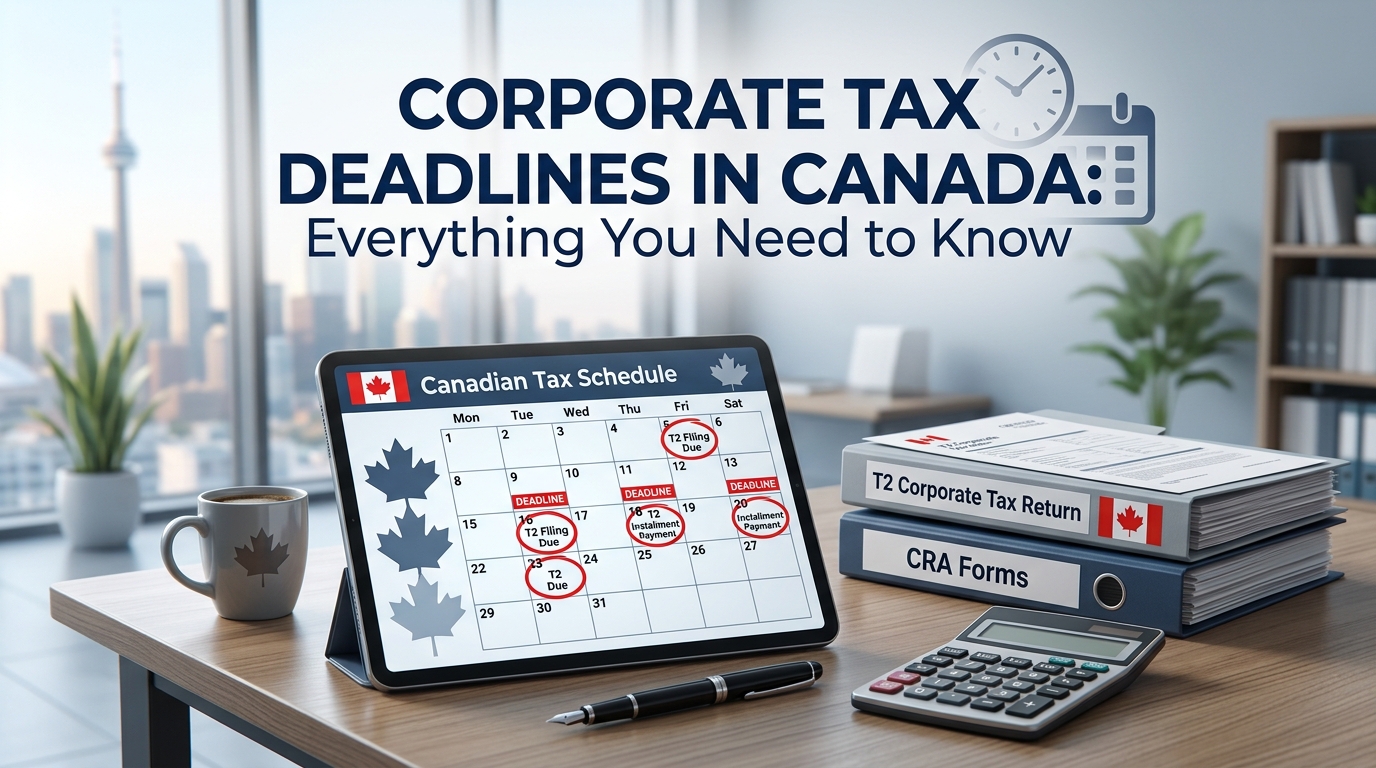
Corporate Tax Deadlines in Canada: Everything You Need to Know
Meeting corporate tax deadlines is one of the most important responsibilities for every incorporated business in Canada. Whether you’re a startup, a growing small business, or an established corporation, staying on top of your filing and payment obligations helps you avoid costly penalties, interest charges, and unnecessary stress. Many business owners focus only on filing their annual tax return, but corporate tax compliance also includes GST/HST filings, payroll remittances, instalment payments, and maintaining accurate financial records throughout the year.
At Top Tier Accountants, we regularly help Canadian businesses navigate CRA requirements and ensure every important deadline is met. Missing even one due date can affect your cash flow and create compliance issues that are easily avoided with proper planning. This guide explains the key corporate tax deadlines every Canadian business owner should know in 2026.
Why Corporate Tax Deadlines Matter
Corporate tax deadlines are more than dates on a calendar—they are legal obligations established by the Canada Revenue Agency (CRA). Filing and paying taxes on time helps your corporation remain compliant, maintain a good standing with the CRA, and avoid unnecessary penalties and interest.
Late filings can delay tax refunds, increase interest costs, and require additional correspondence with the CRA. By maintaining organized bookkeeping and planning ahead, businesses can meet their obligations without last-minute pressure. Creating a tax calendar and reviewing it regularly is one of the simplest ways to reduce compliance risks.
Understanding Your Corporation’s Fiscal Year-End
Unlike personal income taxes, which generally follow the calendar year, corporations can choose a fiscal year-end that best suits their operations. Your corporation’s tax year is its fiscal period, and every filing deadline is calculated based on that year-end.
For example:
| Fiscal Year-End | T2 Filing Deadline |
| March 31 | September 30 |
| June 30 | December 31 |
| August 31 | February 28 (or 29 in a leap year) |
| September 30 | March 31 |
The CRA requires corporations to file their T2 Corporation Income Tax Return within six months after the end of their fiscal year. If the filing date falls on a weekend or recognized public holiday, the deadline moves to the next business day.
T2 Corporate Tax Return Filing Deadline
Every resident corporation in Canada—whether active, inactive, or earning no income—generally must file a T2 Corporation Income Tax Return each tax year. Filing is required even if there is no tax payable.
For tax years beginning after 2023, most corporations must file their T2 return electronically. Corporations that are required to e-file but submit a paper return may face a $1,000 penalty.
Submitting your return on time also helps avoid late-filing penalties and ensures that loss carryforwards, refunds, and other tax attributes are processed without unnecessary delays.
Corporate Tax Payment Deadlines
Filing your return and paying your taxes are two separate obligations. Even if your T2 return is not yet due, any balance owing is generally payable two months after the end of the corporation’s tax year.
Eligible Canadian-Controlled Private Corporations (CCPCs) claiming the Small Business Deduction may qualify for an extended payment deadline of three months after the fiscal year-end, provided they meet the CRA’s eligibility conditions.
Businesses should budget throughout the year so sufficient funds are available when payment is due, avoiding interest charges on outstanding balances.
Instalment Payment Deadlines
Many corporations are required to pay corporate income tax by instalments instead of making one annual payment. Depending on CRA rules and the corporation’s circumstances, instalments are generally due monthly or quarterly.
Missing instalment payments can result in interest and instalment penalties, even if the corporation eventually pays its full tax balance. Monitoring projected taxable income throughout the year helps determine whether instalments need to be adjusted.
If you’re unsure whether your corporation is required to make instalment payments, a qualified accountant can review your tax situation and help establish the correct payment schedule.
GST/HST Filing Deadlines
If your business is registered for GST/HST, filing deadlines depend on your assigned reporting frequency.
| Reporting Frequency | Filing & Payment Due |
| Monthly | One month after the reporting period |
| Quarterly | One month after the reporting period |
| Annual | Generally three months after the fiscal year-end* |
*Some annual filers, such as certain self-employed individuals, have different payment and filing rules.
Reconciling GST/HST returns with your accounting records before filing helps prevent reporting discrepancies and reduces the likelihood of CRA reviews.
Payroll Tax Deadlines
Corporations with employees must also meet payroll reporting and remittance obligations. Payroll deductions—including income tax, CPP, and EI—must be remitted according to the business’s assigned remittance schedule.
Businesses must also file T4 information returns by the last day of February following the calendar year. Missing payroll deadlines can lead to penalties and interest, making accurate payroll processing an essential part of corporate tax compliance.
Consequences of Missing Corporate Tax Deadlines
Missing CRA deadlines can have serious financial consequences. Late-filed corporate tax returns may result in penalties, while unpaid taxes continue to accumulate daily interest until the balance is paid.
Common consequences include:
- Late-filing penalties
- Interest on unpaid balances
- Instalment interest and penalties
- Delayed refunds
- Increased likelihood of CRA reviews
- Additional administrative costs
Avoiding these issues is much easier than correcting them later. Strong bookkeeping, regular financial reviews, and early tax preparation can significantly reduce the risk of missed deadlines.
Important 2026 CRA Corporate Tax Dates
Here are some of the most important deadlines every incorporated business should remember:
| Tax Obligation | Deadline |
| T2 Corporate Tax Return | Within 6 months after fiscal year-end |
| Corporate Tax Balance Due | Generally 2 months after fiscal year-end |
| Eligible CCPC Balance Due | Generally 3 months after fiscal year-end (if eligible) |
| Corporate Tax Instalments | Monthly or quarterly, depending on CRA requirements |
| T4 Information Returns | Last day of February |
| GST/HST Returns | Based on reporting frequency |
Keeping these dates in a tax calendar can help your business stay organized throughout the year.

Tips to Never Miss a CRA Deadline
Meeting corporate tax deadlines becomes much easier when businesses adopt proactive financial management practices.
Some simple strategies include:
- Maintain accurate bookkeeping every month.
- Use cloud accounting software.
- Schedule quarterly financial reviews.
- Set calendar reminders for filing and payment dates.
- Prepare financial statements before year-end.
- Review tax obligations with your accountant regularly.
- Budget for tax payments throughout the year.
These habits not only improve compliance but also provide valuable financial insights that support business growth.
How Top Tier Accountants Can Help
At Top Tier Accountants, we help Canadian businesses stay compliant with CRA requirements while reducing the stress of corporate tax filing. Our experienced professionals monitor important deadlines, prepare accurate financial statements, and develop proactive tax strategies tailored to your business.
Our services include:
- Corporate Tax Return (T2) Preparation & Filing
- Bookkeeping Services
- GST/HST Returns
- Payroll Services
- Financial Statements
- Tax Planning & Compliance
- Cash Flow Management
- Business Incorporation
- CRA Representation
- Internal Control & Advisory Services
Whether you’re filing your first corporate return or managing multiple reporting obligations, our team is here to help you meet every deadline with confidence.
Conclusion
Corporate tax compliance is about more than submitting a T2 return once a year. Businesses must monitor filing deadlines, payment due dates, GST/HST obligations, payroll remittances, and instalment schedules throughout the year. Missing even one deadline can lead to unnecessary penalties, interest, and administrative challenges.
By staying organized and working with experienced professionals, your business can remain compliant while focusing on growth. Top Tier Accountants is committed to helping Canadian businesses simplify tax compliance, avoid costly mistakes, and build long-term financial success.
Frequently Asked Questions
1. When is a T2 Corporate Tax Return due?
A T2 return must generally be filed within six months after the corporation’s fiscal year-end.
2. When is corporate income tax payment due?
Most corporations must pay any balance owing two months after their fiscal year-end, while eligible CCPCs may qualify for a three-month payment deadline.
3. Does an inactive corporation still need to file a T2 return?
Yes. Most resident corporations, including inactive corporations, are required to file an annual T2 return.
4. What happens if my corporation files late?
Late filing can result in penalties, interest, delayed refunds, and additional CRA compliance actions.
5. Why should I work with Top Tier Accountants?
Our experienced professionals help businesses meet CRA deadlines, prepare accurate tax returns, optimize tax planning, and remain fully compliant throughout the year.
Post a comment
Related Posts
August 31, 2026
5 Bookkeeping Reports Every Canadian Business Owner Should Review Monthly
Why Monthly Financial Reporting Matters Running a Canadian business without regularly reviewing your bookkeeping reports…

August 8, 2026
How to Set Up a CRA Payroll Account for Your Business
What Is a CRA Payroll Account? If your Canadian business is hiring employees, one of…

August 8, 2026
How to Reduce Your Corporate Tax Legally in Canada (2026 Guide)
Every business owner wants to keep more of their hard-earned profits, but reducing your tax…

August 8, 2026
How to File Complex Tax Returns for Canadian Businesses
Filing a corporate tax return in Canada can become complicated as a business grows. A…