


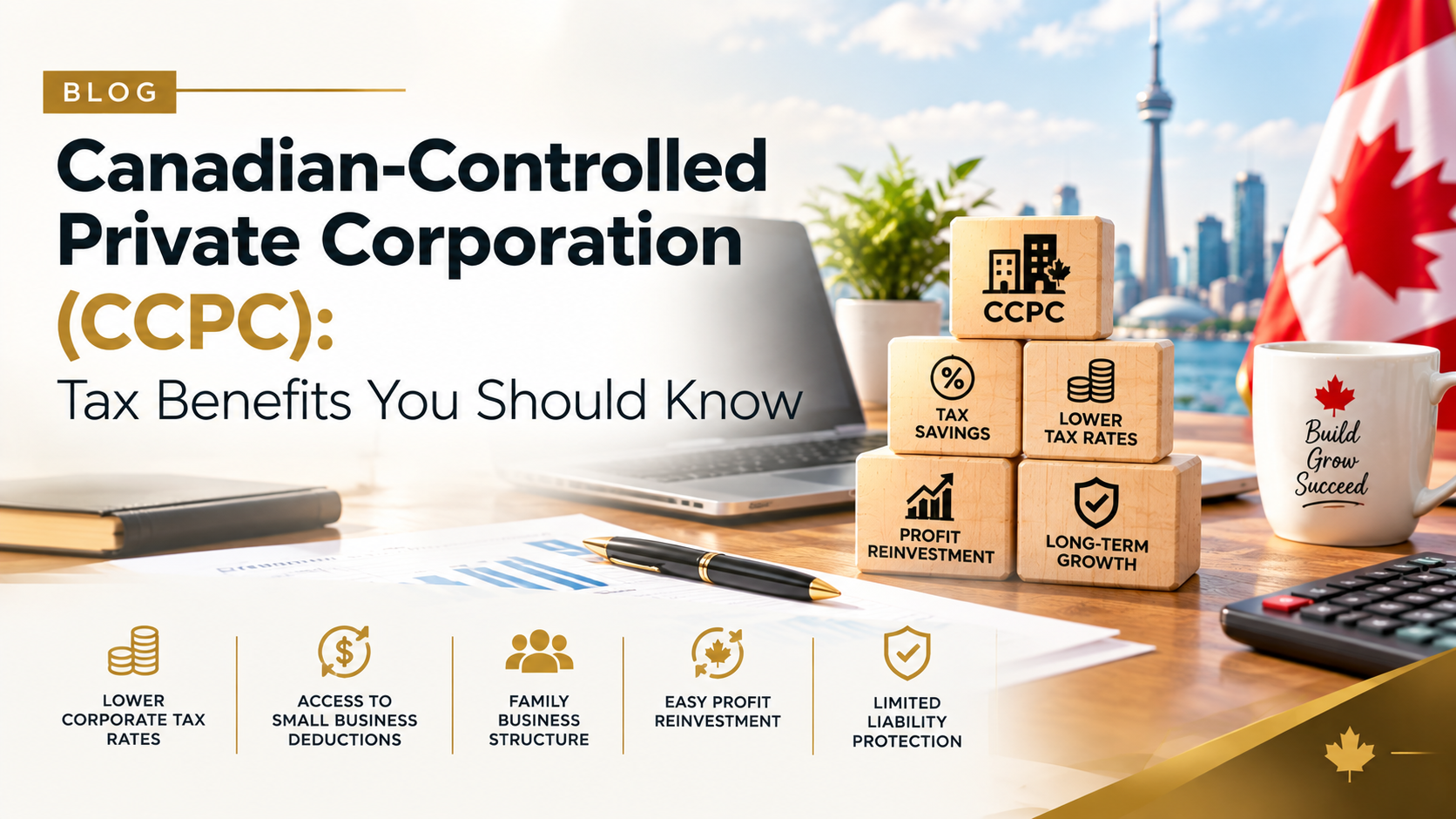
A Canadian-Controlled Private Corporation (CCPC) can be one of the most valuable structures available to Canadian entrepreneurs, particularly when a business is owned and controlled by Canadian residents and is actively operating in Canada. But becoming a CCPC is not simply a matter of incorporating a company in Canada. The corporation must satisfy specific control and residency requirements, and its status can have a significant impact on the tax rates, deductions, credits, and planning opportunities available to the business.
For many Canadian small business owners, the biggest attraction is the Small Business Deduction (SBD). A qualifying CCPC can generally access a preferential federal corporate tax rate of 9% on eligible active business income, subject to the applicable rules and business limit. The federal small business limit is generally $500,000, although it can be reduced in certain circumstances, including where the corporation and associated corporations have significant taxable capital or certain investment income.
A CCPC can also provide access to potentially valuable SR&ED investment tax credits, and qualifying shareholders may be able to benefit from the Lifetime Capital Gains Exemption (LCGE) when shares meet the requirements for qualified small business corporation shares.
However, incorporation does not automatically mean lower taxes in every situation. Corporate tax planning involves understanding active business income, passive investment income, salary, dividends, associated corporations, shareholder benefits, capital gains, tax integration, and the timing of withdrawals.
This guide explains the major CCPC tax benefits Canadian entrepreneurs should know and the planning considerations that can make those benefits more useful.
What Is a CCPC?
A Canadian-Controlled Private Corporation is a specific type of corporation recognized under Canadian tax law. The CRA explains that a CCPC must be a private corporation that is resident in Canada and must not be controlled directly or indirectly by non-residents, public corporations, or certain combinations of those parties. Its shares also cannot be listed on a designated stock exchange.
That definition matters because not every Canadian corporation is automatically a CCPC. A company may be incorporated in Canada and still fail to qualify if the control structure does not satisfy the relevant requirements.
For a typical Canadian entrepreneur who owns a private incorporated business and controls the company from Canada, CCPC status can open the door to tax advantages designed specifically to support Canadian-controlled businesses.
The CRA notes that corporation type determines whether the corporation can access certain rates and deductions, and a change in corporation type can have significant tax consequences.
How the CRA Determines CCPC Status
The CRA considers several factors when determining whether a corporation qualifies as a CCPC. Among other requirements, the corporation must be private, resident in Canada, and not controlled directly or indirectly by non-residents or public corporations.
This is particularly important when a company brings in outside investors.
For example, suppose a Canadian founder owns 70% of a corporation and a foreign investor owns 30%. Depending on the rights attached to the shares and the broader control arrangements, the corporation may still require careful analysis to determine whether it remains a CCPC.
That is why ownership and shareholder agreements should be reviewed whenever a business introduces new investors, reorganizes its shares, or establishes relationships with foreign entities.
The Small Business Deduction
For many entrepreneurs, the Small Business Deduction is the most important CCPC tax benefit.
The SBD reduces the amount of federal corporate income tax payable on qualifying active business income. CRA guidance currently states that the SBD generally applies to up to $500,000 of qualifying active business income for a CCPC, subject to the applicable rules and limitations.
This preferential treatment is designed to leave more after-tax cash available inside qualifying Canadian small businesses.
Understanding the $500,000 Business Limit
The $500,000 limit is not necessarily $500,000 for every corporation independently.
If corporations are associated, they generally share the business limit. The CRA specifically notes that the $500,000 annual small business limit must be shared by associated CCPCs.
Consider an entrepreneur who owns two associated corporations. It would generally be incorrect to assume that each corporation automatically receives its own separate $500,000 SBD limit.
This is one reason corporate structures should be designed carefully before creating multiple corporations.
The 9% Federal Small Business Tax Rate
The federal corporate tax rate for a CCPC claiming the small business deduction is currently 9% on qualifying income. The general federal corporate income tax rate is 15% after the applicable federal reductions.
That difference can be substantial.
For example, ignoring provincial tax and other adjustments for illustration, a corporation with $400,000 of qualifying active business income could potentially benefit from the lower federal rate on that income rather than paying the general federal rate.
The actual corporate tax calculation is more complicated than simply multiplying accounting profit by 9%. Taxable income, active business income, adjustments, associated corporations, the business limit, and other provisions all matter.
Why the Lower Rate Matters
The lower corporate tax rate can create a valuable tax-deferral opportunity.
Imagine your corporation earns more money than you personally need for household expenses. Instead of immediately withdrawing every dollar, the corporation may retain some after-tax funds and use them for business purposes.
Those funds could potentially support:
- Hiring employees
- Purchasing equipment
- Marketing
- Expanding operations
- Building working capital
- Paying down business debt
- Developing new products
- Future investments
The corporation therefore becomes more than a legal entity. It can become a tool for managing the timing of business income and personal withdrawals.
Provincial Corporate Tax Rates
Federal tax is only one part of the calculation.
Canadian corporations also deal with provincial or territorial corporate income tax, and rates differ depending on where the corporation operates and the applicable rules.
The CRA explains that provinces and territories generally have a lower and higher corporate income tax rate, with the lower rate applying to income eligible for the federal small business deduction in many jurisdictions.
For an Ontario-based business, for example, the combined federal and Ontario small-business rate is what ultimately matters—not the federal 9% figure by itself.
This is an important point for entrepreneurs searching online for “CCPC 9% tax rate.” The 9% rate is federal, not the total amount of corporate income tax.
A proper tax projection should therefore calculate both federal and provincial components.
Tax Deferral and Keeping Money Inside the Corporation
One of the practical advantages of incorporation is that business profits do not necessarily have to be withdrawn personally as soon as they are earned.
If a business owner needs $100,000 for personal living expenses but the corporation earns significantly more than that, retaining some after-tax earnings inside the corporation may allow the business to preserve capital for future needs.
Reinvesting Business Profits
Suppose a growing construction company earns substantial profits and plans to purchase vehicles, tools, equipment, and additional technology over the next two years.
Rather than extracting every available dollar personally and then trying to fund expansion from personal after-tax income, the company may retain some corporate funds for legitimate business purposes.
This is where tax deferral can become strategically useful.
It does not mean the money has become tax-free. Eventually, personal tax may arise when funds are withdrawn as salary or dividends, depending on the strategy and circumstances.
The advantage is often about timing.
Good tax planning asks not only, “How much tax do I pay?” but also, “When do I pay it?”
SR&ED Tax Credits for CCPCs
For businesses involved in eligible research and development activities, the Scientific Research and Experimental Development (SR&ED) program can provide another significant CCPC benefit.
The CRA currently states that the basic SR&ED investment tax credit is 15%, while most CCPCs may qualify for an enhanced 35% refundable ITC on eligible SR&ED expenditures up to the applicable expenditure limit.
This can be particularly valuable for technology companies, manufacturers, engineering businesses, software developers, and other businesses undertaking qualifying experimental development.
The Enhanced 35% ITC
The enhanced rate does not mean that every dollar a CCPC spends on technology automatically qualifies.
SR&ED has specific eligibility requirements concerning the nature of the work and expenditures.
According to the Department of Finance’s 2026 tax expenditure information, the enhanced 35% rate applies to small CCPCs on their first $3 million per year of eligible expenditures, subject to the applicable expenditure limit and phase-out rules.
That makes proper documentation extremely important.
If your company is developing new technology, solving technological uncertainties, experimenting with processes, or conducting qualifying research, do not wait until tax season to ask whether the work might qualify.
Lifetime Capital Gains Exemption
Another potentially valuable CCPC-related benefit appears when an entrepreneur eventually sells qualifying shares.
The Lifetime Capital Gains Exemption (LCGE) can potentially shelter some capital gains arising from the sale of qualifying small business corporation shares, provided the statutory requirements are satisfied.
The shares must meet the definition of qualified small business corporation shares (QSBC shares). CRA guidance sets out several conditions involving ownership, the corporation’s assets, active business operations, and the 24-month period before the sale.
Qualified Small Business Corporation Shares
This is where long-term planning becomes extremely important.
CRA guidance indicates that, during the relevant 24-month period before disposition, the shares must satisfy specific CCPC and asset-use requirements. At the time of sale, the corporation must also satisfy the relevant small business corporation requirements.
The rules can become complicated when a company has accumulated significant passive investments, excess cash, real estate, or other assets that are not used in the active business.
That means LCGE planning should start well before a business sale.
Waiting until a buyer is ready to sign a purchase agreement may be too late to restructure the company’s assets efficiently.
Corporate Tax Planning With Salary and Dividends
Once a business is incorporated, owners often ask:
“Should I pay myself salary or dividends?”
There is no universal answer.
Salary can create RRSP contribution room and involves payroll obligations, while dividends are generally paid from after-tax corporate income and have different personal tax treatment.
The appropriate mix depends on income level, corporate profits, personal cash requirements, CPP considerations, RRSP planning, future business needs, and other factors.
The key is to think about corporate and personal taxes together.
Understanding Tax Integration
Canada’s tax system uses a concept commonly referred to as integration, designed to reduce major differences between earning income personally and earning income through a corporation and later distributing it to shareholders.
The Department of Finance explains that active business income in a private corporation is integrated when dividends are ultimately paid to shareholders, while additional refundable taxes apply to certain investment income earned inside private corporations.
So an entrepreneur should not look at the corporate tax rate in isolation.
A corporation paying 9% federal tax does not necessarily mean the owner ultimately pays only 9% tax.
The full picture includes corporate tax plus personal tax when funds are extracted.
Passive Investment Income Inside a CCPC
One of the biggest misunderstandings about CCPCs is the belief that all corporate income can permanently enjoy the small-business tax rate.
That is not how the system works.
Investment income earned inside a private corporation can be subject to special tax rules, including refundable taxes. The tax system has specific mechanisms intended to reduce the advantage of earning passive investment income through a corporation rather than personally.
This means a business owner who accumulates a large investment portfolio inside a corporation should receive professional tax advice.
The $50,000 Investment Income Threshold
The small business deduction can be reduced when a CCPC and its associated corporations earn significant adjusted aggregate investment income.
The commonly referenced threshold is $50,000 of annual investment income, after which the $500,000 business limit can begin to grind down, subject to the detailed rules.
The business limit is generally reduced by $5 for every $1 of adjusted aggregate investment income above $50,000, reaching zero at $150,000 of investment income.
This can create a major tax-planning issue for successful companies that accumulate substantial passive investments.
The solution is not necessarily “never invest inside a corporation.” Instead, the decision should be evaluated based on the company’s long-term objectives, cash requirements, personal tax situation, investment strategy, and corporate structure.
Associated Corporations and the Shared Business Limit
Another area that can significantly affect CCPC tax planning is association.
An entrepreneur may own a consulting corporation, a property company, and another operating company and assume that each corporation can independently access the full small business limit.
That assumption can be wrong.
The CRA specifically provides rules dealing with relationships between corporations and how those relationships affect the SBD and SR&ED incentives.
If corporations are associated, their available business limit may need to be allocated among them.
This means corporate structures should not be created solely for the purpose of multiplying access to the small-business rate.
Before establishing a second corporation, discuss the proposed ownership and control structure with an accountant.
Common CCPC Tax Planning Mistakes
Many Canadian entrepreneurs lose potential tax advantages not because they lack access to CCPC benefits, but because they fail to plan around them.
Common mistakes include:
- Assuming incorporation automatically means lower total tax.
- Treating the 9% federal rate as the total corporate tax rate.
- Ignoring provincial corporate taxes.
- Creating multiple corporations without considering association rules.
- Accumulating passive investments without reviewing the small-business limit implications.
- Ignoring the QSBC requirements before a future business sale.
- Treating personal expenses as corporate deductions.
- Paying shareholder expenses from corporate accounts without proper accounting treatment.
- Failing to document SR&ED activities.
- Waiting until year-end to discuss tax planning.
The biggest mistake may simply be waiting too long.
Tax planning is most effective when decisions are made before transactions occur.
How Professional Accounting Advice Helps
CCPC taxation can become complicated quickly.
A professional accountant can help business owners understand the difference between corporate tax reduction and tax deferral, forecast corporate tax liabilities, review salary-versus-dividend decisions, monitor the small business limit, assess passive income, identify potential SR&ED opportunities, and plan for a future business sale.
At Top Tier Accountants, the focus is on helping Canadian businesses make informed decisions throughout the year rather than simply preparing a tax return after the financial year has ended.
For example, a year-end tax review can examine:
Corporate profit: How much active business income is expected?
Business limit: How much of the $500,000 SBD limit is actually available?
Associated corporations: Are multiple corporations required to share the limit?
Owner compensation: Should the owner consider salary, dividends, or a combination?
Investments: Is corporate passive income affecting future tax planning?
Capital purchases: Are planned equipment or technology purchases eligible for current deductions or credits?
Future sale: Could the company eventually qualify for the LCGE?
These questions turn tax preparation into strategic tax planning.
Conclusion
A Canadian-Controlled Private Corporation can provide Canadian entrepreneurs with important tax advantages, particularly when the corporation qualifies for the Small Business Deduction.
The federal small-business corporate tax rate is currently 9%, and the SBD generally applies to up to $500,000 of qualifying active business income, subject to the applicable rules and limitations.
CCPCs may also benefit from enhanced SR&ED tax credits, including a 35% refundable ITC on qualifying expenditures within the applicable limits, while shareholders may potentially access the Lifetime Capital Gains Exemption when selling qualifying small business corporation shares.
But these benefits come with rules.
The most successful tax strategy is not simply finding the lowest tax rate. It is understanding when income is earned, how much should remain in the corporation, how money should be withdrawn, whether investment income is affecting the business limit, whether corporate relationships create association, and whether future transactions could affect valuable exemptions.
For Canadian business owners, CCPC status can be a powerful tax-planning tool—but only when the structure is managed properly.
Top Tier Accountants can help Canadian businesses with corporate tax planning, bookkeeping, financial statements, tax preparation, payroll, GST/HST, CRA compliance, and strategic accounting support.
FAQs
1. What is a Canadian-Controlled Private Corporation?
A CCPC is a private Canadian-resident corporation that meets specific requirements concerning Canadian control, residency, ownership, and public-company control. The CRA sets out detailed conditions that must be satisfied for CCPC status.
2. What is the CCPC small business tax rate?
The federal corporate tax rate for a CCPC claiming the Small Business Deduction is generally 9% on qualifying income within the applicable business limit. Provincial or territorial corporate tax is additional.
3. How much income qualifies for the small business deduction?
The federal small business limit is generally $500,000 per year for qualifying active business income, but the limit can be reduced in certain situations and must generally be shared among associated corporations.
4. Can a CCPC claim SR&ED tax credits?
Yes. Eligible CCPCs may qualify for an enhanced 35% refundable SR&ED investment tax credit on qualifying expenditures up to the applicable expenditure limit.
5. Can a CCPC help reduce tax when I sell my business?
Potentially. If shares qualify as qualified small business corporation shares, the shareholder may be eligible for the capital gains deduction/LCGE, provided all applicable requirements are met. Planning should begin well before the sale because the qualification tests include conditions relating to the corporation’s assets and operations during the period before disposition.
Disclaimer: Canadian tax rules are detailed and can change. The examples above are for general educational purposes and should not be treated as individualized tax advice. A qualified Canadian tax professional should review your corporation’s specific facts before implementing a tax strategy.
Post a comment
Related Posts
September 19, 2026
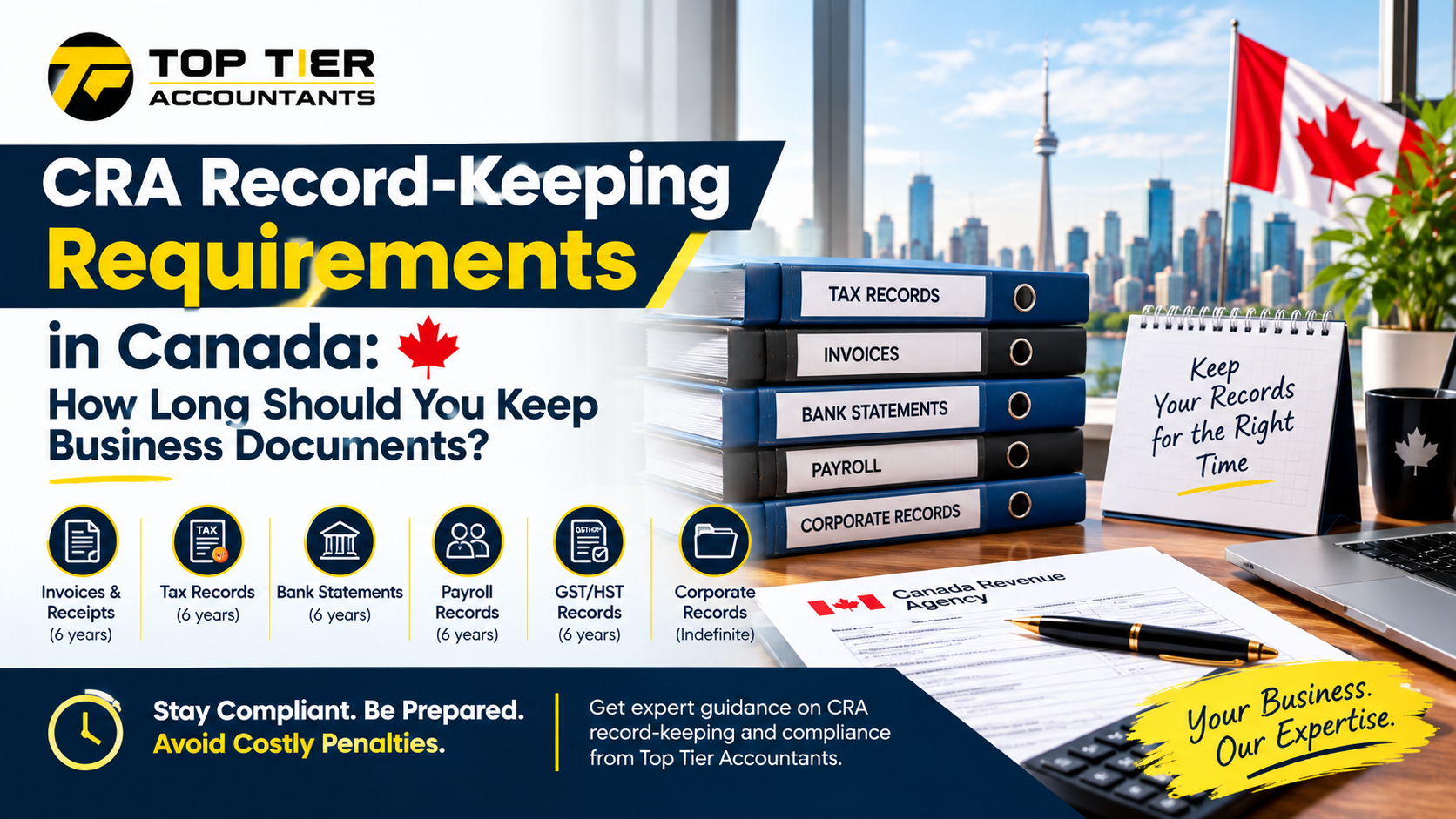
CRA Record-Keeping Requirements in Canada: How Long Should You Keep Business Documents?
Why CRA Record Keeping Matters Good record keeping is one of the most important responsibilities…

September 19, 2026
Corporate Tax Planning Mistakes That Could Cost Canadian Business Owners Thousands
Canadian business owners often focus on increasing revenue, controlling expenses, and finding new customers. Tax…

September 19, 2026
Corporate Tax Instalments in Canada: How to Calculate and Avoid CRA Interest
For many Canadian business owners, corporate tax instalments can feel confusing. You make payments throughout…
September 19, 2026
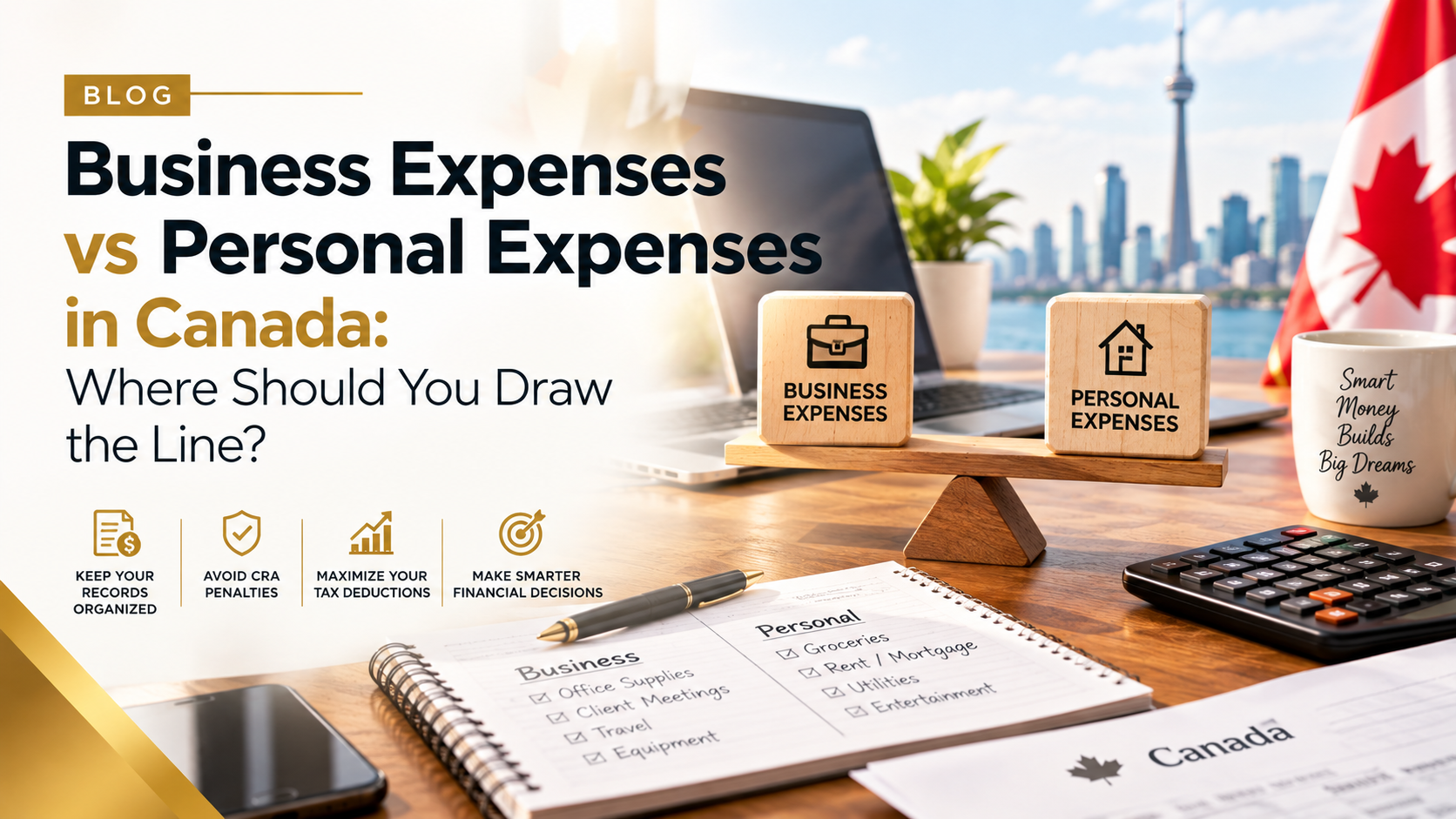
Business Expenses vs Personal Expenses in Canada: Where Should You Draw the Line?
Running a small business often means your personal and business lives overlap. You might use…