


Common Bookkeeping Mistakes Small Businesses Make in Canada
Running a small business in Canada is exciting, but it also comes with financial responsibilities that many entrepreneurs underestimate. Among these responsibilities, bookkeeping is one of the most critical yet commonly neglected tasks. Many business owners focus on sales, marketing, and growth but treat bookkeeping as something to deal with later. Unfortunately, poor bookkeeping practices can quickly lead to financial confusion, inaccurate tax filings, and even penalties from the Canada Revenue Agency (CRA).
Bookkeeping is not just about recording numbers in a spreadsheet. It is the backbone of your business’s financial health. Accurate bookkeeping allows you to track income, manage expenses, monitor profitability, and prepare for tax obligations without stress. When bookkeeping is done incorrectly, it becomes difficult to understand how your business is actually performing. In many cases, businesses lose money simply because they do not have clear financial visibility.
For Canadian small businesses, the stakes are even higher because tax rules, payroll obligations, and sales tax regulations can be complex. A simple mistake—such as misreporting GST/HST or missing a deductible expense—can cost thousands of dollars. Many entrepreneurs discover these errors only during tax season or after receiving a notice from the CRA.
The good news is that most bookkeeping mistakes are avoidable. By understanding the most common errors and implementing better financial systems, small business owners can maintain accurate records and protect their businesses from costly problems. In this guide, we will explore the most common bookkeeping mistakes small businesses make in Canada, why they happen, and how to avoid them.
Why Accurate Bookkeeping Is Crucial for Canadian Small Businesses
Financial Visibility and Decision-Making
Accurate bookkeeping provides the financial clarity every business owner needs to make smart decisions. Imagine trying to drive a car without a dashboard—you would have no idea how fast you’re going or how much fuel you have left. Running a business without proper bookkeeping is very similar.
When your financial records are up to date, you can easily see how much revenue your business generates, where your money is going, and whether you are actually profitable. This visibility helps you identify trends, manage cash flow, and plan for growth. For example, if your bookkeeping shows that certain expenses are increasing faster than revenue, you can address the issue before it becomes a serious problem.
Small businesses that maintain accurate books are also better prepared when applying for loans or attracting investors. Financial institutions often request income statements, balance sheets, and cash flow reports before approving funding. Without organized financial records, obtaining financing becomes much more difficult.
Accurate bookkeeping also simplifies tax preparation. Instead of scrambling to gather receipts and invoices at the last minute, your financial data is already organized and ready for filing. This reduces stress and helps ensure your tax returns are accurate.
CRA Compliance and Avoiding Penalties
In Canada, businesses must comply with several tax obligations, including income tax, payroll deductions, and GST/HST reporting. Proper bookkeeping ensures these obligations are met accurately and on time.
The CRA requires businesses to maintain detailed financial records for at least six years. These records must clearly show all income, expenses, and tax-related transactions. If your bookkeeping is incomplete or inaccurate, it may raise red flags during an audit.
Incorrect tax filings can lead to penalties and interest charges. For example, late GST/HST filings or underreported income can result in additional assessments that significantly increase your tax bill. In severe cases, businesses may face audits that consume time and resources.
Maintaining organized bookkeeping records is the best defense against these issues. When your financial data is accurate and accessible, responding to CRA inquiries becomes straightforward.
The Most Common Bookkeeping Mistakes Canadian Businesses Make
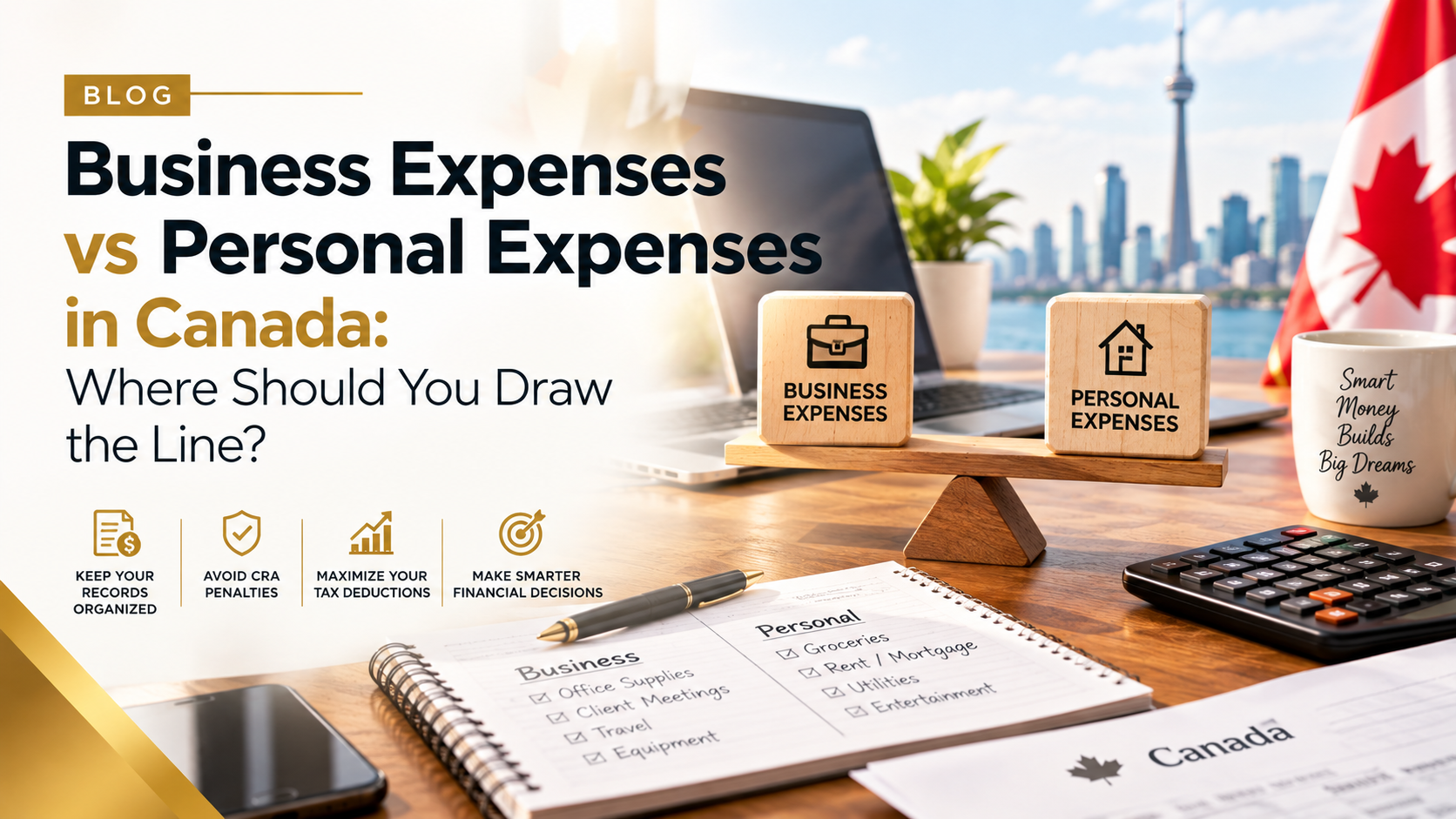
Mixing Personal and Business Finances
One of the most common bookkeeping mistakes small business owners make is mixing personal and business finances. Many entrepreneurs start their businesses using personal bank accounts or credit cards. While this may seem convenient at first, it quickly creates confusion when tracking expenses and income.
When personal and business transactions are combined, it becomes difficult to determine which expenses are legitimate business deductions. This can lead to inaccurate financial records and incorrect tax filings. In addition, separating transactions later can be extremely time-consuming.
Opening a dedicated Business Bank Account is one of the simplest ways to avoid this problem. A separate account ensures that all business transactions are recorded clearly and makes bookkeeping significantly easier.
Poor Record Keeping
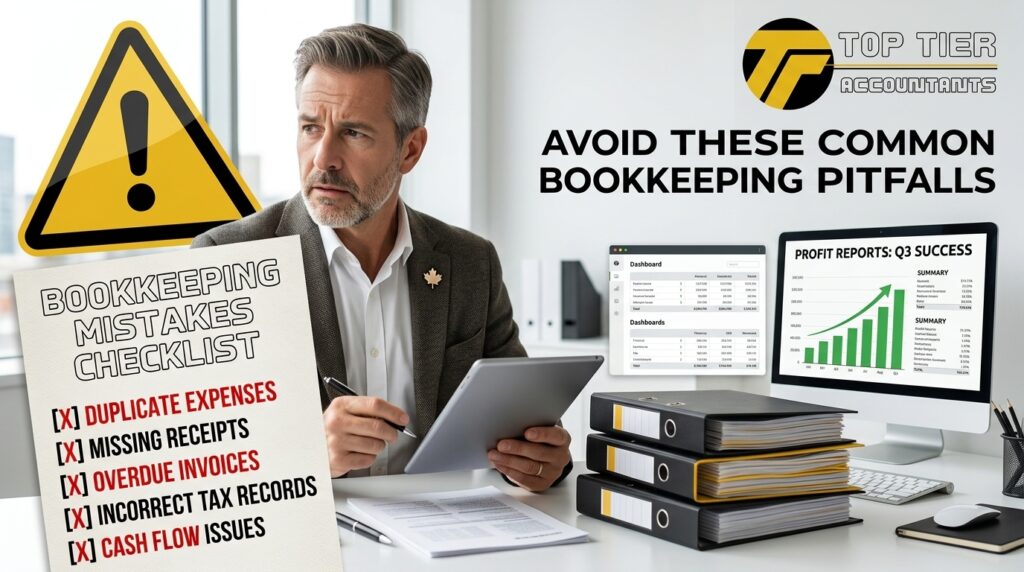
Another frequent issue is incomplete or disorganized financial records. Many business owners fail to keep copies of receipts, invoices, or contracts. Over time, these missing records create gaps in financial documentation.
Poor record keeping can become a serious problem during tax season. Without proper documentation, you may not be able to claim legitimate deductions. This means paying more tax than necessary.
Digital tools can make record keeping much easier. Scanning receipts, storing documents in cloud systems, and organizing invoices regularly can help maintain a clear financial trail.
Not Reconciling Bank Accounts Regularly
Bank reconciliation is the process of matching your internal financial records with your bank statements. Many small businesses skip this step, assuming their accounting software automatically tracks everything correctly.
However, discrepancies often occur. Transactions may be recorded incorrectly, duplicate entries may appear, or bank fees may be missed. Without regular reconciliation, these issues can accumulate and distort your financial reports.
Reconciling accounts monthly helps ensure that your financial records are accurate and up to date. It also allows you to detect errors or potential fraud early.
Ignoring Sales Tax Obligations (GST/HST)
Sales tax compliance is another area where many small businesses struggle. In Canada, businesses must register for GST/HST once their revenue exceeds $30,000 in a single quarter or within four consecutive quarters.
Some businesses forget to register on time, while others incorrectly calculate or report their sales tax. These mistakes can lead to unexpected tax liabilities and penalties.
Accurate bookkeeping ensures that sales tax collected and paid is tracked properly. This makes filing GST/HST returns much easier and reduces the risk of errors.
Mistakes Related to Expense Tracking
Missing Deductible Expenses
Many small businesses pay more tax than necessary simply because they fail to track deductible expenses. Business-related costs such as office supplies, software subscriptions, travel expenses, and marketing costs are often overlooked.
When these expenses are not recorded properly, they cannot be claimed as deductions. Over time, these missed deductions can add up to thousands of dollars in unnecessary tax payments.
A consistent bookkeeping system ensures that all expenses are recorded and categorized correctly throughout the year.
Incorrect Expense Categorization
Another common mistake is placing expenses in the wrong categories. For example, marketing expenses may be recorded as office supplies, or equipment purchases may be classified as regular expenses rather than capital assets.
Incorrect categorization can create inaccurate financial reports and complicate tax filings. It may also affect how certain deductions are calculated.
Using standardized accounting categories and reviewing financial reports regularly can help maintain accurate classifications.
Payroll and Employee Payment Errors
Misclassifying Employees vs Contractors
Misclassifying workers is a frequent issue for small businesses. Some companies treat employees as independent contractors to avoid payroll deductions. However, the CRA has strict guidelines for determining worker classification.
If a worker is incorrectly classified, the business may become responsible for unpaid payroll taxes, CPP contributions, and EI premiums.
Proper bookkeeping ensures that payroll records are accurate and compliant with CRA requirements.
Incorrect Payroll Remittances
Employers in Canada must remit payroll deductions—including CPP, EI, and income tax—withheld from employees. These remittances must be submitted on time according to CRA schedules.
Missing or incorrect payroll remittances can result in penalties and interest charges. Many businesses make errors simply because payroll calculations are done manually.
Using payroll software or professional bookkeeping services can significantly reduce these risks.
Technology and Software Mistakes
Not Using Cloud Accounting Software
Many small businesses still rely on spreadsheets or manual bookkeeping methods. While spreadsheets can work initially, they often become inefficient as businesses grow.
Cloud accounting software provides real-time financial insights, automated transaction tracking, and simplified reporting. These tools also integrate with bank accounts and payment systems, reducing manual data entry.
Adopting modern accounting software improves accuracy and saves significant time.
Lack of Automation in Financial Processes
Automation can streamline many bookkeeping tasks, including invoice generation, expense tracking, and payment reminders. Businesses that fail to automate these processes often spend unnecessary time on manual work.
Automation also reduces human error, which improves financial accuracy.
Year-End and Tax Preparation Mistakes
Waiting Until Tax Season to Organize Books
Many small businesses ignore bookkeeping throughout the year and try to organize everything at tax time. This approach often leads to missing records, incorrect data, and unnecessary stress.
Maintaining up-to-date books throughout the year makes tax preparation much smoother.
Not Working with a Professional Accountant
While bookkeeping software is helpful, professional accountants provide valuable expertise. They can identify tax-saving opportunities, ensure compliance with regulations, and help businesses plan for growth.
Working with professionals can prevent costly financial mistakes.
How Small Businesses in Canada Can Avoid These Bookkeeping Mistakes
Implementing Strong Financial Systems
Creating a structured bookkeeping system is essential for long-term success. This includes dedicated business accounts, consistent expense tracking, and regular financial reviews.
Standardized processes ensure that financial data remains organized and accurate.
Regular Financial Reviews and Professional Guidance
Successful businesses review their financial reports regularly. Monthly reviews allow business owners to monitor cash flow, identify trends, and address potential issues early.
Professional guidance can also provide insights that improve financial efficiency and tax planning.
Conclusion
Bookkeeping may not be the most exciting part of running a business, but it is one of the most important. Accurate financial records provide clarity, support better decision-making, and ensure compliance with Canadian Tax Regulations.
Many small businesses face challenges because bookkeeping is treated as an afterthought. Simple mistakes—such as mixing personal finances, missing expenses, or failing to reconcile accounts—can create serious financial problems.
The good news is that these mistakes are preventable. By implementing organized systems, using modern accounting tools, and seeking professional advice when needed, small businesses can maintain accurate financial records and focus on growth with confidence.
FAQs
1. What is the most common bookkeeping mistake small businesses make in Canada?
The most common mistake is mixing personal and business finances, which creates confusion and inaccurate financial records.
2. How often should small businesses update their bookkeeping?
Ideally, bookkeeping should be updated weekly or monthly to maintain accurate financial records.
3. Do small businesses in Canada need to keep receipts?
Yes. The CRA requires businesses to maintain receipts and supporting documents for at least six years.
4. When should a business register for GST/HST?
Businesses must register when their taxable revenue exceeds $30,000 within a 12-month period.
5. Should small businesses hire a professional bookkeeper?
Hiring a professional bookkeeper can save time, reduce errors, and help businesses stay compliant with tax regulations.
Post a comment
Related Posts
September 19, 2026
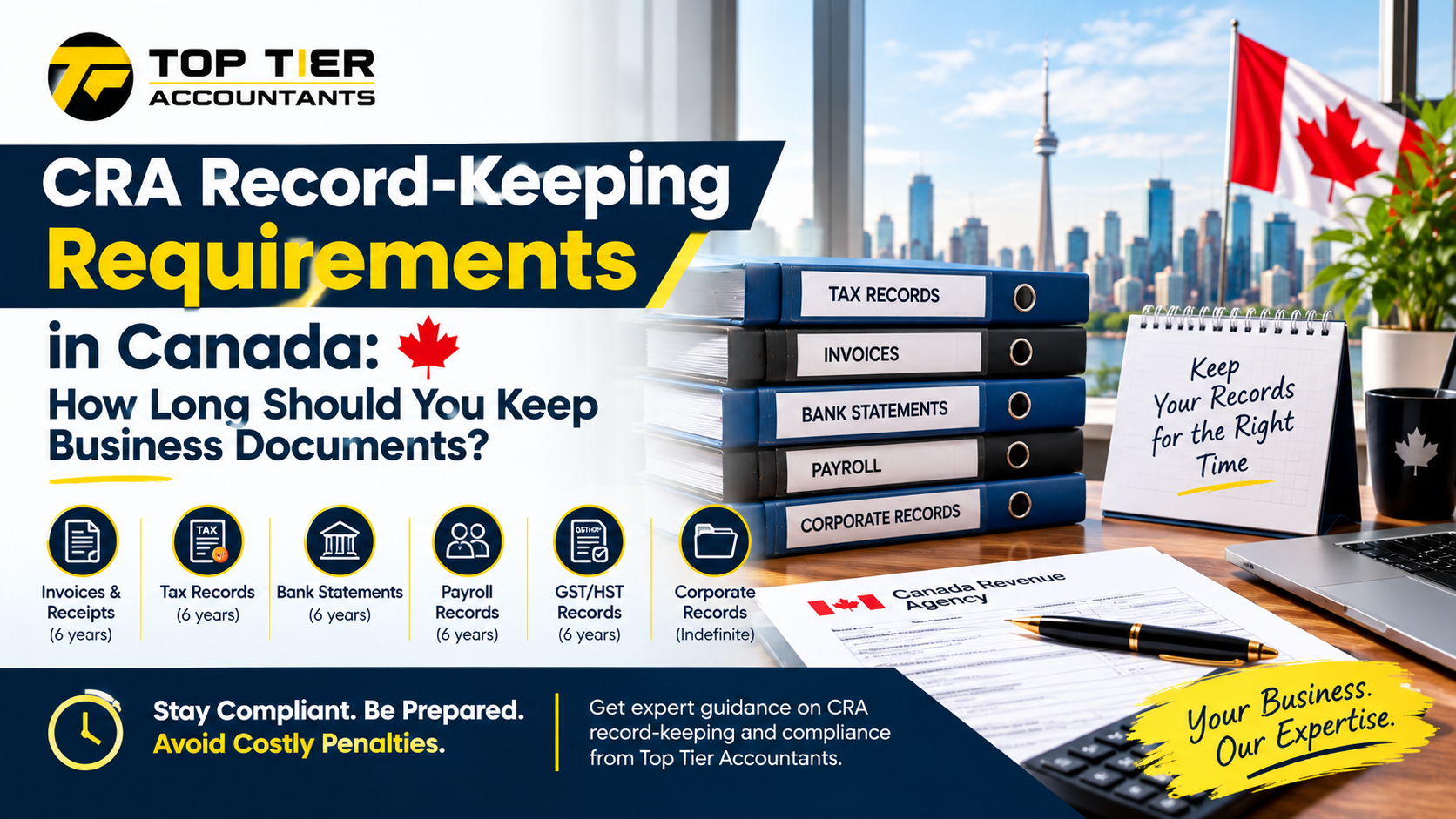
CRA Record-Keeping Requirements in Canada: How Long Should You Keep Business Documents?
Why CRA Record Keeping Matters Good record keeping is one of the most important responsibilities…

September 19, 2026
Corporate Tax Planning Mistakes That Could Cost Canadian Business Owners Thousands
Canadian business owners often focus on increasing revenue, controlling expenses, and finding new customers. Tax…

September 19, 2026
Corporate Tax Instalments in Canada: How to Calculate and Avoid CRA Interest
For many Canadian business owners, corporate tax instalments can feel confusing. You make payments throughout…

September 19, 2026
Canadian-Controlled Private Corporation (CCPC): Tax Benefits You Should Know
A Canadian-Controlled Private Corporation (CCPC) can be one of the most valuable structures available to…