

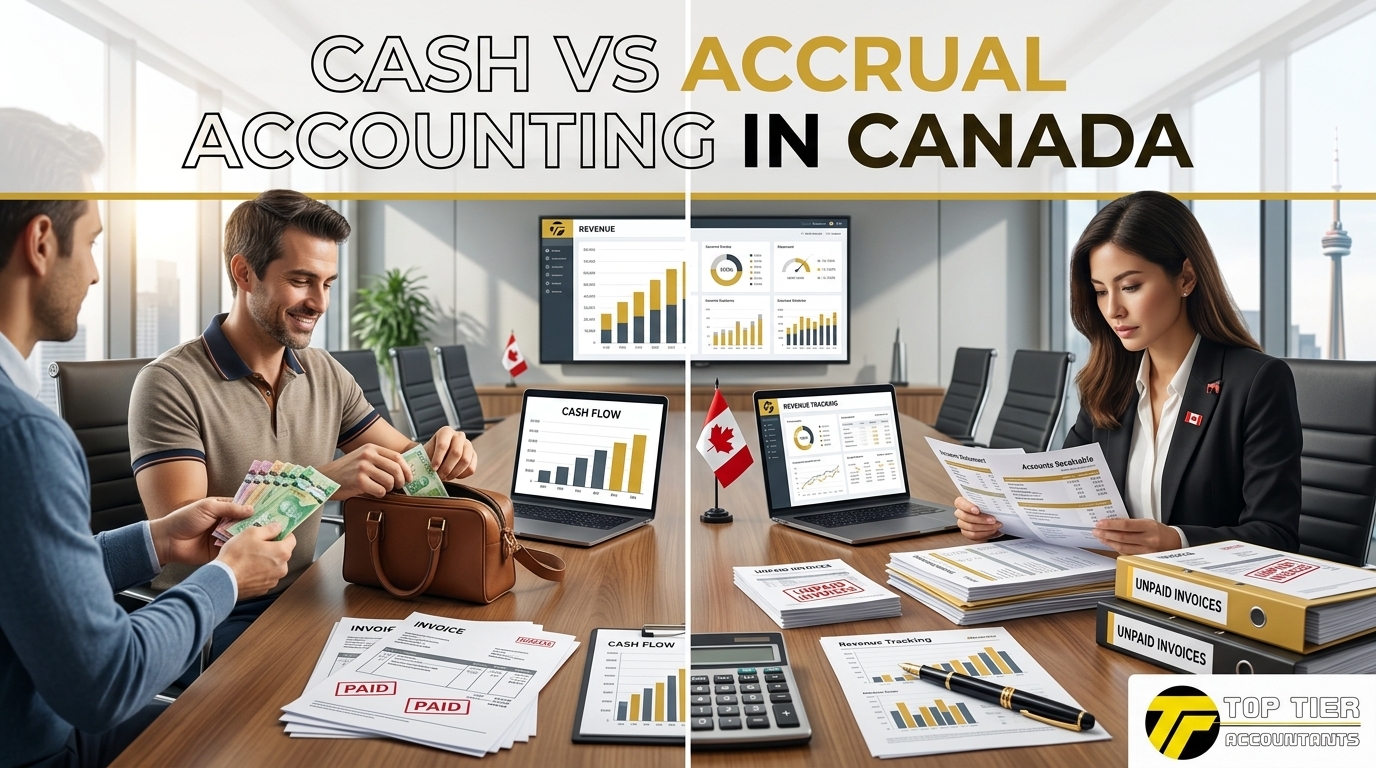
Cash vs Accrual Accounting in Canada: Which Method Is Better for Your Business?
Running a business in Canada involves more than just selling products or services. Behind every successful company is a Financial System that tracks revenue, expenses, profits, and taxes. One of the most important decisions Canadian entrepreneurs must make early on is choosing the right accounting method. This choice affects how your income is reported, how taxes are calculated, and how accurately you understand your company’s financial health.
Two primary accounting methods exist for Canadian businesses: cash accounting and accrual accounting. At first glance, they might appear to be simple bookkeeping techniques. In reality, they influence everything from tax obligations to business strategy. Think of them like two different lenses through which you view your financial reality. One focuses on money entering and leaving your bank account, while the other tracks financial activity the moment it occurs.
Many small business owners choose an accounting method without fully understanding the implications. Later, they discover that their reporting system doesn’t reflect their true profitability or cash flow. Choosing the correct method early can save time, reduce tax complications, and provide clearer insights into your business performance.
This guide explores the differences between cash and accrual accounting in Canada, how the tax system treats each method, and which one may be the best fit for your business.
Understanding Accounting Methods in Canada
Accounting methods determine when income and expenses are recorded in your financial records. While the numbers may eventually end up the same over time, the timing of when they appear in your financial statements can differ significantly depending on the method used.
For Canadian businesses, choosing the right accounting approach helps ensure compliance with tax regulations while also giving owners an accurate understanding of profitability. The accounting method you use will affect financial statements such as your income statement, balance sheet, and tax filings.
Why Accounting Methods Matter for Canadian Businesses
Imagine two businesses that both earn $100,000 in sales during a year. One company records revenue when customers pay their invoices, while the other records it when the sale is made—even if payment hasn’t arrived yet. Their financial statements will look completely different even though they technically generated the same revenue.
This difference can influence many business decisions. Investors, lenders, and government agencies often rely on financial statements to evaluate business performance. Using the right accounting method helps ensure that financial reports accurately reflect your operations.
Accounting methods also impact business planning. If your system doesn’t reflect unpaid invoices or upcoming expenses, you may overestimate your financial position. Accurate financial data helps owners make smarter decisions about hiring, investing, and expanding operations.
How Accounting Impacts Taxes and Financial Reporting
Taxes are another major reason accounting methods matter. In Canada, the timing of income recognition determines when you pay tax on that income. Cash accounting may delay taxes until payment is received, while accrual accounting may require you to report income even before cash arrives.
Financial reporting is also affected. Banks often prefer accrual-based statements because they provide a more complete picture of financial obligations and revenue streams. Larger companies must generally use accrual accounting because it aligns with recognized accounting standards.
The method you choose therefore influences everything from tax strategy to financial transparency. Understanding these systems helps businesses avoid surprises and maintain compliance with tax regulations.
What Is Cash Accounting?
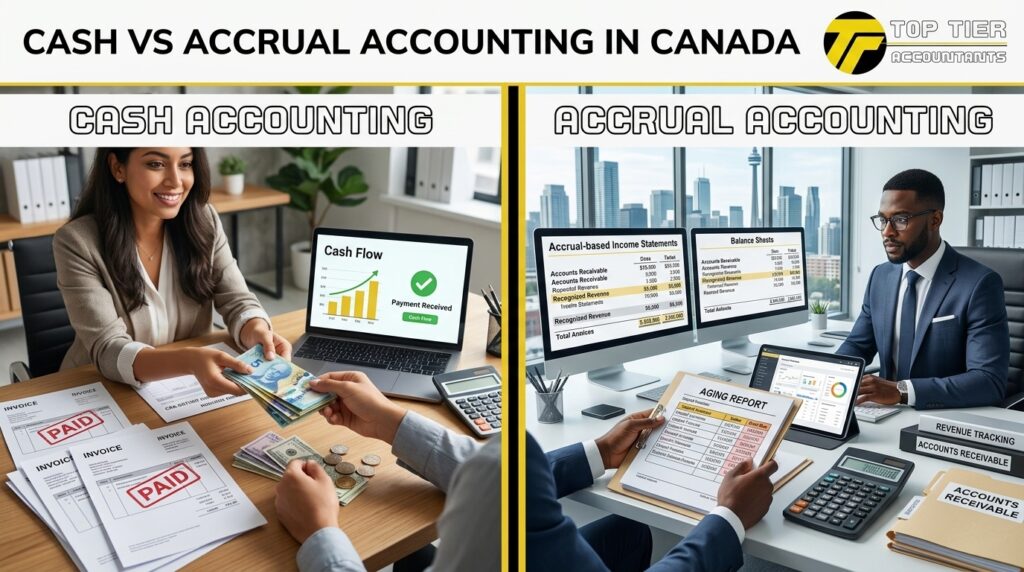
Cash accounting is the simpler of the two accounting methods. It records transactions only when money actually changes hands. Income is recorded when you receive payment, and expenses are recorded when you pay them.
This approach closely mirrors how most individuals manage their personal finances. If a customer hasn’t paid you yet, the income doesn’t appear in your books. If you receive payment for a future service, it is immediately counted as revenue.
How Cash Accounting Works
Under cash accounting, revenue recognition occurs only when cash is received. For example, if you send an invoice in December but the customer pays in January, that income will appear in January’s financial records.
Expenses follow the same principle. If you receive a bill in December but pay it in January, the expense is recorded in January.
This system provides a straightforward view of actual cash flow. Business owners can quickly determine how much money is currently available without worrying about outstanding invoices or pending payments.
Advantages of Cash Accounting for Small Businesses
Many small businesses prefer cash accounting because it is easy to understand and maintain. Since transactions are recorded only when money moves, bookkeeping becomes less complicated.
Cash accounting also provides a clear picture of available cash, which is critical for small companies managing limited resources. Owners can quickly see whether they have enough funds to cover payroll, rent, and operational expenses.
Another advantage relates to taxes. Because revenue is recorded only when payment is received, businesses may delay paying taxes on income until the following year if customers pay later.
Limitations of Cash Accounting
Despite its simplicity, cash accounting has several drawbacks. The biggest issue is that it does not provide a complete picture of business performance.
If your company has many unpaid invoices, your financial statements may underestimate your actual revenue. Similarly, large upcoming expenses may not appear until they are paid, which can make profits look higher than they really are.
Cash accounting can also make it difficult to track long-term financial trends. Without recording receivables and payables, businesses may struggle to understand their true financial obligations.
What Is Accrual Accounting?
Accrual accounting takes a different approach by recording income and expenses when they are earned or incurred, regardless of when cash is received or paid.
This method aligns with standard accounting principles used by most large companies worldwide. It provides a more accurate picture of financial performance because it reflects economic activity as it happens.
How Accrual Accounting Works
Under accrual accounting, revenue is recorded when a sale occurs. If you deliver a service and send an invoice, the income appears in your financial records immediately—even if payment arrives weeks later.
Expenses are treated similarly. If your business receives a bill for supplies, the expense is recorded when the obligation is created rather than when the payment is made.
This method introduces additional accounts such as accounts receivable and accounts payable, which track outstanding invoices and unpaid bills.
Advantages of Accrual Accounting
Accrual accounting provides a more accurate representation of a company’s financial position. By recording income and expenses when they occur, businesses can see the full scope of their operations.
This method helps owners understand profitability more clearly. Even if payments are delayed, revenue is still recognized in the correct period, making financial analysis easier.
Banks and investors often prefer accrual-based financial statements because they show both current earnings and future financial obligations.
Challenges of Accrual Accounting
The primary drawback of accrual accounting is complexity. Tracking receivables and payables requires more detailed Bookkeeping and sometimes specialized accounting software.
Businesses may also face tax obligations on income that hasn’t yet been received. This can create cash flow challenges if large invoices remain unpaid for long periods.
Despite these challenges, accrual accounting is widely considered the most accurate method for financial reporting.
Cash vs Accrual Accounting – Key Differences
Understanding the differences between these two accounting methods can help business owners choose the system that aligns best with their operations.
Comparison Table
| Feature | Cash Accounting | Accrual Accounting |
| Revenue Recognition | When payment is received | When income is earned |
| Expense Recording | When bills are paid | When expenses are incurred |
| Complexity | Simple | More complex |
| Financial Accuracy | Limited | More accurate |
| Cash Flow Visibility | Very clear | Requires analysis |
Impact on Taxes and Profit Reporting
The biggest difference between these methods lies in timing. Cash accounting aligns closely with real cash flow, while accrual accounting reflects the economic reality of transactions.
For tax planning, this timing difference can influence when income is reported and when expenses are deducted. Businesses using cash accounting may defer taxes if payments arrive later.
Accrual accounting, however, provides more consistent reporting across accounting periods, making it easier to analyze long-term performance.
CRA Rules on Accounting Methods
Canadian businesses must follow guidelines set by the Canada Revenue Agency when choosing an accounting method.
Who Can Use Cash Accounting in Canada
Certain small businesses and self-employed individuals may be allowed to use cash accounting. Professionals such as farmers, fishers, and some sole proprietors commonly use this method because it simplifies record keeping.
Small service-based businesses with straightforward transactions may also choose cash accounting for convenience.
When Accrual Accounting Is Required
Most corporations in Canada must use accrual accounting because it aligns with standard financial reporting practices.
Accrual accounting ensures that financial statements accurately reflect outstanding receivables, liabilities, and long-term obligations. This makes it easier for regulators, lenders, and investors to assess business performance.
Choosing the Right Accounting Method
Selecting an accounting method depends on several factors including business size, industry, and financial complexity.
Factors to Consider Before Choosing
Business owners should evaluate how they manage invoices, expenses, and long-term financial planning. Companies with simple transactions may find cash accounting sufficient, while businesses with complex operations often benefit from accrual accounting.
Another factor is growth. As companies expand, they typically transition toward accrual accounting to support more advanced financial reporting.

When to Switch Accounting Methods
Switching accounting methods may be necessary as your business evolves. A startup might begin with cash accounting but move to accrual accounting as revenue grows and financial reporting becomes more complex.
Changing methods may require adjustments to financial records and approval from tax authorities, so professional accounting advice is often recommended.
Conclusion
Choosing between cash and accrual accounting in Canada is more than a Bookkeeping Preference. It influences how you understand your business, how you plan for growth, and how you manage taxes. Cash accounting offers simplicity and clear cash flow tracking, making it attractive for smaller operations. Accrual accounting provides a deeper, more accurate financial picture that supports long-term decision making and investor confidence.
Many businesses begin with cash accounting and transition to accrual accounting as they grow. The right choice ultimately depends on the complexity of your operations, regulatory requirements, and financial goals. Understanding the strengths and limitations of each system helps entrepreneurs build stronger financial foundations and make smarter strategic decisions.
FAQs
1. Is cash accounting allowed for corporations in Canada?
Most corporations must use accrual accounting for tax reporting. Cash accounting is generally limited to certain self-employed individuals or specialized industries.
2. Which accounting method is better for small businesses?
Small businesses with simple transactions often prefer cash accounting for its simplicity. Businesses with inventory, multiple invoices, or investors typically benefit from accrual accounting.
3. Can a business switch from cash to accrual accounting?
Yes. Businesses can change accounting methods, but adjustments to financial statements and tax reporting may be required.
4. Why do banks prefer accrual accounting?
Accrual accounting shows both earned revenue and outstanding liabilities, giving lenders a more complete understanding of financial health.
5. Does accrual accounting mean paying tax before receiving money?
Yes, in some cases income may be taxed when earned rather than when received, which can create cash flow considerations.
Post a comment
Related Posts
September 19, 2026
CRA Record-Keeping Requirements in Canada: How Long Should You Keep Business Documents?
Why CRA Record Keeping Matters Good record keeping is one of the most important responsibilities…

September 19, 2026
Corporate Tax Planning Mistakes That Could Cost Canadian Business Owners Thousands
Canadian business owners often focus on increasing revenue, controlling expenses, and finding new customers. Tax…

September 19, 2026
Corporate Tax Instalments in Canada: How to Calculate and Avoid CRA Interest
For many Canadian business owners, corporate tax instalments can feel confusing. You make payments throughout…

September 19, 2026
Canadian-Controlled Private Corporation (CCPC): Tax Benefits You Should Know
A Canadian-Controlled Private Corporation (CCPC) can be one of the most valuable structures available to…