



Why CRA Compliance Is Critical for Not-For-Profits
Starting a not-for-profit organization in Canada is an inspiring journey. You have a mission, a cause, and a community to serve. But here’s something many founders underestimate: passion alone doesn’t satisfy the Canada Revenue Agency (CRA).
If your organization isn’t properly structured and registered in compliance with CRA regulations, you could face penalties, audits, revoked status, or even dissolution. That’s not dramatic—it’s reality.
CRA-compliant Not-for-Profit Registration services exist for one reason: to ensure your organization is built correctly from day one.
Think of compliance like the foundation of a building. You might not see it every day, but if it’s weak, everything else becomes unstable. The CRA has clear rules about how not-for-profits must operate, report income, maintain records, and use funds. These rules apply whether you’re a small community association or a national advocacy group.
The mistake many organizations make is assuming incorporation automatically means CRA approval. It doesn’t.
Incorporation establishes your legal entity. CRA compliance ensures your organization meets federal tax obligations and reporting standards. Those are two separate—but connected—processes.
Professional registration services bridge that gap. They handle documentation, ensure governing documents align with CRA expectations, register necessary tax accounts, and guide organizations through compliance obligations.
Why risk delays, rejected applications, or regulatory issues when expert guidance can prevent them?
Let’s break down what CRA-compliant registration really involves and why it matters more than most people realize.
Understanding Not-For-Profit Registration in Canada
Before diving into CRA compliance, it’s important to clarify what “registration” actually means. Many people use the term loosely, but legally, it involves multiple steps.
What Is a Not-For-Profit Organization (NPO)?
A not-for-profit organization (NPO) in Canada is an entity organized and operated exclusively for social welfare, civic improvement, pleasure, recreation, or other purposes except profit.
Here’s the key phrase: except profit.
That doesn’t mean an NPO can’t earn money. It can. But any surplus must be reinvested into its objectives. Members and directors cannot personally benefit from profits.
NPOs are governed either federally under the Canada Not-for-profit Corporations Act (CNCA) or provincially under applicable legislation. However, governance law is only part of the picture. Tax compliance falls under the CRA.
Difference Between Incorporation and CRA Registration
This is where confusion often happens.
| Incorporation | CRA Compliance |
| Creates legal entity | Ensures tax compliance |
| Governed by federal/provincial law | Governed by Income Tax Act |
| Requires articles and bylaws | Requires proper tax accounts and filings |
| Filed with Corporations Canada or province | Managed through CRA |
You can incorporate without fully addressing CRA tax obligations. But if you operate without CRA compliance, you risk serious consequences.
CRA-compliant registration services ensure both elements are aligned. They don’t just file incorporation documents—they structure your organization properly for tax purposes.
And that alignment matters more than you might think.
The Role of the Canada Revenue Agency (CRA)
The CRA oversees tax compliance for all entities operating in Canada, including not-for-profit organizations.
Just because an organization isn’t “for profit” doesn’t mean it’s invisible to the CRA.
CRA Requirements for NPOs
Under Section 149(1)(l) of the Income Tax Act, qualifying NPOs are generally exempt from paying income tax—but only if they meet specific criteria:
- Organized exclusively for non-profit purposes
- Operated exclusively for those purposes
- No income payable to members
The CRA evaluates both structure and operations. That means your articles of incorporation, bylaws, and actual activities must align with non-profit objectives.
If your organization starts generating income that benefits members, it could lose tax-exempt status.
When CRA Registration Is Mandatory
Even if exempt from income tax, many NPOs must still:
- File a T2 Corporate Income Tax Return
- File a T1044 Non-Profit Organization Information Return (if applicable)
- Register for GST/HST (if revenue exceeds threshold)
- Open payroll accounts (if hiring employees)
Failure to file required returns can trigger penalties—even if no tax is owed.
CRA-compliant registration services ensure you’re properly set up for:
- Business Number (BN) registration
- Tax account activation
- Ongoing reporting requirements
It’s not about avoiding tax—it’s about staying compliant.
Federal vs. Provincial Incorporation and CRA Compliance
Whether you incorporate federally or provincially, CRA compliance rules still apply. The Income Tax Act governs tax matters nationwide.
However, federal incorporation often simplifies national operations and can strengthen credibility when dealing with federal grants or funding agencies.
Provincial incorporation may be sufficient for local organizations, but tax obligations remain identical at the federal level.
Professional services evaluate:
- Operational scope
- Funding sources
- Long-term growth plans
- Reporting complexity
Choosing the right incorporation jurisdiction while aligning with CRA requirements prevents administrative headaches later.
Remember: incorporation and tax compliance are separate tracks that must run in parallel.
Step-by-Step Process of CRA-Compliant Not-For-Profit Registration
Creating a compliant not-for-profit isn’t a single form it’s a structured process.
Choosing and Reserving a Name
Your organization’s name must be:
- Distinct
- Not misleading
- Compliant with corporate naming rules
A NUANS name search may be required federally to confirm uniqueness.
But here’s what many overlook: the name should reflect non-profit purposes clearly. Misleading names can raise red flags during CRA review.
Drafting Compliant Articles of Incorporation
Articles must clearly state:
- Non-profit purpose
- Restrictions on profit distribution
- Dissolution clauses directing assets to another NPO
The dissolution clause is particularly important. If drafted incorrectly, it may delay charitable registration later.
Preparing Bylaws That Meet CRA Standards
Bylaws outline governance rules:
- Membership structure
- Voting rights
- Director responsibilities
- Financial controls
Poorly drafted bylaws create governance risk and potential CRA scrutiny.
Obtaining a Business Number (BN)
After incorporation, you must obtain a Business Number from the CRA. This becomes your organization’s tax identification number.
From there, specific accounts are activated depending on activities.
This structured approach ensures compliance before operations begin—not after problems arise.
Registering for Tax Accounts with the CRA
Depending on your activities, your NPO may require:
Payroll Accounts
If hiring employees, you must:
- Deduct CPP and EI
- Withhold income tax
- Remit payroll deductions
GST/HST Accounts
If taxable revenues exceed $30,000 in a 12-month period, GST/HST registration becomes mandatory.
Even below threshold, voluntary registration may allow input tax credits.
Information Return Filing Requirements
NPOs meeting certain asset or income thresholds must file the T1044 annually.
These filings maintain transparency and protect tax-exempt status.
Professional services determine which accounts apply to your specific situation.
Ongoing CRA Compliance Obligations
Compliance doesn’t end after registration.
Annual T2 and T1044 Filings
Most incorporated NPOs must file:
- T2 Corporate Tax Return
- T1044 Information Return (if required)
Even if no tax is payable.
Record-Keeping Requirements
CRA requires:
- Financial statements
- Meeting minutes
- Donation records
- Expense documentation
Records must generally be kept for six years.
Maintaining Non-Profit Purpose
Operational drift can jeopardize status. If activities shift toward profit generation, CRA may reassess tax exemption eligibility.
Compliance is ongoing—not a one-time event.
Common Mistakes That Lead to CRA Issues
Many NPOs unintentionally create compliance problems:
- Mixing personal and organizational funds
- Failing to file annual returns
- Distributing surplus to members
- Poor documentation of expenses
- Ignoring GST/HST thresholds
These mistakes are avoidable with professional oversight.
Prevention is far less costly than correction.
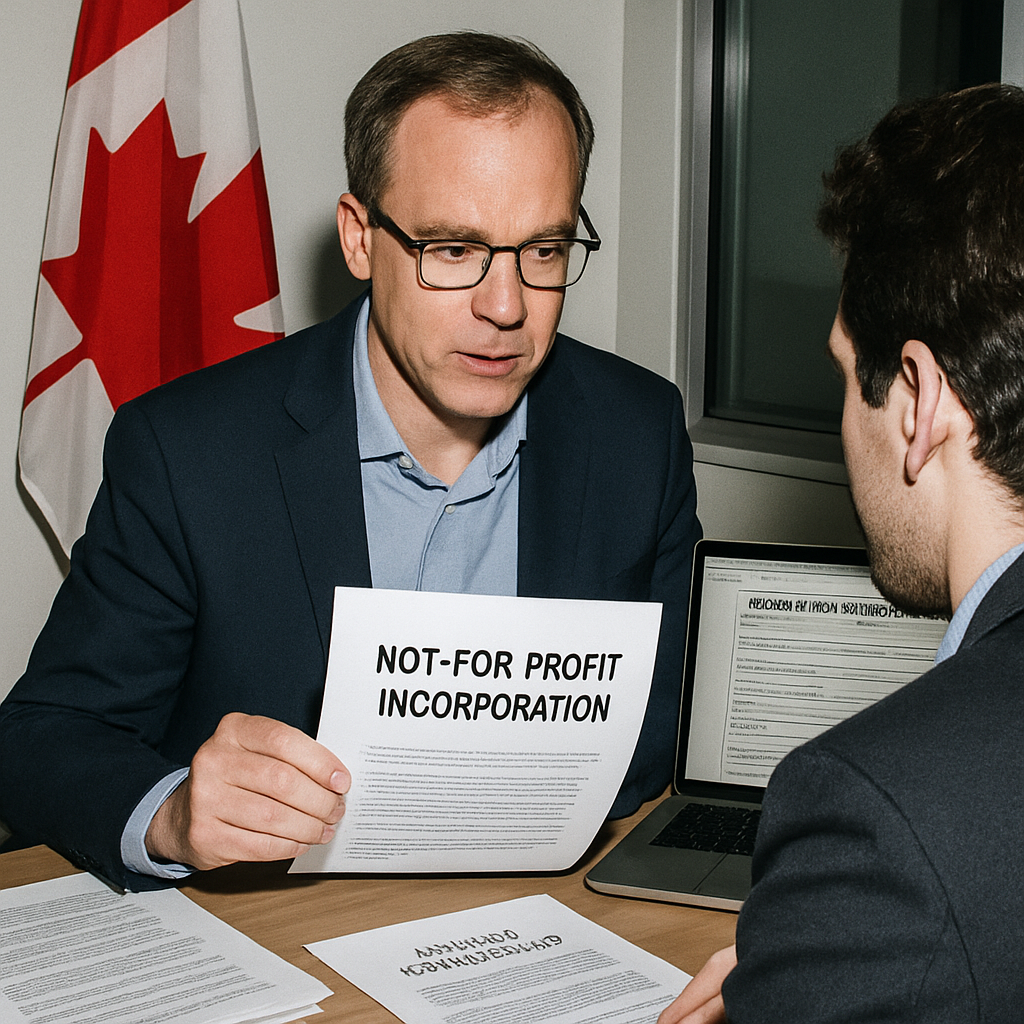
Benefits of Using Professional Registration Services
Why involve professionals?
Because:
- They understand CRA interpretation nuances
- They draft compliant documents correctly
- They prevent costly delays
- They streamline BN and tax account setup
- They provide guidance for future charitable registration
Think of it as insurance for your organization’s credibility and legal standing.
A properly structured foundation supports long-term growth.
Conclusion
CRA-compliant not-for-profit registration services provide more than administrative assistance—they provide protection, clarity, and strategic alignment.
Incorporation creates your legal entity. CRA compliance secures your tax position. Both are essential.
Without proper compliance, organizations risk penalties, audits, revoked tax-exempt status, and reputational damage. With professional guidance, you build correctly from the start.
Your mission deserves a solid legal and financial structure. When compliance is handled properly, you can focus on what truly matters—serving your community and advancing your cause.
FAQs
1. Does incorporation automatically grant CRA tax-exempt status?
No. Incorporation creates the legal entity, but CRA tax compliance requirements must still be met separately.
2. Do all NPOs need to file a T2 return?
Most incorporated NPOs must file a T2 annually, even if no tax is owed.
3. When is T1044 filing required?
It applies when certain income or asset thresholds are exceeded.
4. Is GST/HST registration mandatory for NPOs?
It becomes mandatory once taxable supplies exceed the small supplier threshold.
5. Can professional services help with future charitable registration?
Yes. Proper structuring during initial registration makes future CRA charity approval smoother.
Post a comment
Related Posts

February 27, 2026
Certified Industrial Accountant in Canada
Introduction to Certified Industrial Accountant in Canada A Certified Industrial Accountant in Canada plays a…

February 27, 2026
Trusted Experts for Personal Tax Filing in Canada
Introduction: Why Choosing the Right Tax Expert Matters in Canada Filing personal taxes in Canada…
February 27, 2026
Start Your Sole Proprietorship Today
Start Your Sole Proprietorship Today – We Handle the Registration Starting a business is exciting.…

February 19, 2026
Professional Not-For-Profit Incorporation Services in Canada
Why Incorporating a Not-For-Profit Matters Starting a not-for-profit organization (NPO) in Canada often begins with…