



Introduction to Certified Industrial Accountant in Canada
A Certified Industrial Accountant in Canada plays a vital role in helping businesses maintain financial stability, manage costs, and achieve sustainable growth. In today’s competitive market, companies can’t afford financial errors or poor planning. That’s where a Certified Industrial Accountant in Canada steps in—with structured expertise, regulatory knowledge, and strategic thinking.
Simply put, a Certified Industrial Accountant in Canada focuses on internal financial management. Unlike public accountants who serve multiple external clients, industrial accountants work within organizations. Their goal is to strengthen financial systems, reduce waste, and improve profitability.
Businesses across Canada rely on a Certified Industrial Accountant in Canada for budgeting, forecasting, financial reporting, compliance, and tax planning. These professionals combine analytical skills with real-world experience. They don’t just manage numbers—they guide business decisions.
Why Businesses Need a Certified Industrial Accountant in Canada
A business without strong financial control is like a ship without a compass. A Certified Industrial Accountant in Canada ensures that companies move in the right direction.

Financial Accuracy and Compliance
First and foremost, compliance matters. Canadian businesses must follow strict tax and reporting regulations. A Certified Industrial Accountant in Canada ensures:
- Accurate bookkeeping
- Proper tax filings
- Compliance with CRA regulations
- Transparent financial statements
Mistakes in financial reporting can lead to penalties. However, with a Certified Industrial Accountant in Canada, companies reduce risk and maintain credibility.
Strategic Cost Management
Beyond compliance, cost control is critical. A Certified Industrial Accountant in Canada analyzes:
- Production costs
- Operational expenses
- Inventory valuation
- Labor efficiency
By identifying inefficiencies, they help businesses save money. Over time, these savings translate into stronger margins and better financial health.
Moreover, they provide insights that support executive decisions. Instead of guessing, business owners make informed moves.
Core Responsibilities of a Certified Industrial Accountant in Canada
The role of a Certified Industrial Accountant in Canada goes far beyond bookkeeping. It includes strategy, analysis, and leadership.
Budgeting and Forecasting
A Certified Industrial Accountant in Canada prepares detailed budgets that align with company goals. They analyze past performance and market trends to forecast future revenue and expenses.
This helps management:
- Plan investments wisely
- Allocate resources efficiently
- Avoid cash flow problems
Forecasting isn’t about predicting the future perfectly—it’s about being prepared. That’s the power a Certified Industrial Accountant in Canada brings.
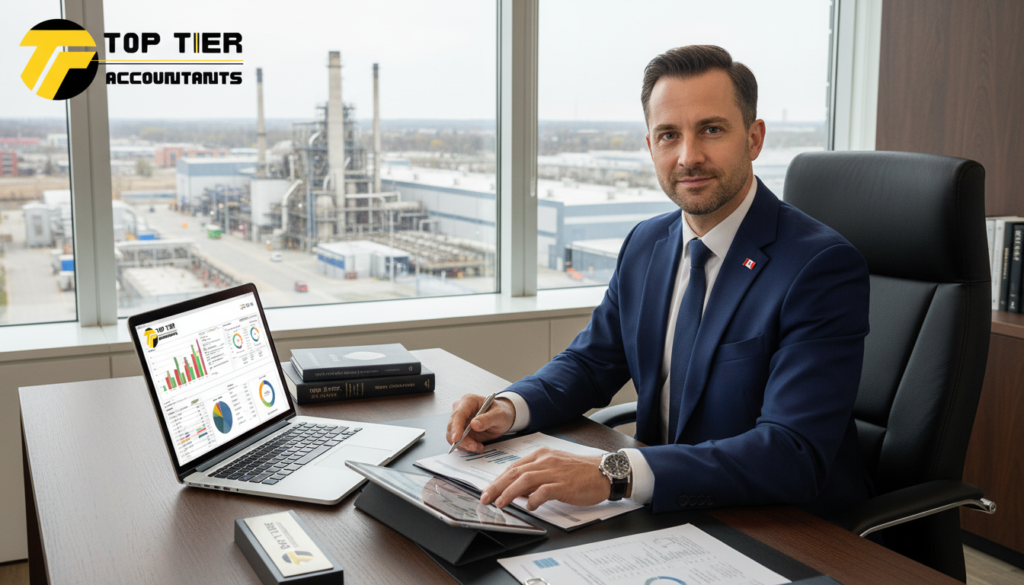
Financial Reporting and Analysis
Timely and accurate financial reports are essential. A Certified Industrial Accountant in Canada prepares:
- Income statements
- Balance sheets
- Cash flow statements
- Performance dashboards
These reports help stakeholders understand financial health. Furthermore, analysis turns raw data into clear insights.
Tax Planning and Advisory
Taxes can be complex. A Certified Industrial Accountant in Canada develops tax-efficient strategies that comply with Canadian law while minimizing liabilities.
They also advise on:
- Corporate structuring
- Dividend vs. salary planning
- Investment decisions
Smart tax planning can significantly improve profitability.
Industries That Benefit Most
Almost every sector benefits from a Certified Industrial Accountant in Canada, but some industries rely on them more heavily:
- Manufacturing
- Construction
- Logistics
- Retail chains
- Technology companies
- Healthcare organizations
In manufacturing, cost accounting is vital. In construction, project-based accounting ensures accurate budgeting. In retail, inventory control impacts profits directly.
No matter the industry, a Certified Industrial Accountant in Canada customizes financial strategies to meet operational needs.
Key Qualifications and Certifications
Becoming a Certified Industrial Accountant in Canada requires dedication and professional training.
Education Requirements
Typically, candidates must complete:
- Bachelor’s degree in Accounting or Finance
- Advanced coursework in cost accounting
- Financial management studies
Strong analytical and communication skills are also essential.
Professional Certifications
Many professionals pursue CPA designation in Canada. A Certified Industrial Accountant in Canada often holds recognized credentials that demonstrate:
- Technical competence
- Ethical responsibility
- Ongoing professional development
Continuous learning ensures they stay updated with regulatory changes.
Difference Between Industrial and Public Accountants
It’s easy to confuse roles, but there’s a key distinction.
| Industrial Accountant | Public Accountant |
| Works inside one company | Serves multiple clients |
| Focuses on internal strategy | Focuses on external reporting |
| Involved in budgeting | Involved in audits |
| Supports management decisions | Provides independent assurance |
A Certified Industrial Accountant in Canada becomes part of the organization’s leadership team. They’re deeply involved in daily operations and long-term planning.
How a Certified Industrial Accountant in Canada Improves Profitability
Profitability doesn’t happen by accident. A Certified Industrial Accountant in Canada uses structured methods to enhance financial outcomes.
Cost Reduction Strategies
They analyze:
- Supply chain inefficiencies
- Excess inventory
- Wasteful spending
- Overhead expenses
By streamlining operations, they reduce costs without compromising quality.

Revenue Optimization
Beyond cutting costs, a Certified Industrial Accountant in Canada identifies revenue opportunities:
- Pricing adjustments
- Product line analysis
- Market expansion planning
- Performance benchmarking
In short, they help businesses earn more while spending wisely.
Technology and Modern Accounting Tools
Today’s Certified Industrial Accountant in Canada uses advanced tools such as:
- ERP systems
- Cloud accounting software
- Financial analytics platforms
- Automated reporting systems
Technology improves accuracy and saves time. Moreover, digital tools provide real-time insights.
Data-driven decisions are no longer optional—they’re expected.
Compliance with Canadian Regulations
Canadian regulations can change frequently. A Certified Industrial Accountant in Canada stays informed about:
- Corporate tax laws
- Payroll regulations
- GST/HST compliance
- Financial reporting standards
Staying compliant protects companies from fines and legal issues. It also strengthens investor confidence.
How to Choose the Right Certified Industrial Accountant in Canada
Selecting the right professional matters. Here’s what to consider:
- Professional certification
- Industry experience
- Communication skills
- Technology proficiency
- Strong references
Interview candidates carefully. Ask about real-world scenarios. A capable Certified Industrial Accountant in Canada should provide practical solutions, not vague answers.
Cost of Hiring and ROI
Hiring a Certified Industrial Accountant in Canada is an investment. Costs vary depending on:
- Company size
- Industry complexity
- Experience level
However, the return on investment often outweighs the cost. Reduced waste, better planning, and tax savings contribute to long-term gains.
Simply put, the right Certified Industrial Accountant in Canada pays for themselves.
Future Trends in Industrial Accounting
The future looks promising. A Certified Industrial Accountant in Canada must adapt to:
- Automation
- Artificial intelligence
- Data analytics
- Sustainability reporting
As businesses evolve, financial strategies must evolve too. Forward-thinking professionals embrace change and innovation.
Frequently Asked Questions
1. What does a Certified Industrial Accountant in Canada do?
A Certified Industrial Accountant in Canada manages internal financial operations, budgeting, cost analysis, compliance, and strategic planning to improve business performance.
2. Is a Certified Industrial Accountant in Canada the same as a CPA?
Not always. Many hold CPA designations, but their focus is internal corporate management rather than public auditing.
3. How can a Certified Industrial Accountant in Canada reduce taxes?
They implement tax planning strategies, optimize deductions, and ensure compliance with CRA regulations to minimize liabilities legally.
4. Do small businesses need a Certified Industrial Accountant in Canada?
Yes. Even small businesses benefit from structured budgeting, forecasting, and cost control.
5. What industries hire a Certified Industrial Accountant in Canada?
Manufacturing, retail, construction, healthcare, and technology sectors frequently hire them.
6. How much does it cost to hire a Certified Industrial Accountant in Canada?
Costs depend on experience and business size, but the long-term financial benefits often exceed the expense.
Conclusion
A Certified Industrial Accountant in Canada is more than a financial professional—they’re a strategic partner in business success. From compliance and cost management to profitability and long-term planning, their expertise drives measurable results.
In today’s competitive landscape, businesses can’t afford financial uncertainty. With a Certified Industrial Accountant in Canada, companies gain clarity, control, and confidence.
If your organization seeks growth, stability, and expert financial leadership, partnering with a Certified Industrial Accountant in Canada is a smart move. The numbers don’t lie—structured financial management leads to sustainable success.
Post a comment
Related Posts

February 27, 2026
Trusted Experts for Personal Tax Filing in Canada
Introduction: Why Choosing the Right Tax Expert Matters in Canada Filing personal taxes in Canada…
February 27, 2026
Start Your Sole Proprietorship Today
Start Your Sole Proprietorship Today – We Handle the Registration Starting a business is exciting.…

February 19, 2026
Professional Not-For-Profit Incorporation Services in Canada
Why Incorporating a Not-For-Profit Matters Starting a not-for-profit organization (NPO) in Canada often begins with…

February 18, 2026
Get Your Master Business Licence in Canada – Fast, Easy & Reliable
Understanding the Master Business Licence in Canada Starting a business in Canada is exciting. It…