


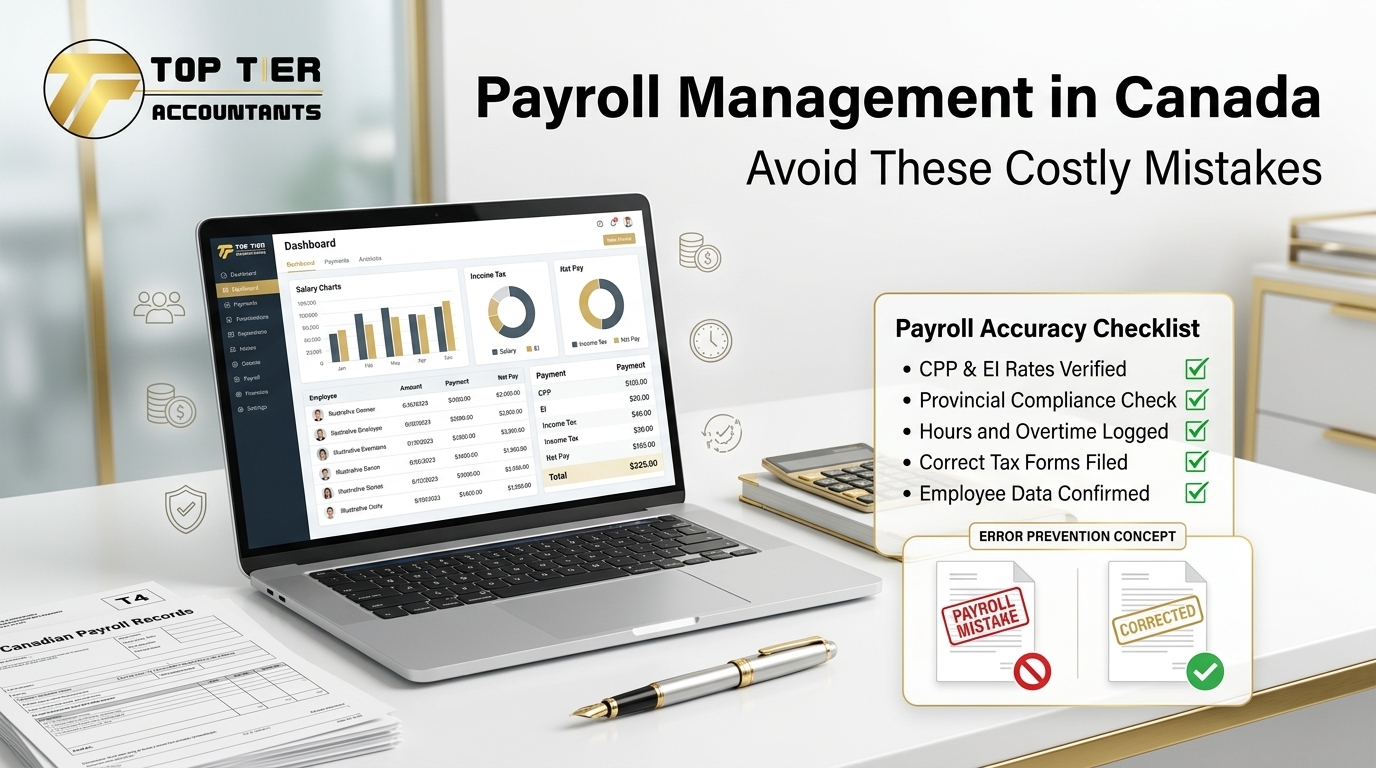
Payroll Management in Canada: Avoid These Costly Mistakes:
Introduction
Importance of Accurate Payroll
Payroll is the lifeblood of your business. Paying employees accurately and on time is not just a legal requirement—it’s essential for employee satisfaction and retention. Mismanaged payroll can cause frustration, erode trust, and even impact the day-to-day operations of your company.
For businesses in Canada, payroll is more than issuing pay cheques. Employers are responsible for deducting taxes, remitting CPP and EI contributions, and filing accurate reports with the CRA. A single mistake can lead to costly penalties and administrative headaches.
Consequences of Payroll Errors
Payroll mistakes can be expensive. The CRA imposes fines and interest for late or incorrect remittances. Employees may file complaints if they are underpaid or over-deducted, which can harm morale and increase staff turnover. Additionally, errors can trigger audits, drawing unwanted attention to your business finances.
Understanding Canadian Payroll Requirements
Federal and Provincial Regulations
Payroll in Canada is governed by a combination of federal and provincial laws. Employers must comply with:
- Canada Revenue Agency (CRA) requirements for taxes, CPP, and EI
- Provincial labor laws regarding minimum wage, overtime, and statutory holidays
- Reporting obligations for benefits and allowances
Understanding these regulations is essential for avoiding compliance issues.
Employer Responsibilities
Employers are legally required to:
- Calculate and deduct employee income tax
- Remit CPP and EI contributions
- Issue T4 slips and summaries annually
- Maintain accurate payroll records for at least six years
Failing to meet these obligations can result in financial penalties and audits.
⚠️ Common Payroll Mistakes
Incorrect Employee Classification
Classifying employees incorrectly as contractors or vice versa is a common mistake. Misclassification can lead to:
- Unpaid CPP and EI contributions
- Incorrect tax filings
- Legal penalties
Miscalculating CPP, EI, and Taxes
Even minor calculation errors in deductions can accumulate over time. Underpayment or overpayment of taxes, CPP, and EI may trigger penalties and interest charges.
Late or Missed Remittances
CRA deadlines are strict. Missing them or paying late is one of the fastest ways to incur fines and interest. Many small business owners underestimate how quickly these amounts add up.
Inaccurate T4 Slips
T4 slips summarize an employee’s earnings and deductions. Errors here can confuse employees, attract CRA scrutiny, and complicate personal tax filings.
Mismanaged Overtime and Benefits
Failing to calculate overtime correctly or mishandling benefit deductions can lead to disputes and CRA penalties. Ensuring proper calculation and reporting of these items is essential.
✅ Payroll Compliance Best Practices
Maintaining Accurate Records
Keeping detailed records of hours worked, deductions, benefits, and payroll changes is essential. Accurate documentation not only protects your business but also makes audits easier to handle.
Automating Payroll Systems
Automation reduces human error. Payroll software can calculate deductions, track contributions, and generate reports automatically, saving time and reducing mistakes.
Regular Payroll Audits
Conduct internal audits periodically to ensure all calculations, remittances, and records are accurate. Early detection of errors prevents larger issues down the road.
💰 Tax Deductions and Reporting
Proper Withholding of Taxes
Withholding the correct amount of income tax, CPP, and EI is critical. Payroll software or professional advisors can ensure compliance with CRA regulations.
Employee Benefit Reporting
Benefits like health insurance or retirement contributions must be reported accurately. Improper reporting can lead to Tax Reassessments and penalties.
⚠️ How Payroll Errors Affect Your Business
Financial Penalties
Late remittances or incorrect filings can lead to fines, interest charges, and CRA audits. Over time, these penalties can significantly impact your cash flow.
Employee Dissatisfaction
Employees who receive incorrect paychecks or delayed payments may lose trust in management. This can affect morale, productivity, and staff retention.
🖥️ Choosing the Right Payroll Solution
In-House vs Outsourcing
Small businesses must decide whether to handle payroll internally or outsource to a professional. Outsourcing reduces errors and ensures compliance but may increase costs. In-house solutions give more control but require expertise.
Payroll Software Options
Popular software options in Canada include QuickBooks, Wagepoint, Ceridian, and ADP. These systems streamline payroll management, automate calculations, and help maintain compliance with federal and provincial regulations.
🧾 Conclusion
Payroll management is complex but critical for Canadian businesses. Avoiding common mistakes, maintaining accurate records, and leveraging automation or professional help can save money, reduce stress, and protect your business from CRA penalties. Proactive payroll management ensures employees are paid correctly and your business stays compliant.
❓ FAQs
1. What is the most common payroll mistake in Canada?
Misclassifying employees or miscalculating deductions like CPP and EI.
2. How often should payroll be processed?
Typically bi-weekly, semi-monthly, or monthly, depending on business needs.
3. Can small businesses outsource payroll?
Yes, outsourcing reduces errors and ensures compliance with CRA rules.
4. What happens if payroll remittances are late?
Late remittances trigger fines, interest, and can increase audit risk.
5. Are payroll software solutions reliable for compliance?
Yes, most reputable software automates calculations and reporting, reducing human error.
Post a comment
Related Posts

September 19, 2026
CRA Record-Keeping Requirements in Canada: How Long Should You Keep Business Documents?
Why CRA Record Keeping Matters Good record keeping is one of the most important responsibilities…

September 19, 2026
Corporate Tax Planning Mistakes That Could Cost Canadian Business Owners Thousands
Canadian business owners often focus on increasing revenue, controlling expenses, and finding new customers. Tax…

September 19, 2026
Corporate Tax Instalments in Canada: How to Calculate and Avoid CRA Interest
For many Canadian business owners, corporate tax instalments can feel confusing. You make payments throughout…

September 19, 2026
Canadian-Controlled Private Corporation (CCPC): Tax Benefits You Should Know
A Canadian-Controlled Private Corporation (CCPC) can be one of the most valuable structures available to…